CM Bhajan Lal Sharma Meets Young Environment Champions on World Environment Day
Synopsis
On World Environment Day, 5 June 2026, Rajasthan Chief Minister Bhajan Lal Sharma met young environmental advocates and declared that children carrying nature's message strengthen the resolve for a greener Rajasthan, reinforcing the state's long-standing youth-led afforestation and climate resilience agenda.
Key Takeaways
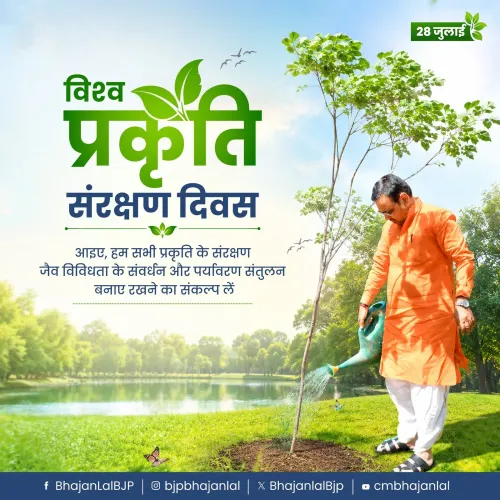
CM Bhajan Lal Sharma met young environment advocates on World Environment Day, 5 June 2026 .
He stated that children stepping forward with nature's message strengthens the resolve for a Green Rajasthan .
Rajasthan has conducted Van Mahotsav tree-planting drives since the 1950s , with district-level targets later aligned to the national Green India Mission after 2014 .
The state's forestry department and school children are the primary stakeholders in such annual campaigns.
Focus will shift to concrete plantation targets and forestry budget decisions ahead of the southwest monsoon season.
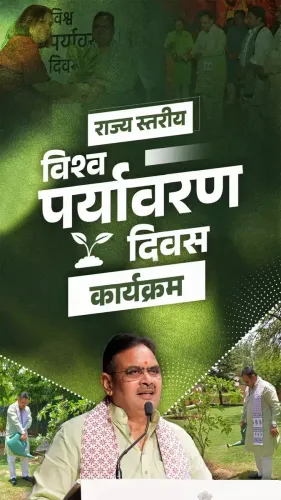
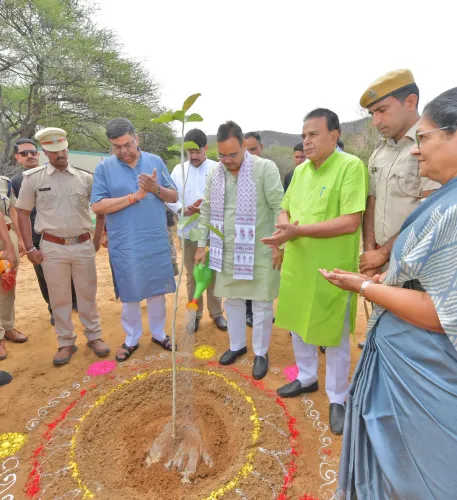
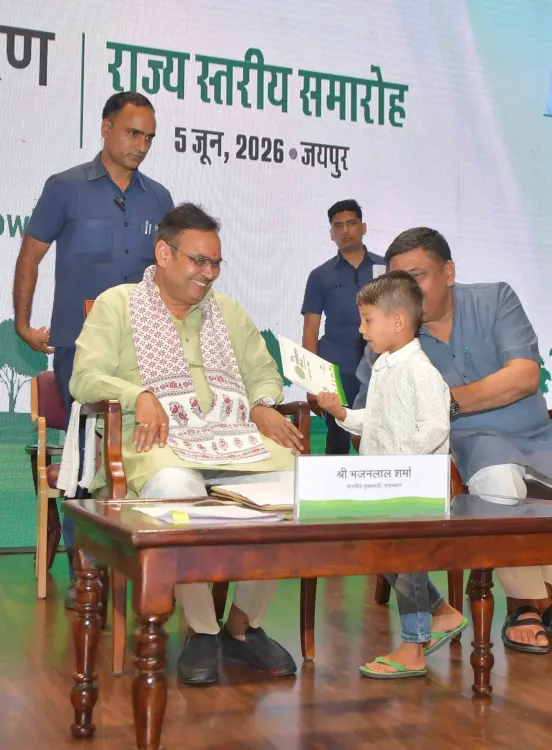
Rajasthan Chief Minister Bhajan Lal Sharma on Friday, 5 June 2026 met young children participating in environmental awareness activities on the occasion of World Environment Day, reaffirming his government's commitment to building a greener Rajasthan with youth at the forefront.
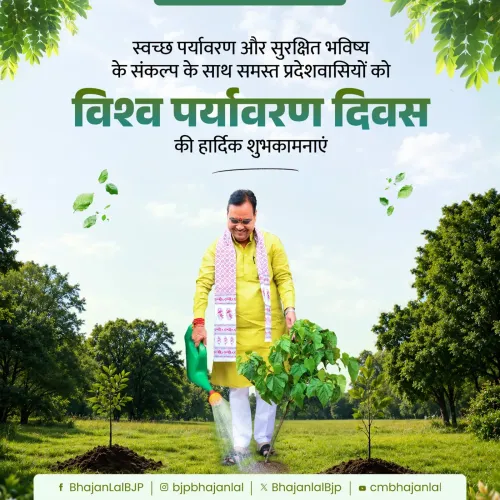
Sharing the meeting on X, CM Sharma wrote, 'मुलाकात नन्हे पर्यावरणमित्र के साथ!' ['A meeting with little environment friends!'], adding that 'when small hands step forward carrying nature's message, the resolve for a Green Rajasthan becomes stronger and hopes for the future grow more powerful.'
Context
World Environment Day, observed every year on 5 June, is the United Nations' principal platform for encouraging awareness and action for the protection of the environment. This year's observance saw leaders and institutions across India organise events centred on youth participation and ecological pledges.
CM Sharma, who assumed office in December 2023 following assembly elections, has consistently positioned Rajasthan's environmental agenda around community participation, with children and school-level programmes forming a visible part of that outreach.
Policy Backdrop
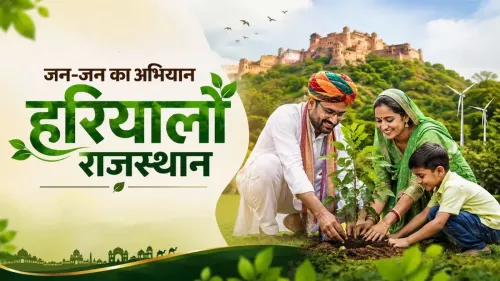
Rajasthan, a state dominated by arid and semi-arid landscapes, has a long history of state-led afforestation efforts. Annual Van Mahotsav tree-planting drives have been conducted in the state since the 1950s, forming the backbone of successive governments' forestry outreach.
After 2014, district-level plantation targets were aligned with the national Green India Mission, embedding local drives within a broader federal framework. The emphasis on mobilising children through eco-clubs and school-based campaigns reflects a nationwide pattern that Rajasthan has consistently adopted.
Stakeholders and Impact
The primary stakeholders in such initiatives are school children and the state's forestry department, whose field personnel coordinate plantation and awareness events at the ground level. Involving young participants is seen as a long-term investment in ecological consciousness, ensuring that conservation values are instilled early.
For a desert-dominated state like Rajasthan, increasing green cover carries direct implications for soil conservation, groundwater recharge, and climate resilience — concerns that affect farming communities and urban populations alike.
What's Next
Attention will now turn to whether the government follows the symbolic gesture with concrete forestry budget allocations or new plantation targets ahead of the monsoon season. Historically, World Environment Day messaging in Rajasthan has served as a precursor to state-level tree-planting campaigns timed with the arrival of the southwest monsoon in late June and July.
The broader trajectory of CM Sharma's green cover agenda — including any updated targets under the Green India Mission or state-specific schemes — is expected to become clearer in the coming weeks as the monsoon planting window approaches.
Point of View
High-visibility gesture that builds public goodwill. The framing of children as bearers of a 'Green Rajasthan' resolve is deliberate: it ties the BJP government's environmental identity to a non-partisan, aspirational symbol that is difficult to contest. The real test, however, lies in whether this symbolic engagement translates into measurable forestry budget commitments or expanded plantation targets in the months ahead. Analysts watching Rajasthan's climate resilience agenda will look for policy follow-through as the monsoon planting window opens.
NationPress
20 Oct 2026
Frequently Asked Questions
Why did CM Bhajan Lal Sharma post about World Environment Day 2026?
CM Bhajan Lal Sharma posted on World Environment Day, 5 June 2026, to mark the UN observance and highlight his government's commitment to a greener Rajasthan, sharing a meeting with young environmental advocates as a symbol of youth-led ecological action.
What is World Environment Day and when is it observed?
World Environment Day is the United Nations' principal annual platform for environmental awareness and action, observed every year on 5 June globally, including across India with government and community events.
What is Rajasthan's record on afforestation and green cover?
Rajasthan has conducted Van Mahotsav tree-planting drives since the 1950s and after 2014 aligned district-level plantation targets with the national Green India Mission, though as a largely arid state it continues to face significant challenges in expanding green cover.
Who is Bhajan Lal Sharma and when did he become Chief Minister of Rajasthan?
Bhajan Lal Sharma is a BJP leader who became Chief Minister of Rajasthan in December 2023 following the state assembly elections in which the BJP won a majority.
How does Rajasthan involve children in environmental programmes?
Rajasthan mobilises school children through eco-clubs and awareness campaigns, particularly around World Environment Day and Van Mahotsav drives, as part of a nationwide pattern of using youth participation to build long-term ecological consciousness.