CM Bhajan Lal calls for mass tree-plantation movement in Rajasthan
Synopsis
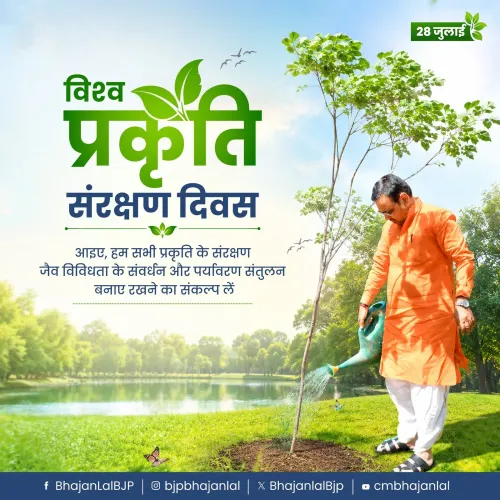
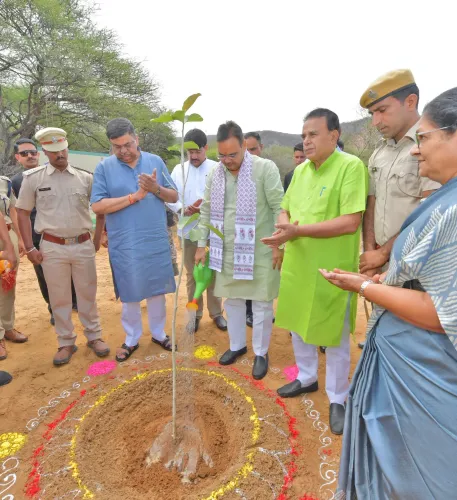
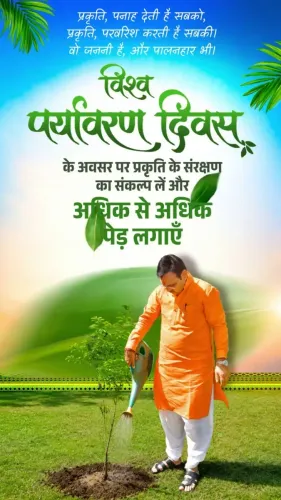
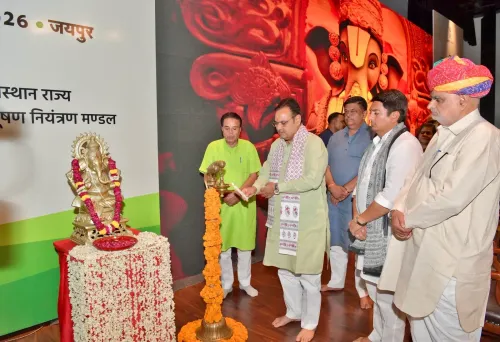
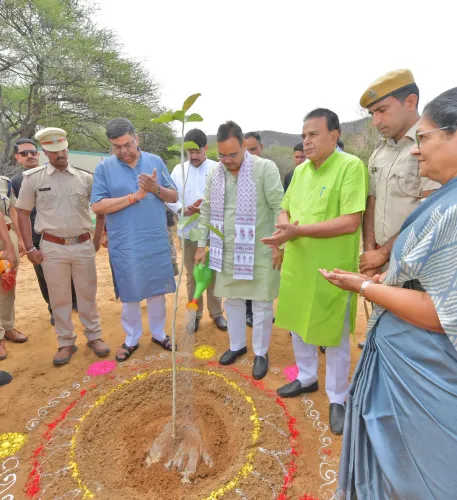
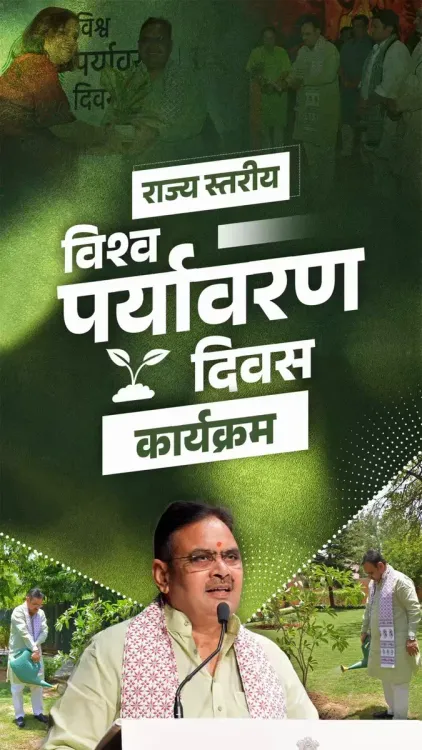
Rajasthan Chief Minister Bhajan Lal Sharma marked World Environment Day on 5 June 2026 by calling for tree plantation and conservation to become a people's movement, speaking at a state-level event at the Constitution Club of Rajasthan in Jaipur under the Hariyalo Rajasthan campaign.
Key Takeaways
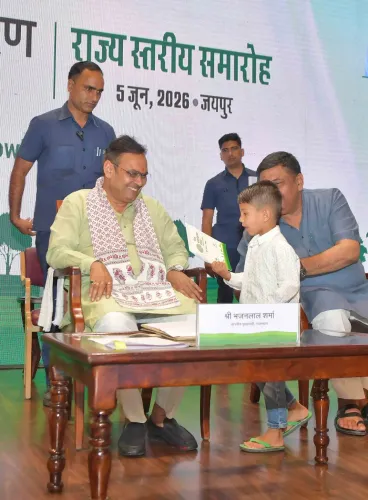
Bhajan Lal Sharma addressed the state-level World Environment Day programme at the Constitution Club of Rajasthan in Jaipur on 5 June 2026 .
He called for environmental conservation and tree plantation to be converted into a jan andolan — a mass public movement.
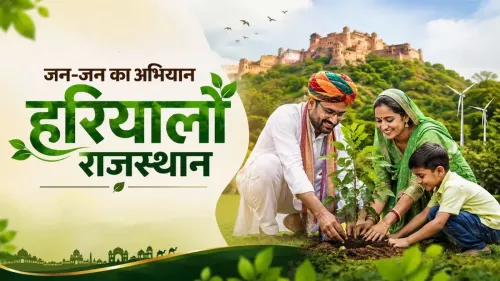
The event was held under the banner of the Hariyalo Rajasthan campaign, the state's flagship afforestation initiative.
Rajasthan 's arid geography makes sustained afforestation a critical policy priority to counter desertification and land degradation.
The monsoon season will be the key window for district-level plantation drives following the chief minister's call to action.
India's tree-cover targets are linked to Paris Agreement commitments, giving state-level campaigns national and international policy relevance.
Rajasthan Chief Minister Bhajan Lal Sharma on Friday, 5 June 2026, called for making environmental conservation and tree plantation a mass public movement, speaking at a state-level World Environment Day programme held at the Constitution Club of Rajasthan in Jaipur.
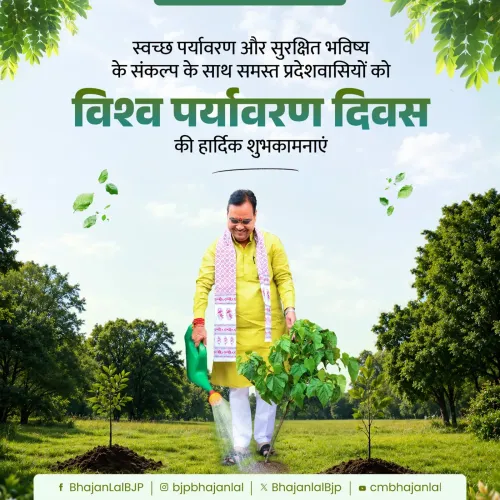
Addressing the gathering, Sharma declared that nature conservation is not merely an obligation but a responsibility towards future generations. In his words, 'प्रकृति संरक्षण केवल एक दायित्व नहीं, बल्कि आने वाली पीढ़ियों के प्रति हमारी जिम्मेदारी है' — 'Nature conservation is not just a duty, but our responsibility towards generations to come.' He called upon citizens to transform environmental protection and afforestation into a jan andolan, or people's movement.
Context
World Environment Day is observed annually on 5 June and was established by the United Nations in 1972 through a General Assembly resolution to promote global awareness and action on environmental issues. State governments across India use the occasion to announce or reinforce conservation programmes and mobilise public participation. The event at the Constitution Club of Rajasthan served as the official state-level observance for 2026.
Policy Backdrop
Rajasthan, with its vast arid and semi-arid terrain, has long confronted the challenge of desertification, making afforestation a persistent policy priority. The state has run successive tree-plantation drives under its forest policy framework since the early 2000s. The Hariyalo Rajasthan (हरियालो_राजस्थान) campaign — the hashtag prominently used by Sharma in his post — is a state-level initiative aimed at large-scale greening through public participation.
India's broader national targets for increasing forest and tree cover are tied to commitments under the Paris Agreement, including carbon sequestration goals. BJP-led state governments have increasingly framed such plantation programmes as both a developmental imperative and a cultural and moral responsibility, aligning civic duty with environmental outcomes.
Stakeholders and Impact
The call to action directly involves Rajasthan's residents, the state forest department, district administrations, and local non-governmental organisations who are expected to coordinate ground-level plantation drives. Framing conservation as a jan andolan signals an intent to move beyond departmental targets and enlist community ownership. Schools, panchayats, and urban local bodies are typical mobilisation channels in such campaigns.
For a state where land degradation and water scarcity intersect acutely, sustained tree cover gains carry direct livelihood implications for rural communities dependent on agroforestry and ecosystem services.
What's Next
Attention will now turn to district-level drives expected during the upcoming monsoon season, which is the primary planting window in Rajasthan. Progress on plantation targets announced at the event, and any follow-up budget allocations or administrative orders from the state government, will indicate how the chief minister's call translates into measurable action on the ground.
Point of View
The chief minister is seeking to distribute ownership of plantation outcomes beyond the forest department, a tactic that can amplify reach but also diffuse accountability. For Rajasthan, where ecological vulnerability is acute, the political salience of green campaigns is high, especially heading into a monsoon season that will test whether rhetoric converts to ground-level tree cover. The Hariyalo Rajasthan banner also allows the state to align visibly with national carbon-sequestration commitments, lending the programme both domestic and diplomatic currency.
NationPress
20 Oct 2026
Frequently Asked Questions
What did Rajasthan CM Bhajan Lal Sharma say on World Environment Day 2026?
Sharma called for making environmental conservation and tree plantation a mass public movement, stating that nature conservation is a responsibility towards future generations, at a state-level event in Jaipur on 5 June 2026.
What is the Hariyalo Rajasthan campaign?
Hariyalo Rajasthan is a state government initiative aimed at large-scale tree plantation and greening of Rajasthan through broad public participation.
Where was the World Environment Day 2026 state event held in Rajasthan?
The state-level World Environment Day programme was held at the Constitution Club of Rajasthan in Jaipur.
Why is tree plantation important for Rajasthan?
Rajasthan has extensive arid and semi-arid regions that are vulnerable to desertification, making afforestation a long-standing policy priority to protect land, water, and rural livelihoods.
When is World Environment Day observed?
World Environment Day is observed every year on 5 June and was established by the United Nations in 1972 to promote global environmental awareness and action.