CM Bhajan Lal launches Alwar air quality warning system on World Environment Day
Synopsis
Rajasthan CM Bhajan Lal Sharma on 5 June 2026 launched an air quality early warning and decision support system for Alwar at a state-level World Environment Day event in Jaipur, while reaffirming the state's Harialo Rajasthan, Vande Ganga and Ek Ped Maa Ke Naam campaigns for a greener Rajasthan.
Key Takeaways
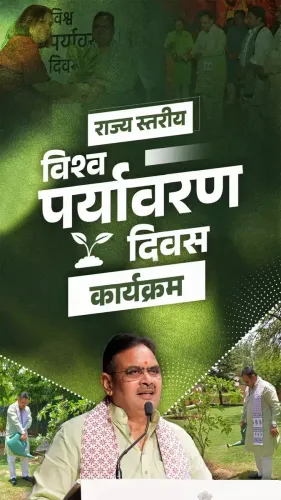
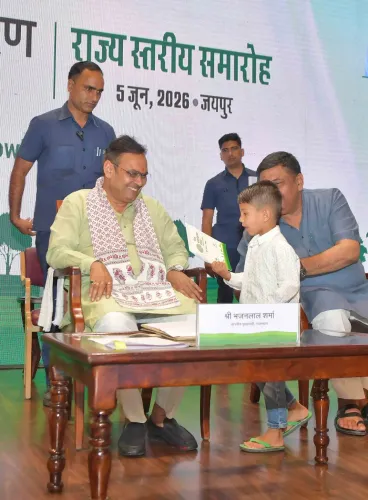
CM Bhajan Lal Sharma addressed the state-level World Environment Day function at the Constitution Club of Rajasthan on 5 June 2026 .
An Air Quality Early Warning and Decision Support System was launched specifically for Alwar district to monitor, forecast and manage air pollution.
The system aligns with the National Clean Air Programme (NCAP) framework established in 2019 for city-level air quality infrastructure.
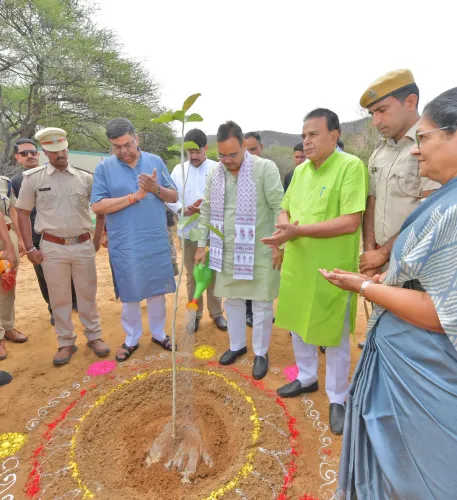
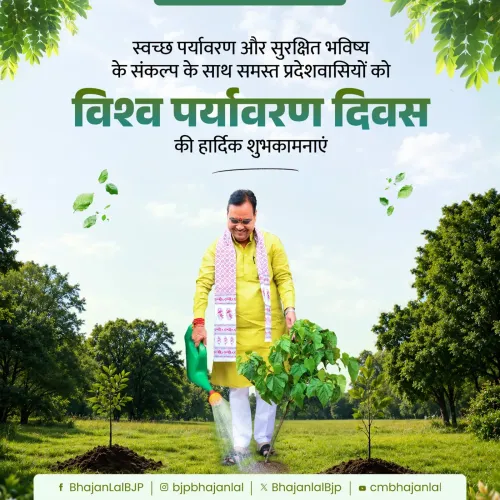
The state is running three parallel environment campaigns: Harialo Rajasthan Abhiyan , Vande Ganga Jal Sanrakshan Jan Abhiyan , and Ek Ped Maa Ke Naam .
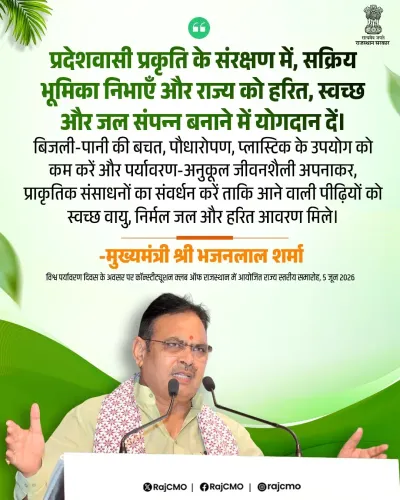
CM Sharma called for making conservation of water, forests and land a people's movement and adopting an environment-friendly lifestyle.
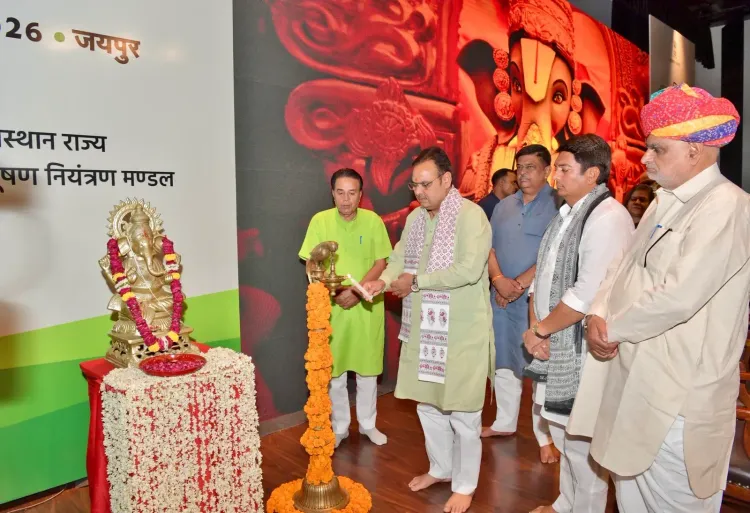
Rajasthan Chief Minister Bhajan Lal Sharma addressed a state-level function at the Constitution Club of Rajasthan on World Environment Day, 5 June 2026, inaugurating a nature-inspired exhibition and launching a new air quality early warning and decision support system for Alwar district. The event marked a dual push by the state government on both environmental awareness and technology-led pollution management.
Context
Posting in Hindi on X, CM Sharma said he addressed the state-level programme and inaugurated and observed a 'nature-inspired exhibition' (प्रकृति से प्रेरित प्रदर्शनी). He announced the launch of an 'Air Quality Early Warning and Decision Support System for Alwar' (वायु गुणवत्ता पूर्व चेतावनी एवं निर्णय सहायता प्रणाली), describing it as a system that 'will play an important role in monitoring, forecasting and effective management of air pollution.'
Alwar, a rapidly industrialising district in eastern Rajasthan, has faced growing urban and industrial pollution pressures, making it a priority candidate for air quality infrastructure under national clean air frameworks.
Policy Backdrop
The new system aligns with the National Clean Air Programme (NCAP), launched in 2019, which provides the framework for city-level air quality early warning systems across India. Rajasthan's State Action Plan on Climate Change, updated in 2023, had specifically prioritised air quality monitoring and afforestation targets as twin pillars of the state's climate response.
CM Sharma also highlighted three ongoing state campaigns: the Harialo Rajasthan Abhiyan for afforestation and green cover expansion; the Vande Ganga Jal Sanrakshan Jan Abhiyan for water body conservation and river rejuvenation; and 'Ek Ped Maa Ke Naam', the national tree plantation drive launched by Prime Minister Narendra Modi on 5 June 2024 that encourages citizens to plant trees in honour of their mothers. Together, he said, these initiatives reflect the government's resolve to realise a 'Green Rajasthan' (हरित राजस्थान).
Stakeholders and Impact
Residents of Alwar stand to benefit most immediately from the early warning system, which is designed to give advance notice of deteriorating air quality and support administrative decisions on pollution control measures. Environmental groups and urban local bodies in the district are expected to be key operational partners.
Across Rajasthan, the three jan abhiyans — people's movements — are framed around community participation, targeting citizens, panchayats and civil society organisations as active contributors rather than passive recipients of environmental policy. The CM called on citizens to 'take a pledge to fulfil our responsibilities towards nature and make the conservation of water, forests and land (जल, जंगल एवं जमीन) a people's movement while adopting an environment-friendly lifestyle.'
What's Next
The operational rollout and data accuracy of the Alwar air quality system will be closely watched as a potential model for other pollution-stressed districts in Rajasthan. Annual plantation figures under Harialo Rajasthan and Ek Ped Maa Ke Naam are expected to feature in the 2026-27 state budget review as measurable indicators of the green cover push.
India's broader climate commitments — including a target of 33 per cent tree cover and net-zero emissions by 2070 under its updated Nationally Determined Contributions — give added weight to whether state-level campaigns translate into verifiable, on-ground gains in the months ahead.
Point of View
Which has lagged behind northern neighbours in deploying real-time pollution decision-support infrastructure. By anchoring the announcement on World Environment Day and pairing it with jan abhiyan rhetoric, CM Sharma is signalling a dual strategy: technology for measurable outcomes and mass campaigns for political optics ahead of future electoral cycles. The convergence with PM Modi's 'Ek Ped Maa Ke Naam' initiative also reinforces the BJP's pattern of aligning state environmental action with central branding. Whether the Alwar system delivers consistent, publicly accessible data will determine if this is a genuine governance upgrade or a ceremonial launch.
NationPress
19 Sept 2026
Frequently Asked Questions
What is the air quality early warning system launched for Alwar?
It is an Air Quality Early Warning and Decision Support System launched by Rajasthan CM Bhajan Lal Sharma on 5 June 2026 to monitor, forecast and help manage air pollution in Alwar district.
What is the Harialo Rajasthan Abhiyan?
Harialo Rajasthan Abhiyan is a statewide Rajasthan government campaign promoting afforestation, green cover expansion and public participation in environmental conservation.
What is 'Ek Ped Maa Ke Naam' and who launched it?
Ek Ped Maa Ke Naam is a national tree plantation initiative launched by Prime Minister Narendra Modi on 5 June 2024 , encouraging citizens to plant trees in honour of their mothers.
Why was Alwar chosen for the new air quality system in Rajasthan?
Alwar is a rapidly industrialising district in eastern Rajasthan with significant urban and industrial pollution pressures, making it a priority location for air quality monitoring infrastructure.
What is the Vande Ganga Jal Sanrakshan Jan Abhiyan?
It is a Rajasthan public campaign for water body conservation and river rejuvenation, relying on community involvement to protect and restore water resources across the state.