CM Bhajanlal Calls Rajasthan Residents to Lead on Environment
Synopsis
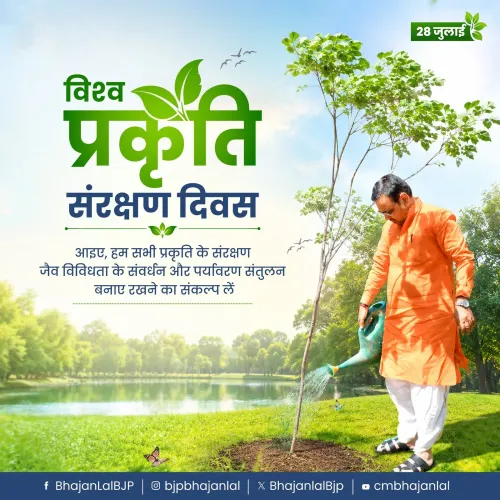
On World Environment Day 2026, the Rajasthan Chief Minister's Office urged all state residents to actively participate in nature conservation and help build a greener, cleaner, and water-sufficient Rajasthan, reflecting the state's ongoing push against desertification and water stress.
Key Takeaways
The Rajasthan CMO issued a World Environment Day message on June 5, 2026 calling for active public participation in nature conservation.
Chief Minister Bhajan Lal Sharma was tagged directly in the appeal, framing it as a government-level call to action.
Rajasthan , India's largest state, faces severe arid conditions, water scarcity, and desertification pressures.
The Mukhya Mantri Jal Swavalamban Abhiyan , launched in 2016 , is a key state scheme for community-driven water conservation and groundwater recharge.
The state's State Action Plan on Climate Change (first adopted 2010 ) aligns Rajasthan's environment strategy with national and international climate frameworks.
The post's hashtag #आपणो_अग्रणी_राजस्थान ('Our Leading Rajasthan') signals the government's broader branding of the state as a development and environment front-runner.
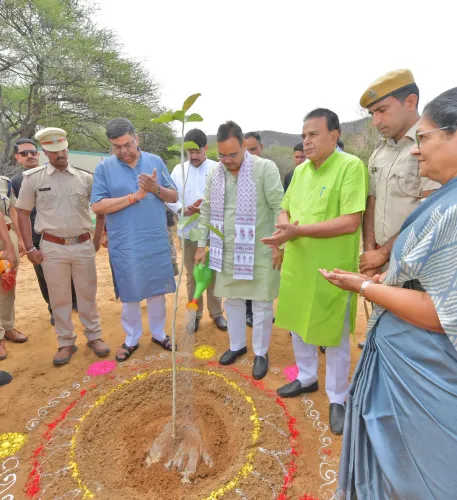
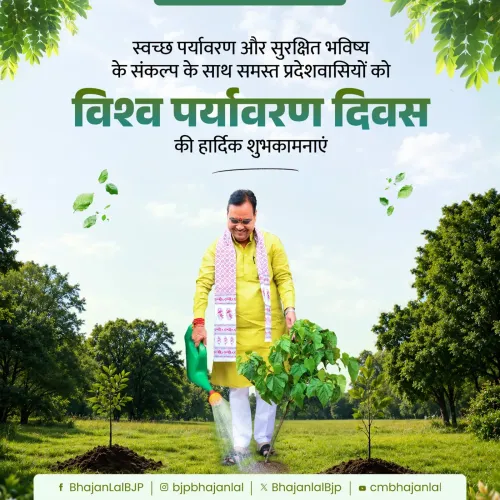
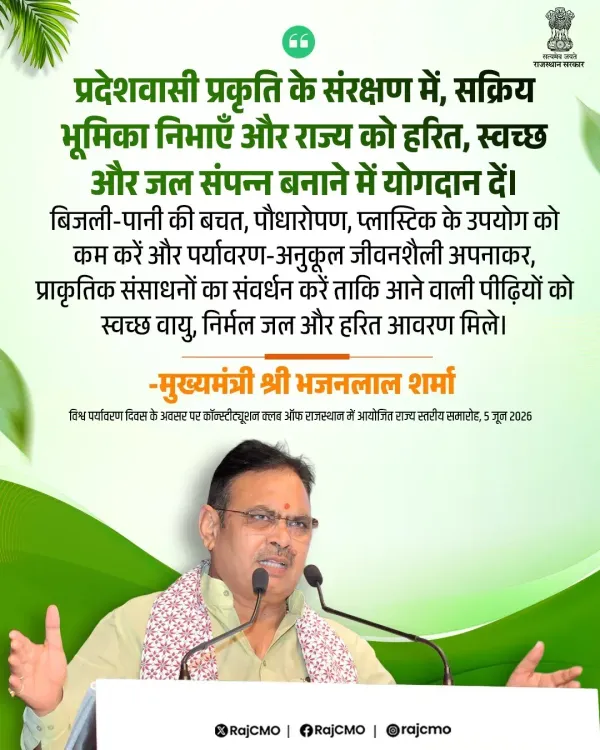
The Chief Minister's Office of Rajasthan, on behalf of Chief Minister Bhajan Lal Sharma, on Saturday, June 5, 2026, called upon the people of the state to actively participate in nature conservation and contribute to making Rajasthan greener, cleaner, and water-sufficient, marking World Environment Day.
Context
The post, shared under the hashtag #आपणो_अग्रणी_राजस्थान ('Our Leading Rajasthan'), urges residents: 'Play an active role in the conservation of nature and contribute to making the state green, clean, and water-rich.' The message was issued on World Environment Day, observed globally on June 5 each year under United Nations auspices to promote awareness and action on environmental protection and sustainability.
Policy Backdrop
Rajasthan is India's largest state by area and faces persistent challenges of arid conditions, water scarcity, and desertification. These pressures have shaped successive state governments' environmental policy for decades. The Mukhya Mantri Jal Swavalamban Abhiyan, launched in 2016, remains a flagship scheme promoting community-driven water conservation, groundwater recharge, and watershed management across rural areas of the state.
Rajasthan adopted its State Action Plan on Climate Change in 2010, later updated to align with India's National Action Plan on Climate Change, targeting adaptation strategies suited to arid zones. The state has also pursued solar power expansion and urban cleanliness drives as part of its broader environmental agenda, complementing national missions such as Swachh Bharat.
Stakeholders and Impact
The appeal is directed at all residents of Rajasthan, with particular relevance to rural communities that depend on groundwater and seasonal water bodies for agriculture and daily use. Community participation in afforestation and water conservation has historically been central to the state's approach, with programmes relying on local involvement for watershed work and tree-planting drives.
The three-pronged call — green, clean, and water-rich — reflects the state's simultaneous focus on increasing forest and green cover, managing solid waste and pollution, and addressing chronic water stress in districts across the state's arid and semi-arid zones.
What's Next
Environmental advocates and policy observers will watch whether World Environment Day 2026 messaging from the Chief Minister's Office is followed by concrete district-level action plans or new targets for afforestation and water body rejuvenation in the coming state budget cycle. Progress on existing schemes such as the Mukhya Mantri Jal Swavalamban Abhiyan will be a key indicator of how the state translates its stated commitments into measurable outcomes. Rajasthan's sub-national environmental actions are increasingly viewed as part of India's broader alignment with sustainable development goals and international climate agreements.
Point of View
The BJP government signals continuity with its development-and-environment framing ahead of potential policy announcements in the next budget cycle. The three-pillar ask — green, clean, water-rich — maps neatly onto existing flagship schemes, suggesting the message is as much about reinforcing institutional identity as it is about fresh environmental ambition. For a state chronically vulnerable to climate stress, translating such messaging into verifiable targets will be the real test of political will.
NationPress
21 Oct 2026
Frequently Asked Questions
What did the Rajasthan CM say on World Environment Day 2026?
The Chief Minister's Office of Rajasthan, on behalf of CM Bhajan Lal Sharma, urged all state residents to actively participate in nature conservation and contribute to making Rajasthan greener, cleaner, and water-rich on World Environment Day, June 5, 2026.
What is the Mukhya Mantri Jal Swavalamban Abhiyan?
The Mukhya Mantri Jal Swavalamban Abhiyan is a Rajasthan government scheme launched in 2016 that promotes community-driven water conservation, groundwater recharge, and watershed management in rural areas of the state.
Why is World Environment Day significant for Rajasthan?
Rajasthan is India's largest state and faces severe arid conditions, water scarcity, and desertification, making environmental conservation especially critical. The state has pursued afforestation, solar power, and water conservation programmes aligned with national and international climate goals.
Who is Bhajan Lal Sharma?
Bhajan Lal Sharma has served as Chief Minister of Rajasthan since December 2023, leading the BJP government in the state with a focus on governance and development priorities including environmental sustainability.
What does #AapnoAgraniRajasthan mean?
The hashtag #आपणो_अग्रणी_राजस्थान translates from Rajasthani and Hindi as 'Our Leading Rajasthan,' used by the state government to brand Rajasthan as a front-runner in development and governance initiatives.