CM Bhajanlal launches Haritalo Rajasthan drive on World Environment Day
Synopsis
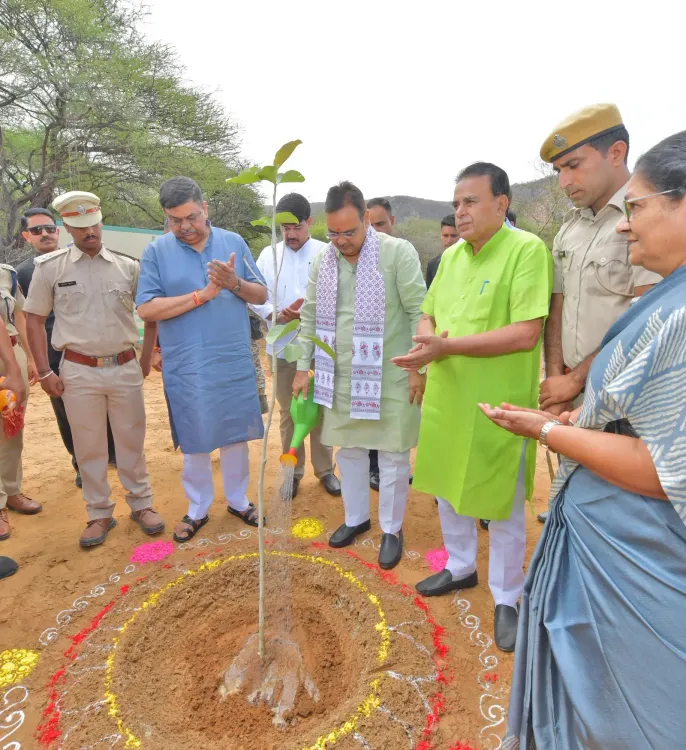
Chief Minister Bhajanlal Sharma launched the Haritalo Rajasthan and Ek Ped Maa Ke Naam campaigns on World Environment Day 2026, planting a banyan sapling at Jhalana's World Forestry Tree Garden in Jaipur. He urged citizens to join mass plantation drives during the monsoon season to improve Rajasthan's green cover.
Key Takeaways
CM Bhajanlal Sharma launched Haritalo Rajasthan and Ek Ped Maa Ke Naam campaigns on 5 June 2026 , World Environment Day.
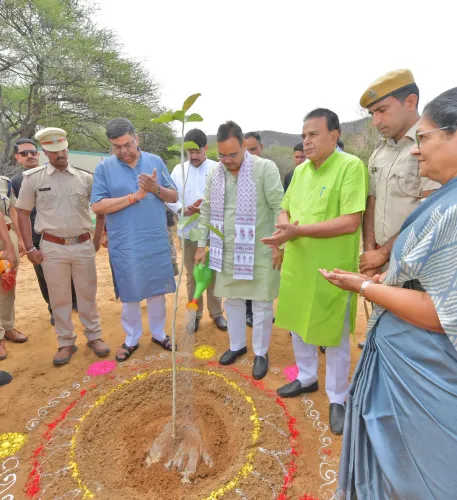
The launch took place at the World Forestry Tree Garden, Jhalana, Jaipur , where the CM planted a banyan sapling.
Citizens were urged to plant trees during the monsoon season and participate in Mission Haritalo Rajasthan .
The Vande Ganga Jal Sanrakshan Jan Abhiyan was cited as a parallel state effort linking water conservation with environmental protection.
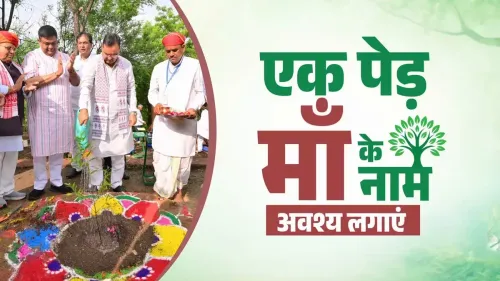
Ek Ped Maa Ke Naam is a national campaign originally launched by PM Narendra Modi in June 2024 , now adopted by Rajasthan.
Rajasthan's arid landscape makes afforestation campaigns a recurring and critical policy priority for the state government.
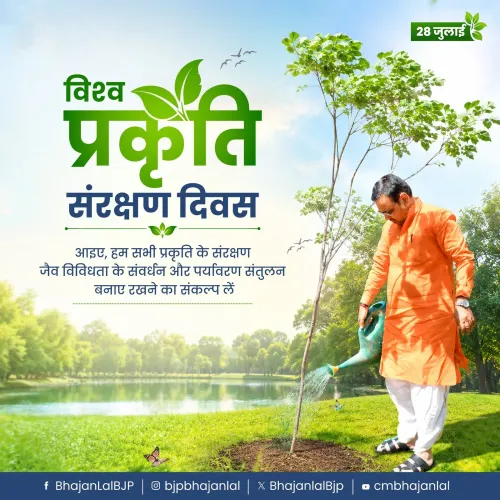
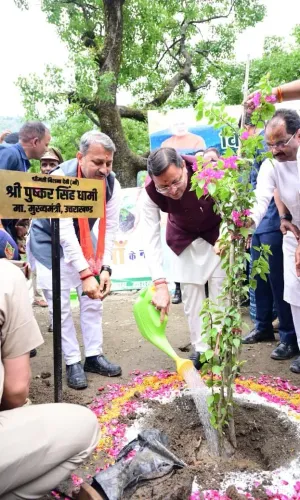
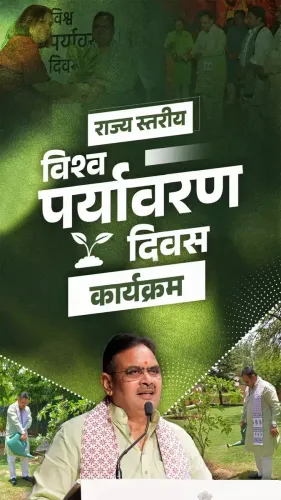
Chief Minister Bhajanlal Sharma on Friday, 5 June 2026 inaugurated the 'Haritalo Rajasthan' and 'Ek Ped Maa Ke Naam' campaigns by planting a banyan sapling at the World Forestry Tree Garden in Jhalana, Jaipur, marking World Environment Day. He appealed to citizens across the state to plant as many trees as possible during the upcoming monsoon season and join the mission to make Rajasthan a greener state.
Context
Speaking at the Jhalana World Forestry Tree Garden, CM Sharma underscored the significance of the occasion, saying — translated from Hindi — 'Hum sabhi ko Rajasthan ko paryavaran ki drishti se shreshtha banana hai' ('We must all make Rajasthan the best from an environmental standpoint'). He extended World Environment Day greetings to the public and called for broad-based participation in plantation activities during the monsoon season. The event was marked by the symbolic planting of a banyan tree, a species long associated with ecological resilience in the Indian subcontinent.
Policy Backdrop
The 'Ek Ped Maa Ke Naam' campaign was originally launched nationally by Prime Minister Narendra Modi on World Environment Day in June 2024, encouraging every citizen to plant a tree in their mother's honour. Rajasthan's adoption of the campaign aligns the state's conservation agenda with the central government's afforestation push. The state has also been running the 'Vande Ganga Jal Sanrakshan Jan Abhiyan' — a public campaign that links water conservation with river rejuvenation — as part of a broader environmental protection effort, which CM Sharma cited alongside the plantation drives.
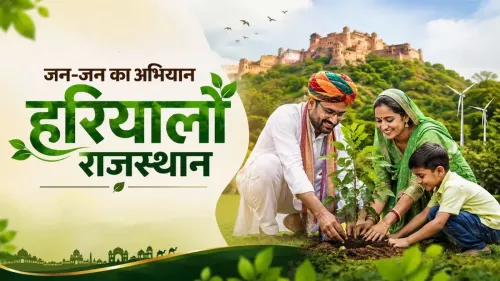
Haritalo Rajasthan is the state's flagship campaign to expand green cover through mass tree plantation and community involvement. Rajasthan, with its predominantly arid and semi-arid landscape, has historically grappled with low forest cover, making such campaigns a recurring policy priority across successive governments. The approach of tying state-level drives to national observances and central schemes has been a consistent feature of Rajasthan's environmental policy.
Stakeholders and Impact
The campaigns are aimed at residents across Rajasthan, particularly communities in rural and peri-urban areas who can participate in monsoon-season plantation activities. Jhalana, located on the outskirts of Jaipur, is a forested zone that also serves as a leopard conservation area, making it a symbolically significant venue for the launch. The choice of a banyan sapling — a long-lived, wide-canopied species — signals the administration's intent to focus on ecologically durable plantation rather than ornamental drives.
Environmental groups and local communities are the primary stakeholders, with the government seeking to mobilise public participation as the monsoon season approaches. The linkage between afforestation and water conservation through the Vande Ganga campaign suggests an integrated approach to addressing both green cover and water scarcity in the state.
What's Next
The administration is expected to roll out plantation targets and mobilisation drives at the district level ahead of the monsoon season, when soil conditions are most conducive to sapling survival. The success of Haritalo Rajasthan will ultimately be measured by sapling survival rates and the scale of community participation recorded through the campaign period. With both state and central campaign frameworks now aligned, the coming months will test whether the symbolic launch translates into measurable gains in Rajasthan's forest and green cover.
Point of View
Even as questions about sapling survival rates and long-term follow-through remain the real test. The bundling of afforestation with water conservation under the Vande Ganga campaign suggests an attempt at integrated environmental governance rather than isolated event-driven action.
NationPress
20 Sept 2026
Frequently Asked Questions
What is Haritalo Rajasthan?
Haritalo Rajasthan is a state government campaign to expand Rajasthan's green cover through mass tree plantation and public participation, with a focus on mobilising citizens especially during the monsoon season.
What is the Ek Ped Maa Ke Naam campaign?
Ek Ped Maa Ke Naam ('One Tree in Mother's Name') is a national tree plantation drive launched by Prime Minister Narendra Modi in June 2024 , encouraging every citizen to plant a tree as a tribute to their mother. Rajasthan formally adopted the campaign under CM Bhajanlal Sharma .
Where did CM Bhajanlal Sharma launch the Haritalo Rajasthan campaign?
The campaign was launched at the World Forestry Tree Garden in Jhalana, Jaipur , where CM Bhajanlal Sharma planted a banyan sapling on World Environment Day, 5 June 2026 .
What is the Vande Ganga Jal Sanrakshan Jan Abhiyan?
The Vande Ganga Jal Sanrakshan Jan Abhiyan is a Rajasthan government public campaign that links water conservation with river rejuvenation efforts, running alongside the state's afforestation initiatives as part of a broader environmental protection agenda.
Why is tree plantation important for Rajasthan?
Rajasthan is predominantly arid and semi-arid, with historically low forest cover. Tree plantation campaigns are a critical policy priority to improve green cover, combat desertification, and support water conservation in the state.