Chirag Paswan Marks International Children's Day
Synopsis
Union Minister Chirag Paswan marked International Child Protection Day on 1 June 2026, calling on citizens to commit to children's holistic development and rights. The message comes against the backdrop of India's extensive child-protection framework, including POCSO, the Juvenile Justice Act, and the NCPCR.
Key Takeaways
Chirag Paswan , Union Food Processing Minister, posted greetings on International Child Protection Day, 1 June 2026 .
He called for commitment to the 'all-round development' of children and protection of their rights.
India ratified the UN Convention on the Rights of the Child in 1992 , anchoring child welfare in international law.
The NCPCR , set up in 2007 , is India's apex statutory body for monitoring child rights.
Key legislation including POCSO (2012) and the Juvenile Justice Act (2015) forms the backbone of India's child-protection framework.
Child nutrition standards linked to food-processing policy remain a potential area of cross-portfolio action.
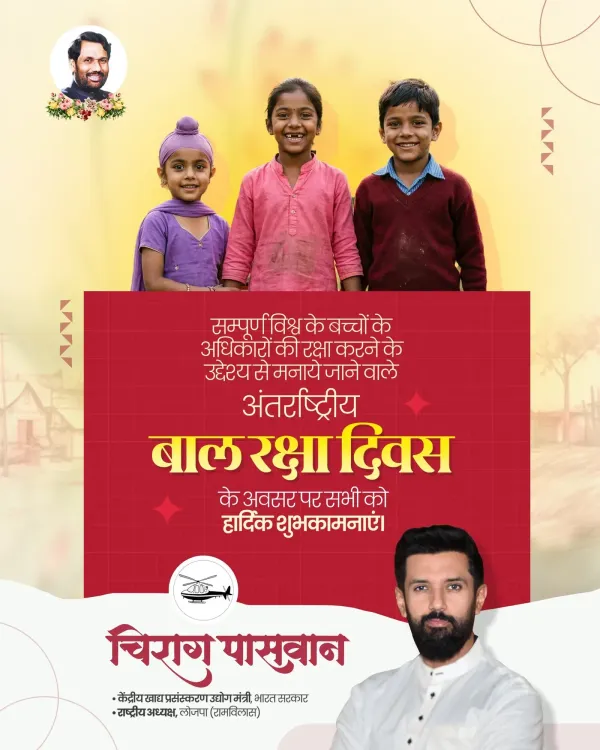
Union Food Processing Minister Chirag Paswan extended greetings on International Child Protection Day on Monday, 1 June 2026, calling on citizens to commit to the holistic development and protection of children's rights.
Context
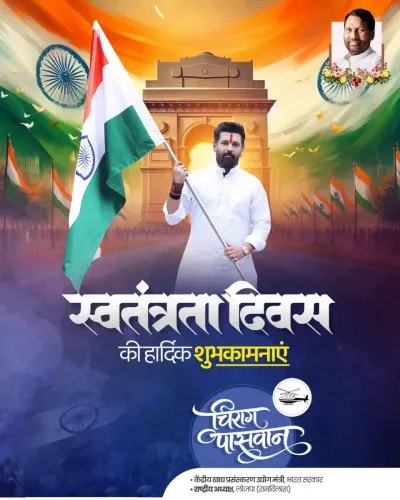
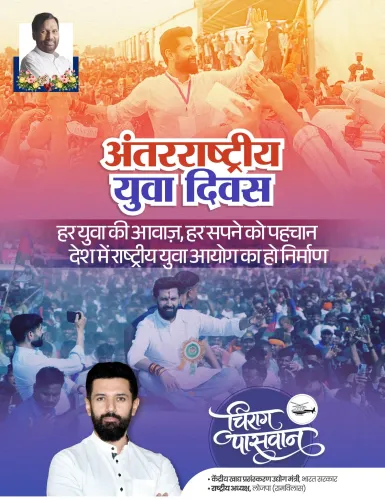
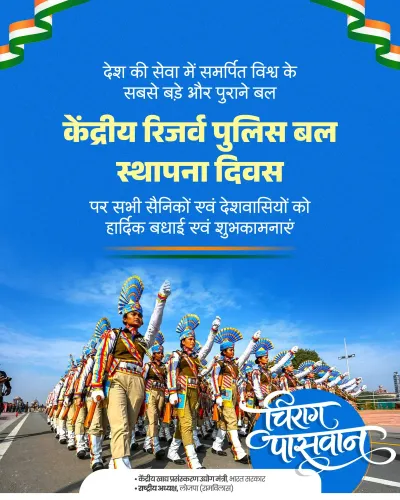
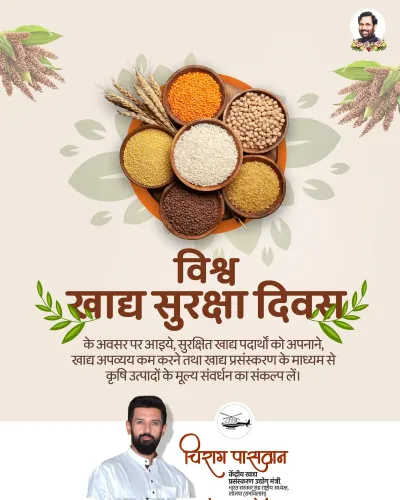
Posting in Hindi on 1 June, Chirag Paswan wrote: 'अंतरराष्ट्रीय बाल रक्षा दिवस की हार्दिक शुभकामनाएं!' ('Heartfelt greetings on International Child Protection Day!'). He urged people to resolve to work toward the all-round development of children and the protection and promotion of their rights. The post was accompanied by an image and was published from his personal handle.
1 June is observed in several countries as a day dedicated to child welfare and the protection of children's fundamental rights. India ratified the UN Convention on the Rights of the Child in 1992, committing to children's rights across four pillars: survival, development, protection, and participation.
Policy Backdrop
India has built a layered legislative and institutional framework for child protection over the past three decades. Key milestones include the Protection of Children from Sexual Offences (POCSO) Act, 2012 and the Juvenile Justice Act, 2015, which together form the backbone of the country's statutory child-protection architecture.
The National Commission for Protection of Child Rights (NCPCR), established in 2007 under the Commissions for Protection of Child Rights Act, serves as the apex statutory body mandated to monitor and enforce child rights across the country. Successive governments have also linked child welfare to nutrition initiatives, including midday meal programmes and fortified food standards — areas that intersect with the mandate of the Ministry of Food Processing Industries.
Stakeholders and Impact
The message is addressed broadly to citizens and child-rights groups, reinforcing the government's stated commitment to child welfare. As national president of the Lok Janshakti Party (Ram Vilas) and a Union Cabinet minister, Paswan's public communication on such occasions carries both political and institutional weight.
Child-rights organisations and welfare advocates have consistently called for stronger enforcement of existing laws and increased budgetary allocations for nutrition and education programmes. A food-processing minister invoking child-rights messaging also signals the potential linkage between food safety, nutrition standards, and child development outcomes.
What's Next
Attention will turn to whether the government follows symbolic observances with substantive policy action — including the tabling of the NCPCR's annual report and any fresh guidelines on child nutrition standards tied to food-processing regulations. Advocates argue that bridging the gap between legislative intent and ground-level implementation remains the central challenge for India's child-protection ecosystem.
Point of View
But it carries an implicit signal from a food-processing minister whose ministry's remit — nutrition standards, fortified foods, mid-meal supply chains — intersects directly with child welfare outcomes. The statement fits a broader pattern of Cabinet ministers using symbolic occasions to reinforce the government's social-welfare narrative. For Paswan personally, such messaging also serves a dual function: it projects a compassionate public image while keeping the LJP (Ram Vilas) visible on issues that resonate with the party's traditional voter base. The real test will be whether this symbolic commitment translates into concrete policy movement, particularly on child nutrition standards and NCPCR recommendations.
NationPress
16 Oct 2026
Frequently Asked Questions
What is International Child Protection Day?
International Child Protection Day, observed on 1 June, is dedicated to raising awareness about child welfare and the protection of children's rights globally. India ratified the UN Convention on the Rights of the Child in 1992, committing to children's survival, development, protection, and participation rights.
What did Chirag Paswan say on Children's Day 2026?
Chirag Paswan extended greetings on International Child Protection Day on 1 June 2026 and urged citizens to commit to the holistic development of children and the protection and promotion of their rights.
What is the NCPCR and what does it do?
The National Commission for Protection of Child Rights (NCPCR) is a statutory body established in 2007 under the Commissions for Protection of Child Rights Act. It monitors and enforces child rights across India and reports annually to Parliament.
What are India's key child protection laws?
India's main child-protection laws include the Protection of Children from Sexual Offences (POCSO) Act, 2012, and the Juvenile Justice Act, 2015. Together they form the core of the country's statutory framework for safeguarding children.
How does the Food Processing Ministry relate to child welfare?
The Ministry of Food Processing Industries sets standards for food safety, fortified foods, and nutrition — areas that directly affect child health and development. Nutrition programmes such as midday meals depend partly on supply-chain and quality frameworks that the ministry oversees.