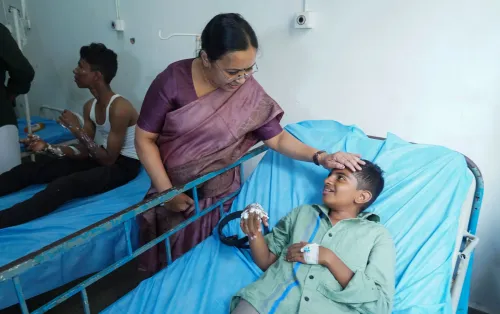
Kerala district hospitals to offer 24-hour specialist care in 6 months
Synopsis
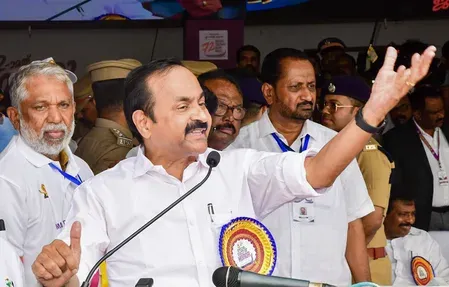
Kerala's new Congress government is attempting something ambitious: breaking the stranglehold of medical colleges on specialist care by making round-the-clock specialist services a reality at district hospitals within six months. With a special officer appointed and privatisation explicitly ruled out, Health Minister K. Muraleedharan is betting on a strengthened public system — not private capital — to deliver the shift.
Key Takeaways
Kerala 's Congress government has announced 24-hour specialist services at district and general hospitals across the state.
The first phase targets at least one hospital per district , with implementation due within six months .
Services will cover medicine, surgery, orthopaedics, paediatrics, and gynaecology , including night-time emergency procedures.
Shinu , Additional Director in the Health Department, has been appointed special officer to oversee the rollout.
Muraleedharan has ruled out privatisation of government hospitals, committing to a public-system-first approach.
The initiative aims to reduce patient dependence on overburdened medical colleges by decentralising specialist care.
Kerala's Congress-led government has announced a significant overhaul of public healthcare delivery, with Health Minister K. Muraleedharan directing that district and general hospitals across the state provide round-the-clock specialist services. The first phase will cover at least one hospital in every district, with implementation targeted within six months.
What the Initiative Covers
The 24-hour specialist services will span five core disciplines: medicine, surgery, orthopaedics, paediatrics, and gynaecology. Crucially, the plan extends to emergency procedures and surgeries during night hours — a gap that has long pushed patients toward overburdened medical colleges. Infrastructure at participating hospitals will be upgraded to sustain round-the-clock operations.
Why It Marks a Departure
Under the existing system, medical colleges have effectively become the default destination for anyone needing specialist care, particularly in emergencies. By anchoring specialist services at the district and general hospital level, the government aims to make expert treatment accessible closer to where patients live, while simultaneously relieving pressure on medical colleges. Muraleedharan has framed treatment, medicines, and hospital beds as basic patient rights — a patient-centric framing that signals a broader philosophical shift in how the Health Department is being run.
Who Is Overseeing the Rollout
A dedicated special officer, K.S. Shinu, Additional Director in the Health Department's Administration and Training wing, has been appointed to lead implementation. Shinu's team will audit existing infrastructure, map the availability of doctors, nurses, and paramedical staff, and deploy personnel where gaps are identified. Hospitals that fall short of the required infrastructure will be upgraded before the service goes live.
Government's Stance on Privatisation
Muraleedharan has explicitly ruled out privatisation of government hospitals, signalling that the administration intends to strengthen the public system rather than rely on private partnerships. This comes amid broader debates across Indian states on the role of private capital in public health infrastructure.
The Road Ahead
The real test, as observers note, lies in execution. Staffing shortfalls, uneven infrastructure across districts, and the logistical demands of sustaining night-time surgical capacity are non-trivial challenges. If the initiative delivers on its six-month target, it could position Kerala as a model for district-level specialist care within India's public health system — shifting the state's healthcare architecture away from its long-standing medical-college-centric model.
Point of View
But the bottleneck has never been political will; it has been staffing. Specialist doctors willing to work night shifts at district hospitals, outside the prestige ecosystem of medical colleges, are scarce. The appointment of a special officer to map personnel availability is the right first step, but the six-month timeline is aggressive. If the government can demonstrate even three or four fully functional 24-hour district hospitals by that deadline, it will have created genuine proof of concept. If it cannot, this risks becoming another well-intentioned announcement that the public health system absorbed without changing.
NationPress
23 Aug 2026
Frequently Asked Questions
What has the Kerala government announced for district hospitals?
The Kerala government has announced that district and general hospitals will provide specialist services round the clock, covering medicine, surgery, orthopaedics, paediatrics, and gynaecology. The first phase will include at least one hospital per district, with a six-month implementation target.
Who is overseeing the 24-hour specialist services rollout in Kerala?
K.S. Shinu, Additional Director in the Health Department's Administration and Training wing, has been appointed as special officer to oversee the project. His team will assess infrastructure, map staffing availability, and deploy personnel as needed.
Why is Kerala making this change to its public healthcare system?
Medical colleges in Kerala have become the default destination for patients needing specialist care, leading to overcrowding and reduced accessibility for those living far from these institutions. The initiative aims to decentralise specialist services to district hospitals, making expert care more accessible and easing pressure on medical colleges.
Has the Kerala government ruled out private involvement in hospitals?
Yes. Health Minister K. Muraleedharan has explicitly ruled out privatisation of government hospitals, stating that strengthening the public healthcare system remains the central priority of his approach.
Which specialities will be available under the new 24-hour scheme?
The scheme covers five specialities — medicine, surgery, orthopaedics, paediatrics, and gynaecology — and will include the capacity to handle emergency procedures and surgeries during night hours.