Karnataka CM Shivakumar urges medical graduates to serve rural areas
Synopsis
At RGUHS's 28th convocation, Karnataka CM D.K. Shivakumar made a pointed appeal: the state that produces 72,000 healthcare graduates a year and runs more medical colleges than any other in India must stop funnelling its doctors exclusively into cities. The rural healthcare gap, he argued, is also a migration problem — and newly minted doctors hold the answer.
Key Takeaways
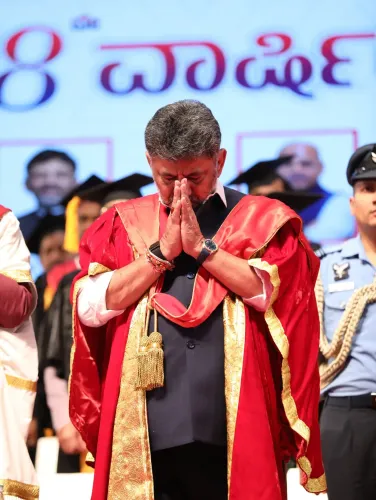
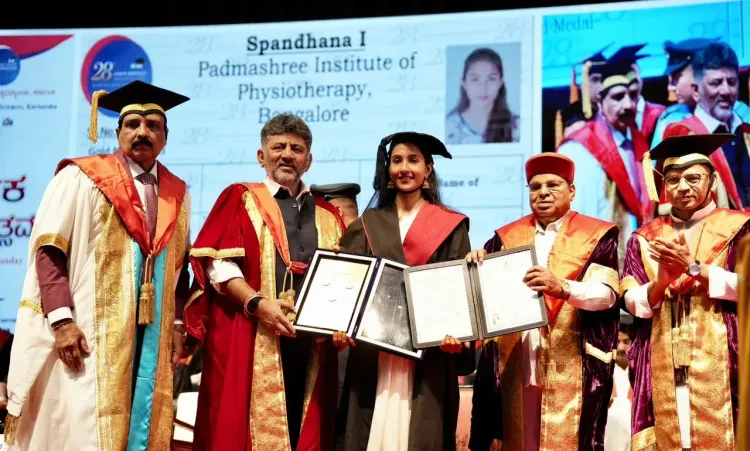
Shivakumar addressed the 28th Annual Convocation of RGUHS on 16 June at the GKVK campus, Bengaluru .
He urged graduates to serve rural and smaller towns to curb patient migration to cities.
Karnataka produces approximately 72,000 healthcare graduates annually, including 13,940 doctors .
The state has 72 medical colleges — more than any other state in India — and RGUHS has 1,044 affiliated colleges .
RGUHS has produced nearly eight lakh graduates over the past three decades.
Shivakumar shared that he earned his own degree from the University of Mysore in 2008 at age 47 .
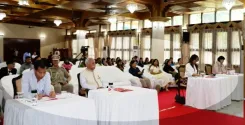
Karnataka Chief Minister D.K. Shivakumar on Tuesday, 16 June called on newly graduated medical professionals to extend their services beyond urban centres, stressing that equitable healthcare access is critical to reducing the migration of patients from villages to cities. He was speaking at the 28th Annual Convocation of the Rajiv Gandhi University of Health Sciences (RGUHS) held at the GKVK campus in Bengaluru.
Key Appeal to Graduates
'India is at a turning point in social and technological transformation. Medical education and healthcare have witnessed remarkable advancements. However, healthcare services must also reach rural areas. By serving villages and smaller towns, you can help reduce the migration of people to cities in search of medical treatment,' Shivakumar said.
The Chief Minister described doctors as 'visible gods,' urging graduates to honour the trust that society places in them, particularly during moments of vulnerability. He emphasised that dedicated service — not just clinical skill — defines the medical profession.
Karnataka's Standing in Global Healthcare
Shivakumar highlighted that Karnataka produces approximately 72,000 healthcare graduates annually, including 13,940 doctors, making it one of the largest contributors to the global healthcare workforce. The state has 72 medical colleges — more than any other state in India — and its professionals are employed at some of the world's most prestigious hospitals.
'There is no match for the quality of medical education and healthcare professionals produced here. The talent, commitment, service and professional standards of doctors trained in Karnataka are recognised globally,' he said.
RGUHS: Scale and Legacy
RGUHS is among the largest health sciences universities in India, with 1,044 affiliated colleges and lakhs of students enrolled. Over the past three decades, the university has produced nearly eight lakh graduates. Shivakumar recalled the vision of former Prime Minister Rajiv Gandhi, after whom the institution is named, describing education as 'a powerful tool for creating social equality.'
Shivakumar also praised Medical Education Minister Sharan Prakash Patil for bringing what he described as an unprecedented level of discipline and commitment to the sector, and reiterated the state government's commitment to supporting the university's growth.
A Personal Note from the Chief Minister
In a candid aside, Shivakumar shared that he could not complete his own degree during his youth after entering politics as a student. He eventually graduated from the University of Mysore in 2008 at the age of 47. 'I had served as a minister earlier, but the joy of receiving my degree was unmatched,' he said.
He also noted that Bengaluru is home to around 26 lakh IT professionals, reinforcing Karnataka's identity as a hub of both technological and healthcare talent. With rural healthcare still an underserved frontier, the state's record graduate output will face its real test in whether those professionals choose to serve beyond city limits.
Point of View
But Karnataka's rural healthcare deficit is structural — not motivational. With 72 medical colleges producing nearly 14,000 doctors a year, the state has supply; what it lacks is incentive architecture to keep those graduates outside Bengaluru and Mysuru. A convocation speech, however sincere, cannot substitute for rural posting mandates, differential pay, or career-pathway guarantees. The real question is whether the Karnataka government will follow this rhetoric with policy — and whether RGUHS's record graduate output will translate into measurable rural health outcomes or simply swell the diaspora rolls that Shivakumar himself celebrated.
NationPress
16 Sept 2026
Frequently Asked Questions
What did Karnataka CM D.K. Shivakumar say at the RGUHS convocation?
Chief Minister D.K. Shivakumar urged newly graduated medical professionals to serve rural and smaller towns rather than concentrating in urban centres, arguing this would reduce patient migration to cities. He addressed the 28th Annual Convocation of RGUHS at the GKVK campus in Bengaluru on 16 June.
How many healthcare graduates does Karnataka produce each year?
Karnataka produces approximately 72,000 healthcare graduates annually, including 13,940 doctors, according to Shivakumar's address. The state has 72 medical colleges — more than any other state in India.
What is the Rajiv Gandhi University of Health Sciences (RGUHS)?
RGUHS is one of the largest health sciences universities in India, with 1,044 affiliated colleges and lakhs of enrolled students. Named after former Prime Minister Rajiv Gandhi, it has produced nearly eight lakh graduates over the past three decades.
Why does Shivakumar want doctors to work in rural areas?
Shivakumar argued that concentrating healthcare services in cities drives rural residents to migrate in search of treatment, straining urban infrastructure. He called equitable healthcare access essential to India's broader social transformation.
What personal story did Shivakumar share at the convocation?
The Chief Minister revealed that he could not complete his degree in his youth after entering politics as a student, and eventually graduated from the University of Mysore in 2008 at the age of 47. He described receiving his degree as a moment of unmatched joy, even after having served as a minister.