CM Shivakumar mourns passing of Dr. Anand Pandurangi
Synopsis
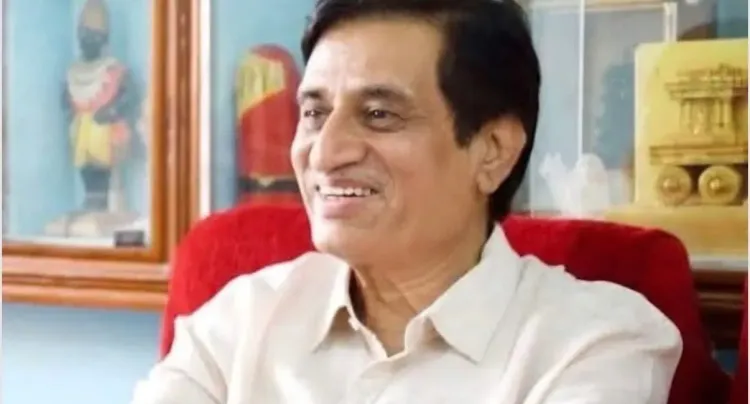
Chief Minister DK Shivakumar and the Karnataka government mourn the passing of Dr. Anand Pandurangi, a Dharwad-based senior psychiatrist, orator, and columnist honoured with both the Karnataka Rajyotsava Award and the national Dr. B.C. Roy Award for decades of service to mental health and youth development.
Key Takeaways
The Chief Minister's Office of Karnataka issued a formal condolence statement on 24 September 2026 on the passing of Dr.
Pandurangi was a senior psychiatrist, public orator, and columnist from Dharwad .
He was a recipient of the Karnataka Rajyotsava Award and the prestigious national Dr.
His public work centred on mental-health awareness and building self-confidence and positive thinking among Karnataka's youth and students.
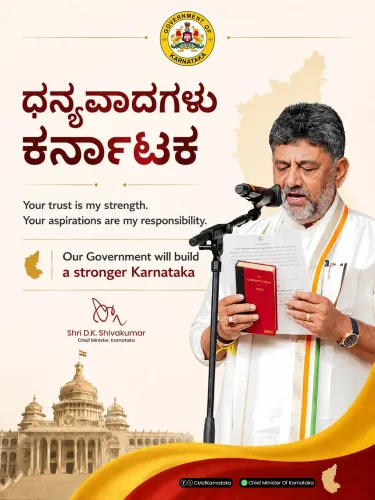
Chief Minister DK Shivakumar signed the tribute, praying for peace for the departed and strength for the bereaved family.
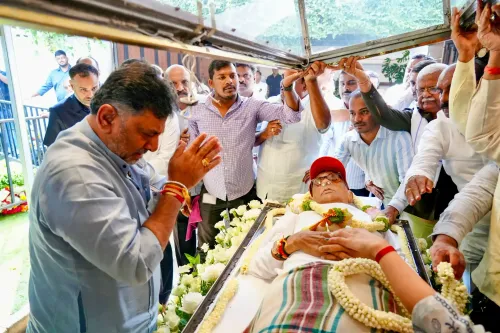
A voice that guided generations of Karnataka's youth toward self-confidence and mental well-being has fallen silent. The Chief Minister's Office of Karnataka on Thursday, 24 September 2026, conveyed the condolences of Chief Minister DK Shivakumar on the passing of Dr. Anand Pandurangi, a celebrated psychiatrist, orator, and columnist from Dharwad.
Expressing deep grief, CM Shivakumar wrote: 'ಅತೀವ ದುಃಖ ತಂದಿದೆ' — 'this news has brought immense sorrow' — and prayed that God grant the departed's family, relatives, and admirers the strength to bear this loss. He signed off with 'ಓಂ ಶಾಂತಿ' — Om Shanti — the traditional invocation of eternal peace.
Decades of service to psychiatry and public awareness
Dr. Pandurangi dedicated decades to the field of psychiatry, going well beyond the clinic. He was a sought-after public speaker who carried conversations about mental health into schools, colleges, and community halls at a time when the subject carried heavy stigma. His columns reached readers who would never have walked into a psychiatrist's office, making him one of the more quietly consequential voices in Karnataka's intellectual life.
His particular focus on youth — nurturing personality development, building self-confidence, and fostering positive thinking among students — gave him an audience and an impact that outlasted any single lecture or publication. For many young Kannadigas, he was the first credible voice telling them that their minds deserved the same care as their bodies.
The Karnataka Rajyotsava Award and the Dr. B.C. Roy recognition
Two honours especially marked the scale of Dr. Pandurangi's recognition. The Karnataka Rajyotsava Award — the state's premier civilian honour, conferred each year on Karnataka Formation Day — acknowledged his distinguished service to the state. The Dr. B.C. Roy Award, instituted by the Medical Council of India and regarded as one of the most prestigious national citations for physicians and medical teachers, placed him in a small company of doctors whose contributions extend beyond treatment into education and public service.
Together, the two awards traced the arc of a career that was simultaneously local in its roots — rooted in Dharwad, a city with a long tradition of intellectual and cultural life — and national in its recognition.
A tradition of formal tribute and what follows
Karnataka governments have a consistent tradition of issuing formal condolences when citizens decorated with state and national awards in medicine or public life pass away. Such tributes do more than mark individual loss; they signal the contours of what the state considers valuable service. Mental-health awareness and youth development, the two pillars of Dr. Pandurangi's public work, have periodically featured in state-level programmes since the early 2000s, and his legacy may yet find a reference point in upcoming health-budget discussions on psychiatric and community-health initiatives.
Karnataka has lost a psychiatrist who understood that healing begins with a conversation — and who spent a lifetime starting those conversations at scale.
Point of View
Not merely a ceremonial occasion. The formal tribute from the Chief Minister's Office underscores how the state frames mental-health advocacy as public service worthy of the same recognition as clinical achievement. At a moment when India's national mental-health frameworks are under renewed policy scrutiny, the death of a doctor who bridged clinic, classroom, and column is a reminder of how much community-level psychiatry depends on individual champions rather than institutional structures. The legacy question now is whether Karnataka translates the tribute into the kind of sustained programme investment that would honour the work rather than simply eulogise it.
NationPress
24 Sept 2026
Frequently Asked Questions
Who was Dr. Anand Pandurangi?
Dr. Anand Pandurangi was a senior psychiatrist, prominent public speaker, and columnist from Dharwad, Karnataka, known for decades of work in mental-health awareness and youth personality development.
What awards did Dr. Anand Pandurangi receive?
He received the Karnataka Rajyotsava Award, the state's top civilian honour, and the Dr. B.C. Roy Award, one of India's most prestigious national recognitions for doctors and medical teachers.
What is the Dr. B.C. Roy Award?
The Dr. B.C. Roy Award is a national honour instituted by the Medical Council of India, given to eminent physicians and medical teachers for outstanding contributions to medicine and public health in India.
Who issued the condolence statement for Dr. Pandurangi?
The condolence was issued by the Chief Minister's Office of Karnataka, signed by Chief Minister DK Shivakumar, on 24 September 2026.
What was Dr. Pandurangi's contribution to youth in Karnataka?
Dr. Pandurangi worked extensively with students and young people to foster personality development, self-confidence, and positive thinking, while also raising public awareness about mental health through speeches and columns.