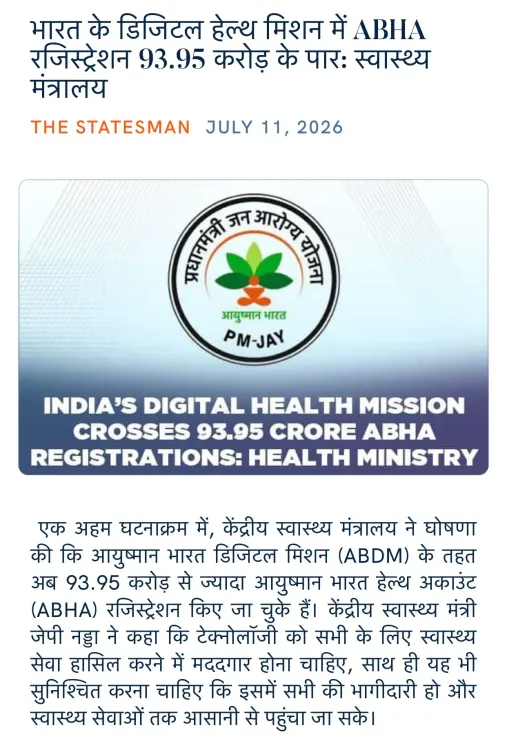
Giriraj Singh flags ABHA registrations crossing 93.95 crore
Synopsis
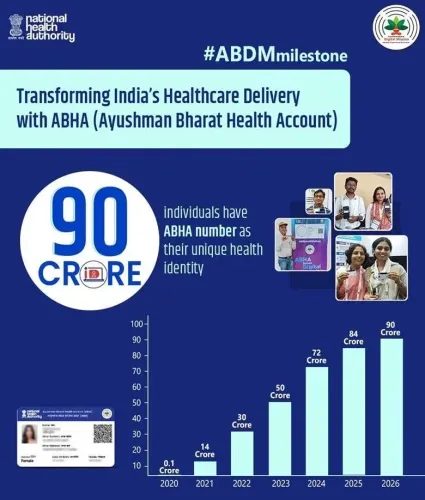
Union Textiles Minister Giriraj Singh on 11 July 2026 amplified a Health Ministry figure showing ABHA registrations under the Ayushman Bharat Digital Mission have surpassed 93.95 crore, underscoring the scale of India's push to build a unified digital health identity for its citizens.
Key Takeaways
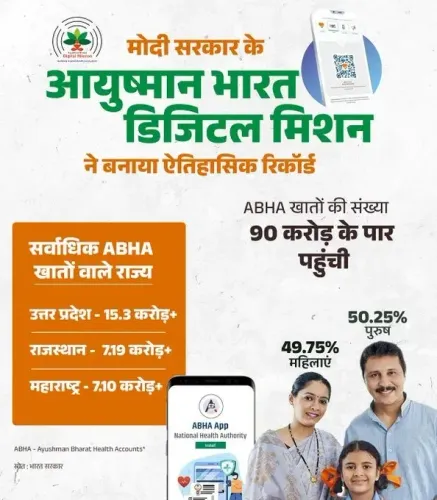
ABHA registrations under the Ayushman Bharat Digital Mission have crossed 93.95 crore , according to the Ministry of Health and Family Welfare .
Union Textiles Minister Giriraj Singh shared the figure on 11 July 2026 via the NaMo App and his X account.
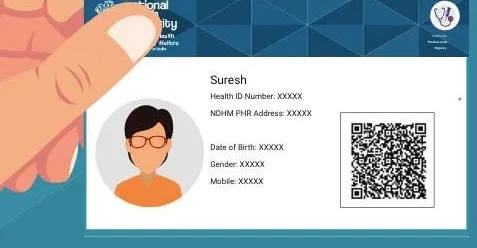
ABHA is a 14-digit unique health identifier designed to enable interoperable, portable health records for Indian citizens.
The mission was launched by PM Narendra Modi on 15 August 2020 as the National Digital Health Mission , later expanded into ABDM .
Integration with PM-JAY and state health systems remains the next critical phase for translating enrolment numbers into active health-record usage.
Union Textiles Minister Giriraj Singh on Saturday, 11 July 2026, shared a milestone from India's digital health drive, highlighting that registrations under the Ayushman Bharat Health Account (ABHA) programme have crossed 93.95 crore, citing data attributed to the Ministry of Health and Family Welfare. The senior BJP leader and Lok Sabha MP from Begusarai, Bihar, shared the update via the NaMo App, amplifying a health ministry statistic to his social media following.
Context
The post, written in Hindi, reads: 'Bharat ke Digital Health Mission mein ABHA registration 93.95 crore ke paar: Swasthya Mantralaya' — translated as 'ABHA registrations in India's Digital Health Mission cross 93.95 crore: Health Ministry.' The figure, if confirmed, would represent one of the largest individual health-ID enrolment counts globally, covering a substantial share of India's population of roughly 140 crore.
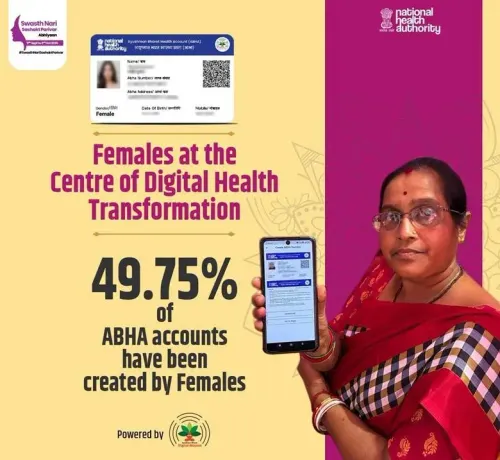
ABHA is a 14-digit unique health identifier that allows citizens to store and share their personal health records digitally. It functions as the citizen-facing identity layer of the Ayushman Bharat Digital Mission (ABDM), enabling interoperability between hospitals, insurers, and government health schemes.
Policy Backdrop
The National Digital Health Mission was launched by Prime Minister Narendra Modi on 15 August 2020 with the stated aim of building a unified digital health infrastructure for the country. It was subsequently expanded into the Ayushman Bharat Digital Mission, bringing together health IDs, health facility registries, and healthcare professional registries under one interoperable framework.
The initiative sits within the broader Digital India programme, launched in 2015, which has progressively extended into sector-specific digital missions — from agriculture to education to health — to improve service delivery at scale. The Ayushman Bharat Pradhan Mantri Jan Arogya Yojana (PM-JAY), rolled out in 2018, is intended to be integrated with ABHA-linked digital records, enabling seamless claims and reducing paperwork for beneficiaries.
The Health Data Management Policy underpins data governance for the mission, setting rules on consent, storage, and sharing of citizens' health information.
Stakeholders and Impact
The primary beneficiaries of ABHA enrolment are Indian citizens, who gain portable health records accessible across public and private healthcare providers. For healthcare providers, digital records reduce duplication of diagnostics and improve continuity of care, particularly for patients moving between states or hospital systems.
Insurers and government schemes such as PM-JAY stand to benefit from reduced fraud and faster claims processing when ABHA is integrated end-to-end with state health systems. Civil society groups tracking health data privacy have, however, called for robust implementation of the consent framework promised under the Health Data Management Policy.
What's Next
The Ministry of Health and Family Welfare is expected to publish quarterly updates on ABHA integration with state-level health management systems and its linkage with PM-JAY beneficiary databases. Parliamentary committees monitoring digital health infrastructure may also take up the milestone figure for scrutiny, particularly regarding the quality and activation rate of registered accounts — a distinction that health policy observers have flagged as separate from raw enrolment numbers.
As India's digital health stack matures, the pace of ABHA integration with frontline facilities — especially in rural and semi-urban areas — will be the more consequential measure of the mission's reach.
Point of View
Regardless of their direct portfolio. A Textiles Minister broadcasting a Health Ministry figure signals a coordinated communications strategy rather than a policy intervention. The 93.95 crore ABHA figure, if verified, would mark a significant quantitative achievement for India's digital health stack, but analysts will watch whether enrolment translates into active record usage and scheme integration — the harder governance test. The milestone also arrives as parliamentary scrutiny of health data governance is expected to intensify.
NationPress
10 Oct 2026
Frequently Asked Questions
What is ABHA and how does it work?
ABHA, or Ayushman Bharat Health Account, is a 14-digit unique health identifier issued to Indian citizens under the Ayushman Bharat Digital Mission. It allows individuals to store, access, and share their health records digitally across hospitals, clinics, and insurance providers in an interoperable system.
How many ABHA registrations have been completed in India?
According to a post shared by Union Textiles Minister Giriraj Singh on 11 July 2026, citing the Ministry of Health and Family Welfare, ABHA registrations have crossed 93.95 crore.
When was the Ayushman Bharat Digital Mission launched?
The National Digital Health Mission — the predecessor to the Ayushman Bharat Digital Mission — was launched by Prime Minister Narendra Modi on 15 August 2020. It was subsequently expanded into the ABDM framework to include health facility and professional registries.
Why did the Textiles Minister post about a health ministry milestone?
Giriraj Singh shared the update via the NaMo App, which is used by government functionaries to amplify flagship scheme achievements. It reflects a coordinated government communications approach where ministers across portfolios promote each other's scheme milestones on social media.
Is ABHA linked to Ayushman Bharat PM-JAY health insurance?
Yes, ABHA is designed to be integrated with the Ayushman Bharat Pradhan Mantri Jan Arogya Yojana (PM-JAY), which was launched in 2018. The integration aims to enable seamless insurance claims and reduce paperwork for beneficiaries by linking their health records to their unique health ID.