Giriraj Singh Hails 90 Crore ABHA Registrations Under ABDM
Synopsis
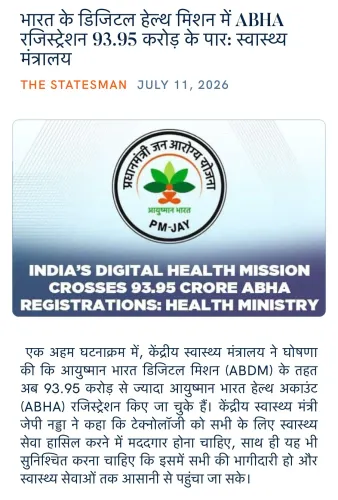
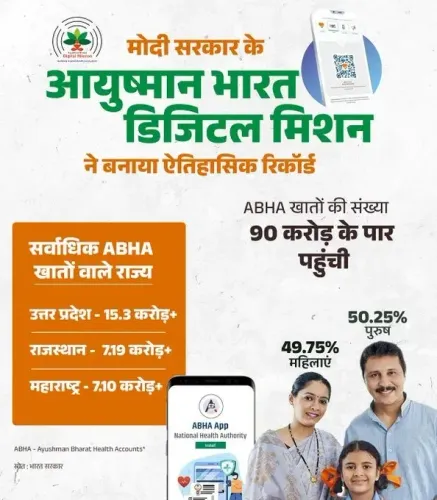
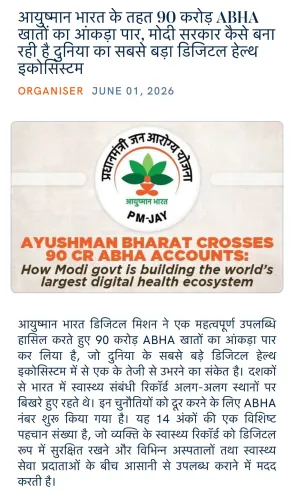
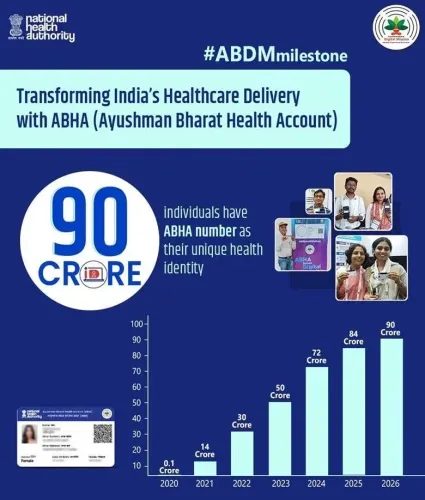
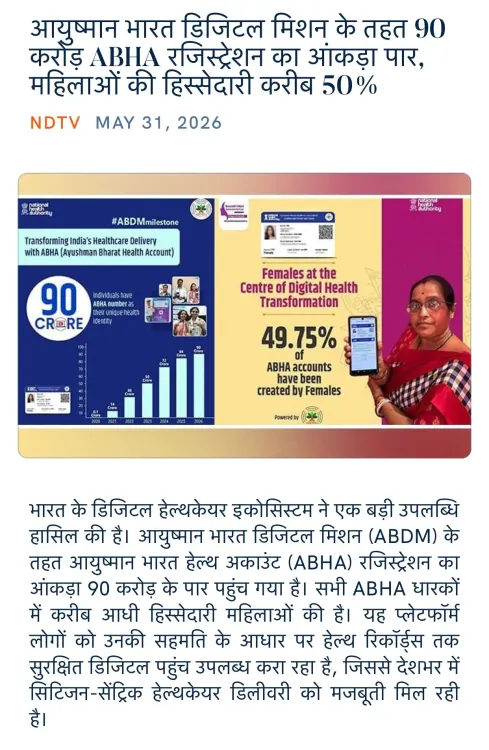
India's Ayushman Bharat Digital Mission has crossed 90 crore ABHA registrations, with women accounting for nearly half of all enrolments. Union Textiles Minister Giriraj Singh shared the milestone via the NaMo App on 31 May 2026, spotlighting the scale and gender inclusivity of the national digital health ID programme.
Key Takeaways
90 crore ABHA registrations have been recorded under the Ayushman Bharat Digital Mission as of May 2026 .
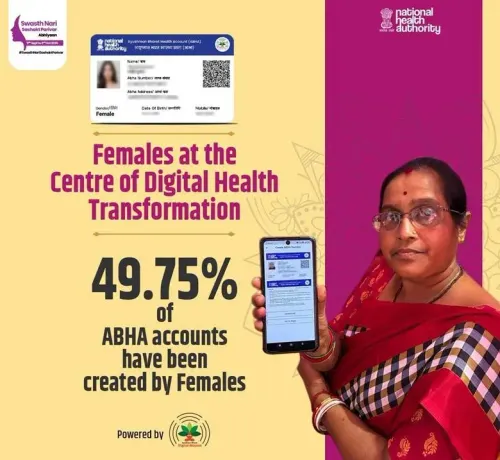
Women account for nearly 50 per cent of all ABHA enrolments, indicating broad gender-inclusive outreach.
ABHA is a 14-digit Aadhaar-linked health identifier enabling portable electronic medical records across providers.
The Ayushman Bharat Digital Mission was formally launched in September 2021 and is implemented by the National Health Authority .
The milestone was amplified by Union Textiles Minister Giriraj Singh via the NaMo App on 31 May 2026 .
Next milestones include deeper integration of ABDM with state health portals and private hospitals .
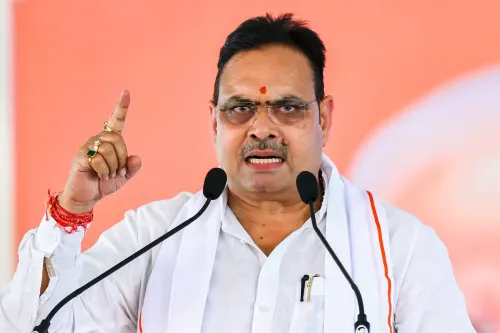
Union Textiles Minister Giriraj Singh on Sunday, 31 May 2026, shared a milestone update on the Ayushman Bharat Digital Mission (ABDM), highlighting that the scheme has crossed 90 crore Ayushman Bharat Health Account (ABHA) registrations, with women accounting for nearly 50 per cent of all enrolments.
Context
The minister's post, shared via the NaMo App, stated: 'Ayushman Bharat Digital Mission ke tahat 90 crore ABHA registration ka aankda paar, mahilaon ki hissedari kareeb 50%' — translating to: 'Under the Ayushman Bharat Digital Mission, the figure of 90 crore ABHA registrations has been crossed, with women's share at nearly 50 per cent.' The update underscores the scale at which India's national digital health infrastructure is expanding, with gender-inclusive enrolment emerging as a headline metric.
Policy Backdrop
The Ayushman Bharat Digital Mission was formally launched in September 2021 to build a unified national digital health ecosystem. At its core is the ABHA — a unique 14-digit health identifier linked to Aadhaar — which allows citizens to store, access, and share electronic medical records across healthcare providers. The mission is implemented by the National Health Authority (NHA), the autonomous body under the Ministry of Health and Family Welfare that also oversees the Pradhan Mantri Jan Arogya Yojana (PMJAY), launched in 2018 to provide health cover to low-income families.
ABDM builds on the National Digital Health Blueprint of 2019 and sits within the broader Digital India programme that has progressively digitised welfare delivery since 2015. Aadhaar-linked health records have been a central pillar of this architecture, enabling interoperability between public and private health systems.
Stakeholders and Impact
The near-equal gender split in ABHA registrations is significant. Successive governments have prioritised gender-disaggregated data in flagship schemes to track inclusion, and a ~50 per cent women's share across 90 crore registrations suggests broad outreach beyond urban, male-dominated early adopters. For Indian citizens, particularly those in rural and semi-urban areas, the ABHA ID is intended to reduce paperwork, prevent duplication of medical tests, and enable continuity of care across facilities. Healthcare providers — hospitals, clinics, and diagnostic labs — stand to benefit from standardised, portable patient records once ABDM integration deepens.
The post was shared by Giriraj Singh, a senior BJP leader and Lok Sabha MP from Begusarai, Bihar, who holds the Union Textiles portfolio. While health scheme communications typically originate from the Health Ministry, cabinet ministers across portfolios routinely amplify government milestones via party and government digital platforms.
What's Next
The next indicators to watch are quarterly progress reports on ABDM integration with state health portals and private hospitals, which will determine whether the registration numbers translate into active usage of digital health records. Parliamentary committee reviews of digital health data governance and privacy safeguards are also expected to gain attention as the registered user base approaches the scale of India's total population. Deeper integration with PMJAY and state insurance schemes could further accelerate adoption among the scheme's primary target group — economically vulnerable households.
Point of View
If sustained by active usage data, would represent one of the largest digital health ID rollouts globally — a point the ruling party is keen to highlight ahead of any electoral cycle. The near-50-per-cent women's share is a deliberate talking point, reflecting the government's consistent strategy of framing welfare scheme metrics through a gender-inclusion lens to counter criticism of urban and male bias in digital programmes. Notably, the update was amplified by the Textiles Minister rather than the Health Ministry, illustrating how the BJP's digital outreach apparatus — centred on the NaMo App — distributes milestone messaging across the entire cabinet. The real test will be whether registration numbers convert into measurable improvements in health outcomes and record interoperability, a question parliamentary oversight bodies are likely to press.
NationPress
14 Oct 2026
Frequently Asked Questions
What is ABHA and how do I register for it?
ABHA stands for Ayushman Bharat Health Account — a unique 14-digit health ID linked to your Aadhaar that stores your electronic medical records. You can register on the official ABDM portal or through the Ayushman Bharat app using your Aadhaar or mobile number.
How many ABHA registrations have been done in India?
As of May 2026 , India has crossed 90 crore ABHA registrations under the Ayushman Bharat Digital Mission, according to a post shared by Union Textiles Minister Giriraj Singh.
What is the Ayushman Bharat Digital Mission?
The Ayushman Bharat Digital Mission (ABDM) is a national programme launched in September 2021 to create a digital health ecosystem in India. It enables citizens to create health IDs (ABHA), store medical records digitally, and share them with doctors and hospitals.
What is the women's share in ABHA registrations?
Women account for nearly 50 per cent of all ABHA registrations, according to the latest government update shared in May 2026.
Who implements the Ayushman Bharat Digital Mission?
The National Health Authority (NHA) , an autonomous body under the Ministry of Health and Family Welfare, is responsible for implementing the Ayushman Bharat Digital Mission alongside Pradhan Mantri Jan Arogya Yojana.