Ayushman Bharat Digital Mission links 104 crore health records to ABHA
Synopsis
India's Ayushman Bharat Digital Mission has crossed a landmark — 104 crore health records linked to 93 crore ABHA accounts — making it one of the world's largest digital health ecosystems. With Aarogya Setu 2.0 now live and over ₹135 crore in incentives disbursed, the mission's infrastructure is built. The harder question is whether routine adoption will follow at scale.
Key Takeaways
Ayushman Bharat Digital Mission (ABDM) has linked more than 104 crore health records to over 93 crore ABHA accounts , per an official fact-sheet dated 6 July .
Aarogya Setu 2.0 has been launched as the citizen-facing app under ABDM , enabling teleconsultations, appointment booking, and wearable device integration.
More than 23.21 crore ABHA-linked digital tokens generated at healthcare facilities as of 18 June .
Government has disbursed over ₹107 crore in incentives to hospitals, ₹2.95 crore to diagnostic centres and pharmacies, and ₹26 crore to digital solution companies.
Over 2,200 healthcare facilities onboarded via the e-Sushrut Clinic platform developed by C-DAC .
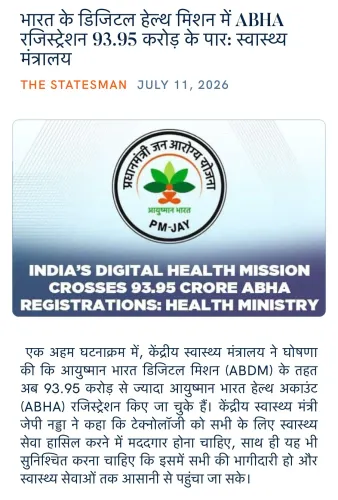
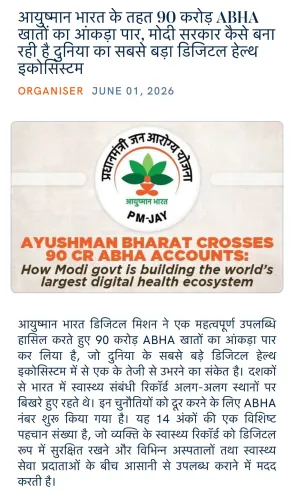
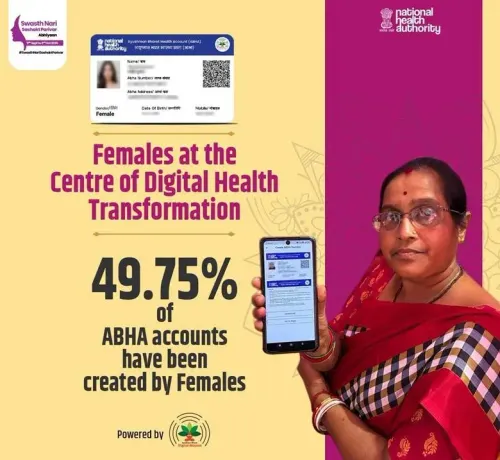
The Ayushman Bharat Digital Mission (ABDM) has linked more than 104 crore health records to over 93 crore Ayushman Bharat Health Account (ABHA) accounts, according to an official fact-sheet released on Monday, 6 July. The milestone positions ABDM as one of the world's largest digital health ecosystems, built on a unified network connecting patients, hospitals, doctors, and insurers.
Scale and Scope of the Mission
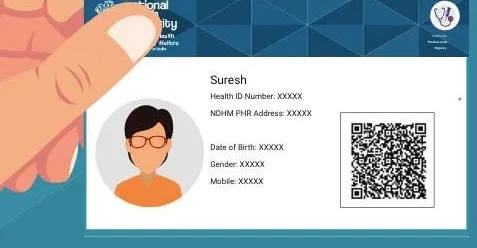
Launched in September 2021, ABDM was conceived as the digital backbone for achieving universal health coverage across India. The mission aims to make healthcare services more accessible, efficient, and interoperable — reducing paperwork, cutting waiting times, and enabling seamless data exchange between healthcare stakeholders. At its core is the ABHA identifier, a unique digital health ID that securely links an individual's medical records across hospitals, laboratories, insurers, and national health programmes, with the patient's explicit consent.
Aarogya Setu 2.0 and Citizen-Facing Features
The government recently launched Aarogya Setu 2.0 as the citizen-facing application under ABDM. The revamped platform allows users to create ABHA accounts, manage digital health records, book teleconsultations and hospital appointments, access insurance information, locate nearby healthcare facilities, and monitor personal health through wearable device integration, according to the fact-sheet.
Reducing Hospital Wait Times
The National Health Authority's 'Scan and Share' service has significantly cut outpatient registration time at hospitals. More than 23.21 crore ABHA-linked digital tokens had been generated at healthcare facilities as of 18 June. This frictionless check-in mechanism is one of the more tangible, on-the-ground impacts of the mission for ordinary patients.
Incentives and Provider Onboarding
To drive adoption among healthcare providers, the government has disbursed incentives exceeding ₹107 crore to hospitals, over ₹2.95 crore to diagnostic centres, laboratories, and pharmacies, and more than ₹26 crore to digital solution companies. Additionally, more than 2,200 healthcare facilities have been onboarded via the 'e-Sushrut Clinic' platform — a lightweight hospital management information system developed by the Centre for Development of Advanced Computing (C-DAC) to help smaller clinics digitise patient records and administrative processes.
What Comes Next
With the foundational infrastructure now in place, the focus is expected to shift toward deepening interoperability — ensuring that records created at one facility are genuinely accessible at another — and expanding the ecosystem to rural and semi-urban healthcare providers who remain underrepresented in the network. The true measure of ABDM's success will be whether the scale of account creation translates into active, routine use of digital health records by patients and providers alike.
Point of View
Say, Jharkhand can have their records pulled up seamlessly at a tertiary centre in another state. Interoperability at that granular level remains unverified in the public domain. The ₹135-crore-plus incentive outlay signals intent, but without published data on active record retrieval rates and cross-facility usage, the ecosystem's functional depth is still an open question.
NationPress
5 Oct 2026
Frequently Asked Questions
What is the Ayushman Bharat Digital Mission (ABDM)?
The Ayushman Bharat Digital Mission (ABDM) is a government initiative launched in September 2021 to build a digital backbone for universal health coverage in India. It enables secure management of health records and connects patients, hospitals, doctors, and insurers on a unified digital network.
What is an ABHA account and who can get one?
An ABHA (Ayushman Bharat Health Account) is a unique digital health identifier that links an individual's medical records across hospitals, laboratories, insurers, and national health programmes with their consent. Any Indian citizen can create an ABHA account, including through the Aarogya Setu 2.0 app.
What is Aarogya Setu 2.0 and what does it offer?
Aarogya Setu 2.0 is the revamped citizen-facing application launched under ABDM. It allows users to create ABHA accounts, manage digital health records, book teleconsultations and hospital appointments, access insurance information, locate nearby healthcare facilities, and monitor health via wearable device integration.
How has ABDM reduced hospital waiting times?
The National Health Authority's 'Scan and Share' service generates ABHA-linked digital tokens at hospital check-in, significantly cutting outpatient registration time. More than 23.21 crore such tokens had been generated at healthcare facilities as of 18 June.
Which healthcare providers have been onboarded under ABDM so far?
More than 2,200 healthcare facilities have been onboarded via the e-Sushrut Clinic platform, a lightweight hospital management system developed by C-DAC. Incentives totalling over ₹107 crore have been disbursed to hospitals, with additional payouts to diagnostic centres, pharmacies, and digital solution companies.