Giriraj Singh hails 90 crore ABHA accounts under Ayushman Bharat
Synopsis
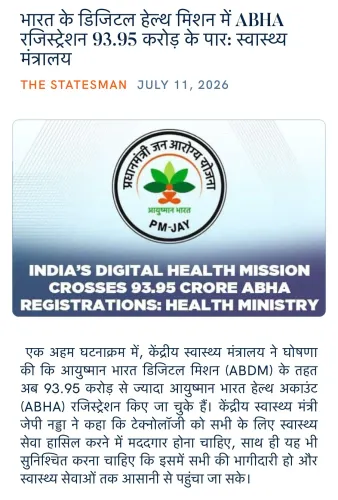
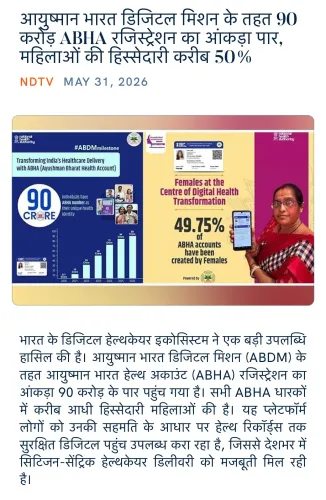
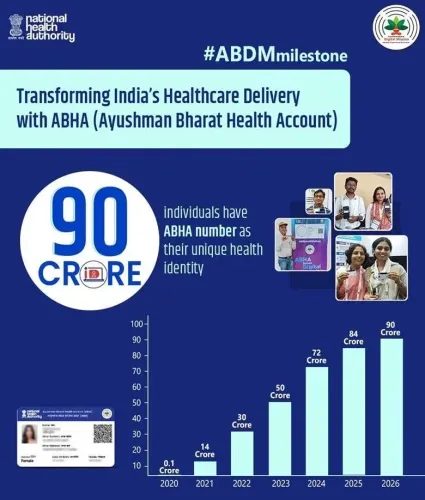
Union Textiles Minister Giriraj Singh on June 1, 2026, amplified a report claiming Ayushman Bharat's digital health ID programme has crossed 90 crore ABHA accounts, positioning India as the builder of the world's largest digital health ecosystem under the Modi government.
Key Takeaways
Giriraj Singh shared a report on June 1, 2026 , via the NaMo App, highlighting the 90 crore ABHA account milestone under Ayushman Bharat.
The Ayushman Bharat Health Account (ABHA) is a 14-digit unique digital health ID launched under the National Digital Health Mission in August 2020 .
The broader Ayushman Bharat scheme, including PM-JAY , was launched in September 2018 as the world's largest publicly funded health assurance programme.
India's digital health strategy follows the same Digital Public Infrastructure model as Aadhaar and UPI , applied now to healthcare.
Key challenges ahead include state-level hospital IT integration and ensuring rural access to the digital health ecosystem.
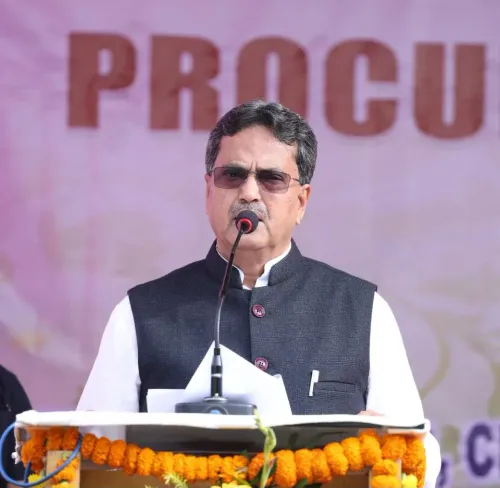
Union Textiles Minister Giriraj Singh on Monday, June 1, 2026, shared a report highlighting that the Ayushman Bharat Health Account (ABHA) programme has crossed 90 crore registered accounts, calling it a milestone in India's effort to build the world's largest digital health ecosystem under the Modi government.
Context
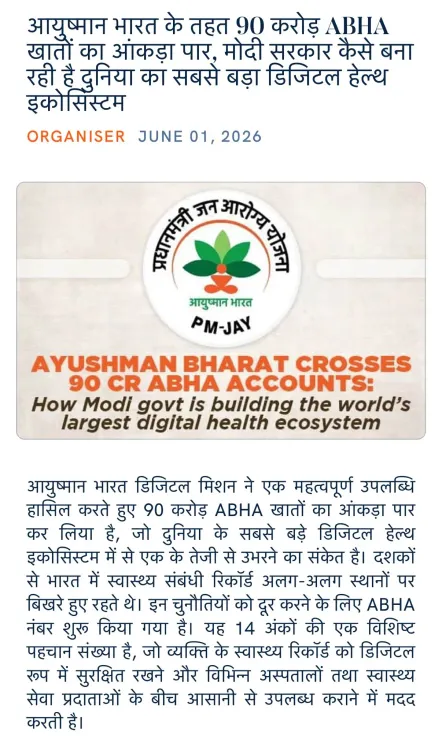
Singh shared the article via the NaMo App, amplifying the claim that India's digital health infrastructure has reached a scale unmatched globally. The post, in Hindi, translates as: 'Ayushman Bharat ke tahat 90 crore ABHA khaton ka aankda paar' — 'Ayushman Bharat crosses 90 crore ABHA accounts, how the Modi government is building the world's largest digital health ecosystem.'
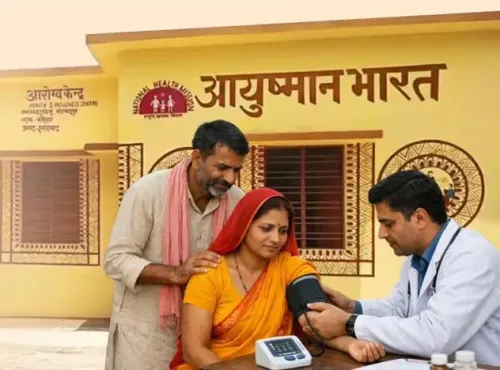
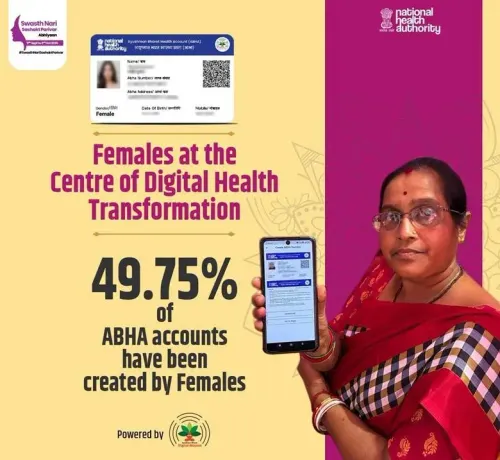
The Ayushman Bharat Health Account is a 14-digit unique digital health ID that allows citizens to store, access and share their personal health records across hospitals and healthcare providers. It forms the core identifier of the National Digital Health Mission (NDHM), formally launched by Prime Minister Narendra Modi on 15 August 2020.
Policy Backdrop
The broader Ayushman Bharat programme was launched in September 2018 as the world's largest publicly funded health assurance scheme, combining hospital insurance coverage under the Pradhan Mantri Jan Arogya Yojana (PM-JAY) with a network of Health and Wellness Centres for primary care.
The digital layer was added through the National Digital Health Blueprint released in April 2019, which laid out the architecture for interoperable health records linked to unique health IDs. The NDHM was subsequently launched to operationalise this blueprint, with ABHA serving as the citizen-facing entry point into the ecosystem.
India's approach mirrors its broader Digital Public Infrastructure (DPI) strategy — the same federated, interoperable model that underpins Aadhaar for identity and UPI for payments — now applied to the healthcare sector to reduce leakages and enable more targeted welfare delivery.
Stakeholders and Impact
The primary beneficiaries of the ABHA ecosystem are healthcare consumers, who gain portability of their medical records across public and private hospitals. State health departments benefit from a unified data layer that can improve planning and reduce duplication of services.
Private hospitals and diagnostic centres integrated with the NDHM network can access patient histories with consent, potentially reducing redundant tests and improving care continuity. The scale of 90 crore accounts — if verified — would represent coverage extending well beyond the economically weaker sections originally targeted by PM-JAY, signalling a broader population-level adoption of the digital health ID.
Singh, who represents Begusarai, Bihar in the Lok Sabha, has been a consistent amplifier of central government welfare and digital-governance milestones on social media, particularly schemes with large rural and semi-urban beneficiary bases.
What's Next
The critical test for the ABHA ecosystem now lies in state-level integration — how effectively existing hospital IT systems across all 28 states and 8 Union Territories are linked to the national health ID infrastructure. Analysts and policy observers are also watching for fresh budgetary allocations in the next Union Budget to deepen this integration and expand broadband and device access in underserved districts.
As India positions its DPI stack as an exportable governance model under platforms such as the G20 and bilateral digital partnerships, the health ecosystem's reach and reliability will be central to that narrative.
Point of View
Attaching a high-visibility health milestone to the broader 'Modi delivers' messaging. The 90 crore ABHA figure, if substantiated, would represent one of the fastest digital-ID rollouts in any sector globally, lending credibility to India's pitch that its DPI model is replicable. However, account creation and active utilisation are distinct metrics — the political communication elides that gap. The real policy test, as observers note, is whether state health systems are genuinely interoperable with ABHA or whether the headline number masks shallow integration.
NationPress
19 Sept 2026
Frequently Asked Questions
What is ABHA under Ayushman Bharat?
ABHA, or Ayushman Bharat Health Account, is a 14-digit unique digital health ID that allows Indian citizens to store and share their personal health records across hospitals and healthcare providers. It was launched as part of the National Digital Health Mission in August 2020.
How many ABHA accounts have been created in India?
According to a report shared by Union Textiles Minister Giriraj Singh on June 1, 2026, the number of ABHA accounts under Ayushman Bharat has crossed 90 crore, though this figure has not been independently verified by NationPress.
What is the National Digital Health Mission?
The National Digital Health Mission (NDHM) is a government initiative formally launched by Prime Minister Narendra Modi on 15 August 2020. It aims to build a federated, interoperable digital health ecosystem linking patients, doctors, and health facilities through unique health IDs.
What is Ayushman Bharat PM-JAY?
Ayushman Bharat Pradhan Mantri Jan Arogya Yojana (PM-JAY) is the world's largest publicly funded health insurance scheme, launched in September 2018. It provides financial coverage for hospitalisation to economically vulnerable families across India.
Why did Giriraj Singh post about Ayushman Bharat?
Giriraj Singh, Union Textiles Minister and senior BJP leader, shared the report via the NaMo App to amplify the Modi government's digital health achievements. He regularly uses social media to highlight central government welfare and governance milestones.