CM Rekha Gupta Shares BJP Chief's Rebuke of Congress on Democracy
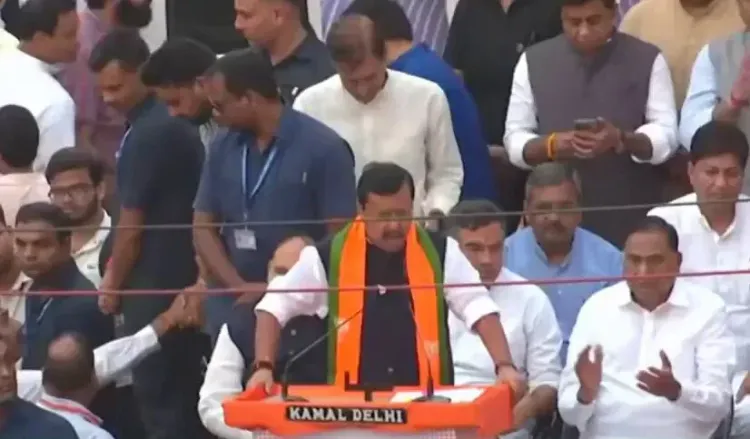
Synopsis
Delhi Chief Minister Rekha Gupta shared BJP National President Nitin Nabin's pointed rebuke of Congress, citing the 1975 Emergency and over 90 Article 356 dismissals as evidence of the party's anti-democratic history, under the hashtag 'Save Democracy, Remove Anarchy'.
Key Takeaways
Delhi CM Rekha Gupta shared a statement by BJP National President Nitin Nabin on 28 October 2026 targeting Congress on democratic credentials.
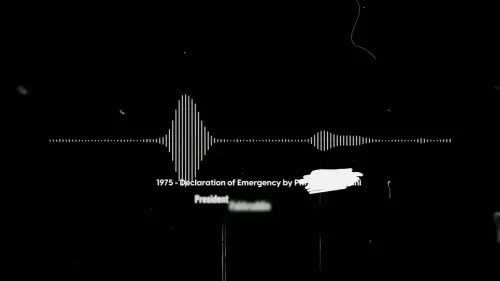
Nabin's statement referenced the 21-month Emergency imposed on 25 June 1975 under Indira Gandhi as evidence of Congress authoritarianism.
The quote cited more than 90 Article 356 dismissals of elected state governments, predominantly during Congress rule between 1950 and 1990 .
The post carried the hashtag #लोकतंत्र_बचाओ_अराजकता_हटाओ ('Save Democracy, Remove Anarchy'), indicating a coordinated BJP campaign frame.
Bommai judgment (1994) placed significant constitutional curbs on Article 356 misuse following decades of controversy.
Congress is expected to rebut the framing; the exchange could influence rhetoric in upcoming state election campaigns.
India's democracy has survived Emergency, Article 356, and repeated attempts to unseat elected governments — and on Wednesday, 28 October 2026, Delhi Chief Minister Rekha Gupta amplified that pointed reminder to the nation by sharing a sharp statement from BJP National President Nitin Nabin on X.
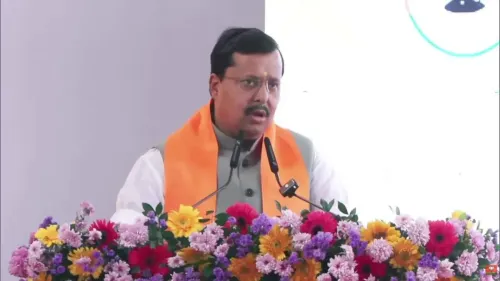
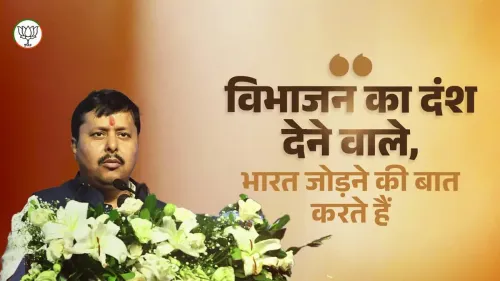
The quote, attributed to Nabin and shared by CM Gupta, pulls no punches: 'कांग्रेस के तथाकथित नेताओं को मैं स्पष्ट रूप से कहना चाहता हूँ' — 'I want to say clearly to the so-called leaders of Congress: the roots of Indian democracy are so strong that even imposing the Emergency could not uproot them. While in power, you dismissed governments elected by the people more than 90 times — yet every time, the people of this country raised the voice of democracy and gave you the answer.'
The Emergency Charge — and What the Numbers Mean
The reference to the 1975 Emergency is not casual history; it is the BJP's sharpest rhetorical weapon. On 25 June 1975, the Congress government under Prime Minister Indira Gandhi suspended fundamental rights and detained opposition leaders for 21 months. The period remains one of the most contested chapters in Indian political memory, and the BJP has consistently used it as a benchmark for what it frames as Congress's instinct toward authoritarianism. Equally loaded is the figure of 'more than 90 times' — a reference to the use of Article 356 of the Constitution, which allows the President to impose central rule and dismiss state governments. Between 1950 and 1990, Article 356 was invoked over 90 times, a period when Congress-led governments dominated the Centre and critics argued the provision was deployed to topple inconvenient non-Congress state administrations. The Supreme Court ultimately placed significant curbs on the power's use in its landmark S.R. Bommai judgment of 1994.Nabin's Statement and the 'Save Democracy' Frame
The post carries the hashtag #लोकतंत्र_बचाओ_अराजकता_हटाओ — 'Save Democracy, Remove Anarchy' — signalling that this is not an isolated remark but part of a coordinated BJP messaging campaign. Nitin Nabin, as national party president, carries the institutional weight to frame such statements as official BJP doctrine rather than individual opinion. By resharing the clip, CM Gupta aligns Delhi's BJP unit squarely with the national party line. BJP leaders have consistently deployed the Emergency narrative during periods of political confrontation, using it to contrast what the party describes as a history of Congress authoritarianism with its own emphasis on electoral mandates. The strategy targets both the party's base — which has long treated the Emergency as foundational grievance — and swing voters who may be receptive to institutional-safety arguments. Congress has historically pushed back on both counts: defending the Emergency as a response to political instability and disputing the framing of Article 356 use as purely partisan. Whether the party formally responds to Nabin's remarks — and whether the exchange bleeds into upcoming state election campaigns or parliamentary sessions — will determine how far this particular volley travels.Point of View
The message is framed as national doctrine. Rekha Gupta's amplification ties Delhi's BJP administration to that broader frame, reinforcing her alignment with central party strategy. The 'Save Democracy, Remove Anarchy' hashtag signals a pre-planned campaign rather than a spontaneous reaction — making Congress's response, or silence, politically consequential.
NationPress
28 Oct 2026
Frequently Asked Questions
What did BJP National President Nitin Nabin say about Congress and democracy?
Nitin Nabin stated that Indian democracy's roots are strong enough to have withstood even the Emergency imposed by Congress, and that Congress dismissed more than 90 elected state governments using Article 356, only to be answered each time by the voters.
What was the 1975 Emergency and why does BJP keep citing it?
The Emergency was a 21-month period from 25 June 1975 to 1977 when the Congress government under Indira Gandhi suspended fundamental rights and jailed opposition leaders. BJP routinely invokes it as the starkest example of Congress authoritarianism.
How many times was Article 356 used to dismiss state governments in India?
Article 356 was invoked more than 90 times between 1950 and 1990, largely by Congress-led central governments. The Supreme Court curtailed its use in the landmark S.R. Bommai judgment of 1994.
Who is Nitin Nabin and what is his role in BJP?
Nitin Nabin is the National President of the Bharatiya Janata Party, making him the party's top organisational authority at the national level.
What does the hashtag Save Democracy Remove Anarchy mean?
The Hindi hashtag #लोकतंत्र_बचाओ_अराजकता_हटाओ translates to 'Save Democracy, Remove Anarchy' and signals a coordinated BJP campaign framing the party as the defender of democratic institutions against what it portrays as Congress's historical record.