Giriraj Singh tours Bharat Renewable Energy Summit 2026 expo
Synopsis
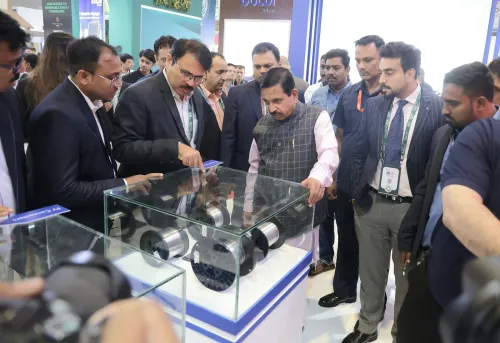
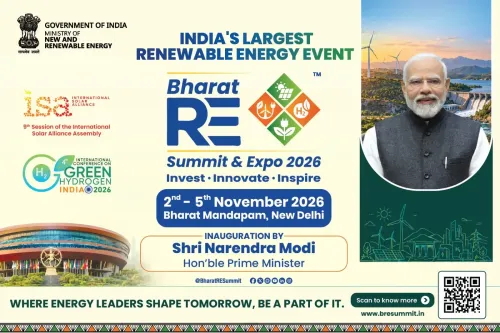
Union Textiles Minister Giriraj Singh toured the grand exhibition at Bharat Renewable Energy Summit 2026 in New Delhi's Bharat Mandapam on 4 November, calling solar innovations and schoolchildren's ideas 'deeply encouraging' and citing India's self-reliant clean-energy march.
Key Takeaways
Giriraj Singh visited the Bharat Renewable Energy Summit 2026 exhibition at Bharat Mandapam, New Delhi on 4 November 2026 .
Exhibitors included leading renewable energy companies, state governments, startups, and school students.
Singh singled out new solar-energy technological solutions and children's creative thinking as particularly encouraging.
India's clean-energy push is anchored to a 500 GW non-fossil fuel capacity target by 2030 , pledged at COP26 in 2021 .
The National Solar Mission , launched in 2010 , and Atmanirbhar Bharat manufacturing incentives form the policy backbone for India's solar expansion.
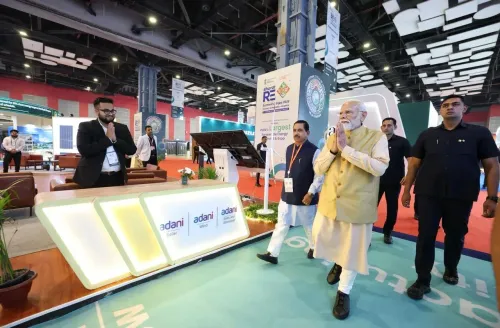
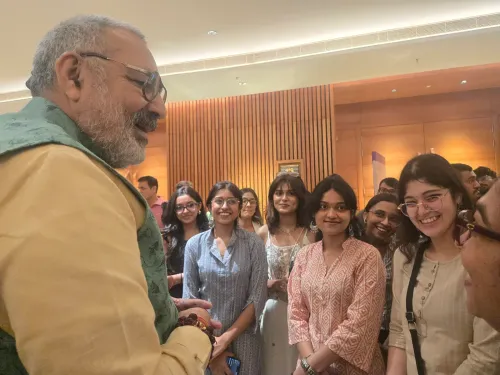
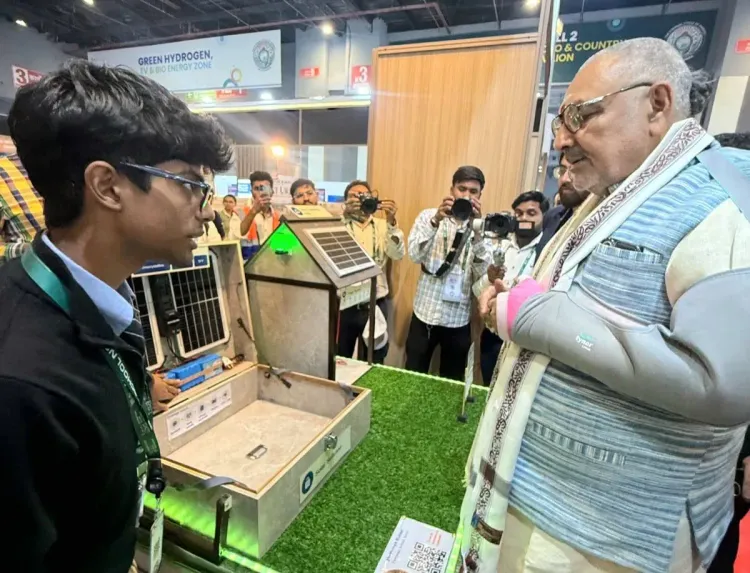
Solar innovations from startups, state pavilions, and — most strikingly — school children: that was the spread waiting for Union Textiles Minister Giriraj Singh when he walked the exhibition floor of the Bharat Renewable Energy Summit 2026 at Bharat Mandapam, New Delhi, on Wednesday, 4 November 2026. The minister took stock of what India's clean-energy ecosystem is building — from grid-scale technology to classroom-born ideas.
Posting on X, Singh described touring the 'भव्य प्रदर्शनी' ('grand exhibition'), noting innovations presented by leading renewable energy companies, multiple states, startups, and schoolchildren. He called out solar energy in particular, writing that the new technical solutions emerging in that space — and the children's creative thinking — were 'बेहद उत्साहजनक' ('deeply encouraging'). The minister concluded that these efforts prove India is 'rapidly advancing toward a powerful future in clean energy through innovation, technological capability, and self-reliance.'
Bharat Mandapam as India's clean-energy showcase
Bharat Mandapam, the sprawling convention and exhibition complex in New Delhi, has become a preferred venue for marquee national events since it opened. Hosting the renewable energy summit there signals the government's intent to give clean energy the same stage as G20-level diplomacy. The exhibition format — bringing companies, state governments, and even school students under one roof — mirrors a pattern India has used to demonstrate breadth of participation in its energy transition.
India's 500 GW ambition and the solar-first push
The backdrop to any such summit is India's 500 GW non-fossil fuel capacity target by 2030, pledged at COP26 in 2021. Solar has been the engine of that ambition ever since the National Solar Mission was launched in 2010 under the National Action Plan on Climate Change. Domestic manufacturing incentives under the Atmanirbhar Bharat framework have added a supply-chain dimension to the deployment story — the same self-reliance theme Singh invoked in his post.
Startups and state-government pavilions at events like this are where that policy ambition meets ground-level proof of concept. When a minister flags a schoolchild's solar prototype in the same breath as a company's grid technology, the message is deliberate: India's clean-energy pipeline runs from the classroom to the grid.
A minister of textiles at an energy summit — why it matters
Singh's portfolio is textiles, not energy — yet his presence at the summit is consistent with the cabinet-wide ownership India's government has taken of the Atmanirbhar agenda. Textile clusters, too, are heavy energy consumers increasingly targeted for solar adoption. His visible engagement at the expo underlines that cross-sectoral buy-in — not just the power ministry — is part of the government's renewable messaging.
Watch for follow-up announcements from participating states or startups on technology adoption, and for any revision of India's near-term renewable capacity addition targets as the country enters the final stretch toward its 2030 deadline.
Point of View
The government frames India's energy transition as a civilisational movement, not merely a sectoral policy. The 500 GW pledge is now entering its most critical execution years, making showcase events like this both a progress report and a political statement. How much of the summit's innovation pipeline translates into contracted capacity will be the real test.
NationPress
5 Nov 2026
Frequently Asked Questions
What is the Bharat Renewable Energy Summit 2026?
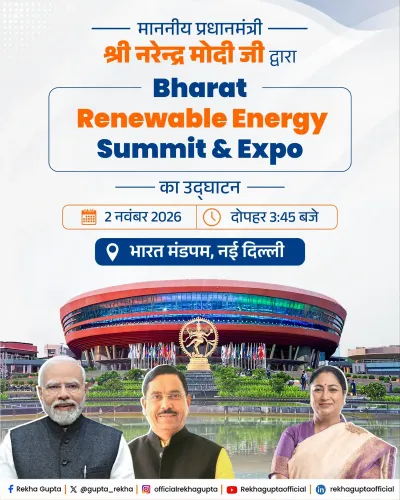
The Bharat Renewable Energy Summit 2026 is a national event held at Bharat Mandapam in New Delhi, featuring an exhibition of clean-energy innovations by companies, state governments, startups, and students.
Why did Giriraj Singh attend an energy summit if he is the Textiles Minister?
Cabinet ministers frequently participate in cross-sector events that align with the broader Atmanirbhar Bharat agenda; textile clusters are also significant energy consumers increasingly targeted for solar adoption.
What is India's renewable energy target for 2030?
India has pledged to achieve 500 GW of non-fossil fuel power capacity by 2030 , a commitment made at the COP26 climate summit in 2021 .
What is Bharat Mandapam?
Bharat Mandapam is a major convention and exhibition centre in New Delhi used for large national and international summits and events.
What did Giriraj Singh say about solar energy at the summit?
Singh said the new technological solutions being developed in the solar energy space, as well as the creative ideas presented by schoolchildren, were 'deeply encouraging' and showed India moving toward clean-energy self-reliance.