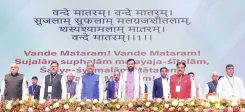
CM Rekha Gupta Hails BRE Summit 2026 Inauguration at Bharat Mandapam
Synopsis
Delhi Chief Minister Rekha Gupta hailed PM Modi's inauguration of the Bharat Renewable Energy Summit & Expo 2026 at Bharat Mandapam — a first-of-its-kind convergence of the ISA's 9th Assembly, a Renewable Energy Summit, and the 4th International Green Hydrogen Conference, drawing 125+ countries and 75,000 participants.
Key Takeaways
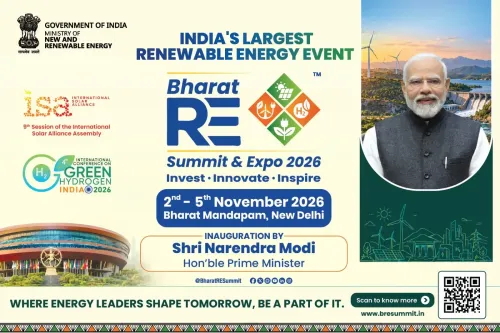
Bharat Renewable Energy Summit & Expo 2026 was inaugurated by PM Narendra Modi at Bharat Mandapam, New Delhi on 2 November 2026 .
For the first time, the Renewable Energy Summit , ISA's 9th Assembly , and 4th International Green Hydrogen Conference are running concurrently on a single platform.
The event features participation from more than 125 countries , over 75,000 participants , and 400+ exhibitors .
The International Solar Alliance , co-founded by India and France at COP21 in 2015 , is headquartered in Gurugram .
India's National Green Hydrogen Mission , approved in January 2023 with an outlay of Rs 19,744 crore , underpins the hydrogen diplomacy on display.
India's Panchamrit commitment targets 500 GW of non-fossil fuel capacity by 2030 , framing the urgency behind the summit.
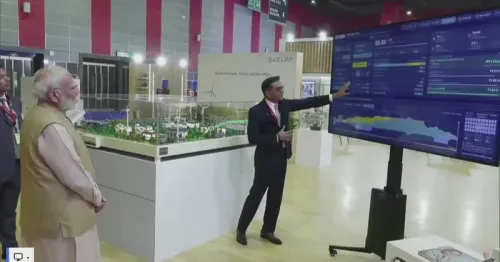
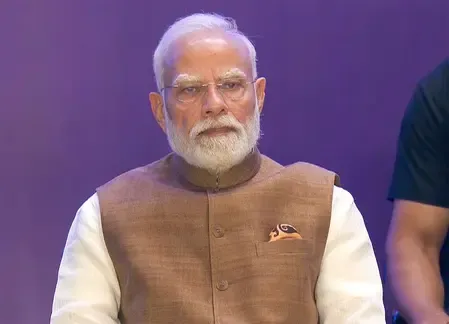
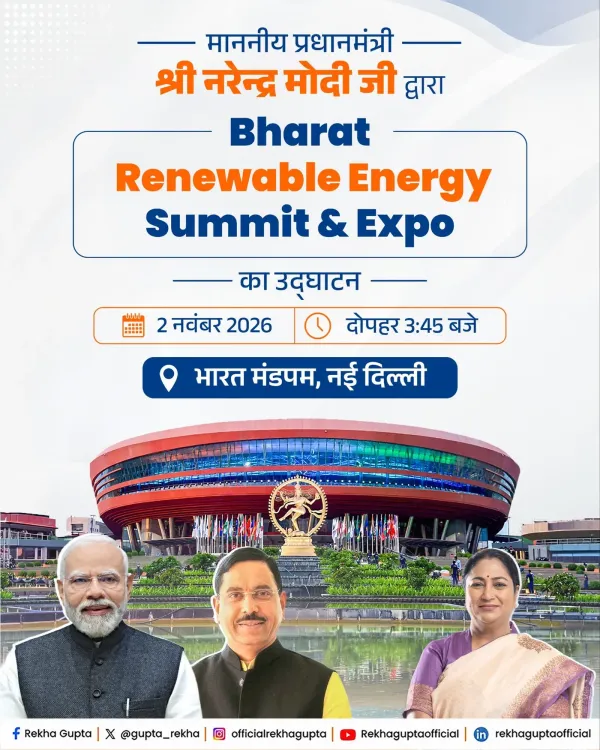
Three global clean-energy platforms under one roof — and India is hosting all of them. Delhi Chief Minister Rekha Gupta took to X on Monday, 2 November 2026, to mark the inauguration of the Bharat Renewable Energy Summit & Expo 2026 at Bharat Mandapam, New Delhi, by Prime Minister Narendra Modi, calling it a milestone in India's march toward global clean-energy leadership.
Three Summits, One Stage at Bharat Mandapam
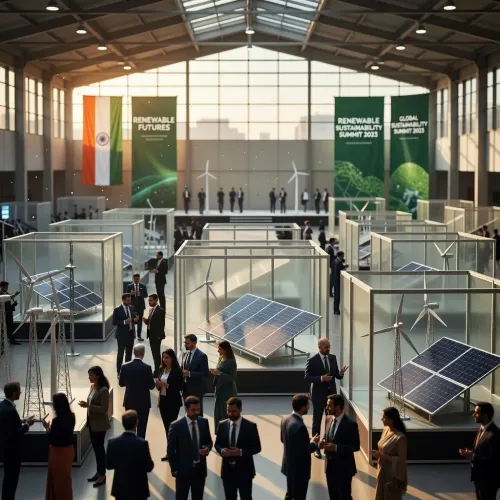
What makes the BRE Summit 2026 structurally unprecedented is the convergence it engineers. For the first time, the Renewable Energy Summit, the 9th Assembly of the International Solar Alliance (ISA), and the 4th International Conference on Green Hydrogen are being held simultaneously on a single platform. The post notes participation from more than 125 countries, over 75,000 participants, and more than 400 exhibitors — numbers that signal the event's ambition as a multilateral clean-energy anchor, not merely a domestic showcase.
The International Solar Alliance was co-launched by India and France at COP21 in 2015 and is headquartered in Gurugram. Its annual Assembly has become a recurring stage for India to project solar diplomacy, particularly among developing nations. Bringing the ISA's 9th Assembly inside a broader commercial and policy expo amplifies both the diplomatic and investment dimensions of the event.
Green Hydrogen's Growing Weight in India's Energy Calculus
The inclusion of the 4th International Conference on Green Hydrogen signals how quickly hydrogen has moved from a policy aspiration to a diplomatic priority. The National Green Hydrogen Mission, approved by the Union Cabinet in January 2023 with an outlay of Rs 19,744 crore, set the domestic scaffolding. Hosting a fourth international edition alongside the ISA Assembly now cements India's claim as a convening power in the emerging global hydrogen economy.
India's 500 GW Ambition — and the Diplomatic Theatre Around It
India's clean-energy diplomacy has a concrete numerical spine. At COP26 in 2021, Prime Minister Modi announced the Panchamrit commitments, including a target of 500 GW of non-fossil fuel capacity by 2030. Successive ISA Assemblies and affiliated events have served as annual report cards — and fundraising pitches — for that ambition. The BRE Summit 2026 follows that template but at a notably larger scale, fusing investment exposition with high-level multilateral assembly.
CM Gupta's post frames the event in the language of 'dूरदर्शी नेतृत्व' (visionary leadership), attributing the moment to Prime Minister Modi. The political messaging is deliberate: as India's clean-energy targets face a 2030 deadline that is now within one electoral cycle, events like BRE Summit serve both as proof-of-progress and as platforms to attract the private capital and technology partnerships that will determine whether the targets are met. The kicker, as always, will be the investment commitments and bilateral technology deals announced before the curtain falls.
Point of View
Weaving together India's domestic clean-energy targets and its growing role as a convening power for the Global South on climate finance and technology. By stacking the ISA Assembly, the Renewable Energy Summit, and the Green Hydrogen Conference under one roof, India is signalling that its clean-energy diplomacy has graduated from bilateral MOUs to systemic coalition architecture. For the BJP government, with 2030 Panchamrit deadlines now politically imminent, the summit also serves as a high-visibility accountability moment — investment pledges and technology partnerships announced here will be benchmarks opponents and allies alike will track. CM Rekha Gupta's effusive framing places Delhi squarely in that national narrative, reinforcing the capital's role as the stage for India's climate ambitions.
NationPress
2 Nov 2026
Frequently Asked Questions
What is the Bharat Renewable Energy Summit 2026?
The Bharat Renewable Energy Summit & Expo 2026 is a major clean-energy event inaugurated by PM Narendra Modi at Bharat Mandapam in New Delhi on 2 November 2026, bringing together the ISA's 9th Assembly, a Renewable Energy Summit, and the 4th International Green Hydrogen Conference on a single platform for the first time.
What is the International Solar Alliance and where is it based?
The International Solar Alliance is a treaty-based international organisation co-founded by India and France at COP21 in 2015 to promote solar energy deployment globally. It is headquartered in Gurugram, India.
What is India's National Green Hydrogen Mission?
The National Green Hydrogen Mission is a central government scheme approved in January 2023 with an outlay of Rs 19,744 crore to scale up green hydrogen production and export, forming the backbone of India's hydrogen diplomacy showcased at BRE Summit 2026.
What is India's 500 GW clean energy target?
At COP26 in 2021, PM Modi announced India's Panchamrit commitments, which include achieving 500 GW of non-fossil fuel electricity capacity by 2030 — a target that frames the urgency of events like the BRE Summit 2026.
Why did Delhi CM Rekha Gupta post about BRE Summit 2026?
Delhi CM Rekha Gupta posted on X to mark the inauguration of BRE Summit 2026 at Bharat Mandapam in New Delhi, highlighting India's growing global role in clean energy under PM Modi's leadership and underscoring the historic scale of the multi-forum event.