PM Modi to inaugurate BRESE 2026 on Nov 2, 130+ nations at Bharat Mandapam
Synopsis
With 130+ nations converging at Bharat Mandapam and a USD 220 billion financing gap to close before 2030, PM Modi's inauguration of BRESE 2026 on 2 November is more than a summit — it is India's most ambitious pitch yet to position itself at the centre of the global clean energy transition.
Key Takeaways
PM Narendra Modi will inaugurate BRESE 2026 at Bharat Mandapam, New Delhi on 2 November .
The summit will bring together participants from more than 130 countries , with 9 nations and the EU as official country partners.
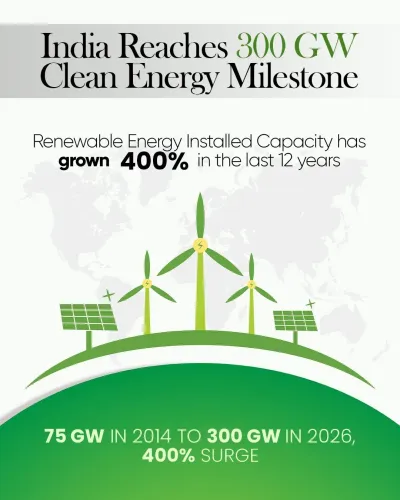
India has 308 GW of installed non-fossil fuel capacity and is targeting 500 GW by 2030 , requiring approximately USD 220 billion in investment between 2027 and 2030.
India invested USD 63.7 billion in renewables between July 2024 and June 2026 , per BloombergNEF .
BRESE 2026 runs alongside the 9th ISA Assembly and the 4th International Conference on Green Hydrogen .
13 States and Union Territories will showcase renewable energy investment and manufacturing opportunities at the summit.
Prime Minister Narendra Modi will inaugurate the Bharat Renewable Energy Summit & Expo (BRESE) 2026 on 2 November at Bharat Mandapam, New Delhi, drawing participants from more than 130 countries, including global leaders, investors, industry executives, and innovators. The summit marks one of India's largest-ever clean energy convergences as the country accelerates toward its 500 GW non-fossil fuel target by 2030.
Scale and Scope of the Summit
The four-day event, themed 'Invest. Innovate. Inspire', will be held alongside two other high-profile convenings: the 9th Session of the International Solar Alliance (ISA) Assembly and the 4th International Conference on Green Hydrogen (ICGH). Together, the three events will create a unified platform for discussions on renewable energy investment, international cooperation, emerging technologies, and clean energy deployment.
Nine countries — Australia, Denmark, France, Germany, Netherlands, Norway, Sweden, the United Kingdom, and the European Union — will participate as official country partners, reflecting the geopolitical weight India now carries in the global energy transition conversation.
India's Clean Energy Credentials
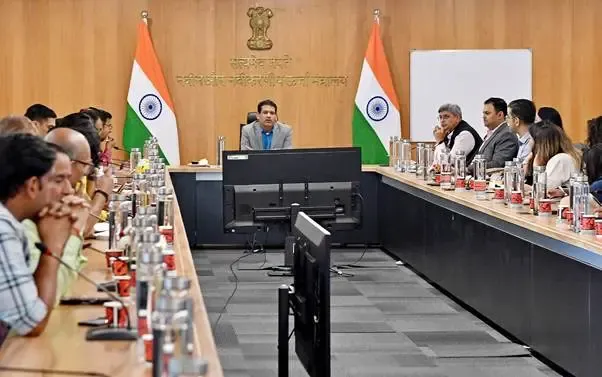
Santosh Sarangi, Secretary of the Ministry of New and Renewable Energy, said on Wednesday that India's clean energy transition is entering a decisive phase. 'India's clean energy transition is entering a decisive phase. With 308 GW of installed non-fossil fuel capacity, we are firmly on course to reach our 500 GW target by 2030. Realising this ambition will require approximately USD 220 billion in investment between 2027 and 2030, alongside accelerated deployment of energy storage, stronger transmission networks and expanded domestic manufacturing capabilities,' he said.
According to data from BloombergNEF, India invested USD 63.7 billion in its renewable energy sector between July 2024 and June 2026. The country currently ranks third globally in renewable energy and solar installed capacity, and fourth in wind power capacity.
States and Union Territories in Focus
Thirteen States and Union Territories will participate in the summit, including Andhra Pradesh, Assam, Bihar, Chhattisgarh, Delhi, Gujarat, Karnataka, Madhya Pradesh, Maharashtra, Odisha, Rajasthan, Uttar Pradesh, and West Bengal. Each will showcase their renewable energy potential, investment opportunities, and manufacturing capabilities. This state-level participation signals that BRESE 2026 is designed not just to attract foreign capital but to link it directly with subnational project pipelines.
What the Summit Will Cover
The conference programme includes high-level plenaries, ministerial discussions, CEO roundtables, and country and state sessions. Key themes span clean energy financing, policy frameworks, energy storage, green hydrogen, domestic manufacturing, and workforce development. Organisers have placed a specific emphasis on technology exchange, scalable solutions for emerging economies, and greater participation by women in the global energy transition.
Delegations from multiple countries are expected to explore cooperation opportunities in renewable energy financing, green hydrogen, energy storage, and clean energy manufacturing — areas where India is seeking both capital and technology partnerships. This comes amid a broader global race to secure clean energy supply chains, with the Global South increasingly positioning itself as both a manufacturing hub and a major demand centre.
What to Watch
The USD 220 billion investment requirement flagged by Secretary Sarangi represents the sharpest articulation yet of India's financing gap for the final stretch of its 2030 renewable target. Whether BRESE 2026 translates announcements into binding commitments — particularly in energy storage and green hydrogen, where project pipelines are thinner — will be the real measure of its success. Outcomes from the ISA Assembly are also expected to shape India's multilateral clean energy diplomacy into 2027.
Point of View
It is a hard gap that must be filled in under four years. The participation of EU, Germany, UK, and the Nordic bloc as country partners suggests India is leveraging geopolitical momentum from Western de-risking strategies, but translating ministerial optics into project-level capital has been India's persistent clean energy challenge. The co-hosting of the ISA Assembly and the Green Hydrogen Conference is smart architecture — it prevents BRESE from being a showcase without a follow-through mechanism. The real test will be whether the investment announcements made here carry enforceable timelines, especially in storage and hydrogen where India's pipeline lags its solar story.
NationPress
28 Oct 2026
Frequently Asked Questions
What is BRESE 2026 and when does it take place?
BRESE 2026 — the Bharat Renewable Energy Summit & Expo — is a four-day international clean energy event inaugurated by PM Narendra Modi on 2 November 2026 at Bharat Mandapam, New Delhi. It brings together participants from over 130 countries to discuss investment, technology, and cooperation in renewable energy.
Why is India hosting BRESE 2026?
India is hosting BRESE 2026 to mobilise approximately USD 220 billion in clean energy investment needed between 2027 and 2030 to meet its 500 GW non-fossil fuel target. The summit is also aimed at accelerating energy storage deployment, expanding domestic manufacturing, and strengthening international clean energy partnerships.
Which countries are participating as partners in BRESE 2026?
Nine countries and one bloc have confirmed as official country partners: Australia, Denmark, France, Germany, Netherlands, Norway, Sweden, the United Kingdom, and the European Union. Delegations from several other nations are also expected to attend.
What other events are being held alongside BRESE 2026?
BRESE 2026 is co-hosted with the 9th Session of the International Solar Alliance (ISA) Assembly and the 4th International Conference on Green Hydrogen (ICGH). All three events share a common platform at Bharat Mandapam from 2 November.
What is India's current renewable energy capacity and its 2030 target?
India has 308 GW of installed non-fossil fuel capacity as of the time of the summit and is targeting 500 GW by 2030. According to BloombergNEF, India invested USD 63.7 billion in its renewable sector between July 2024 and June 2026, and ranks third globally in renewable and solar installed capacity.