Agnipath Gets a Second Wind: Cabinet Clears Two-Year Extension
Synopsis
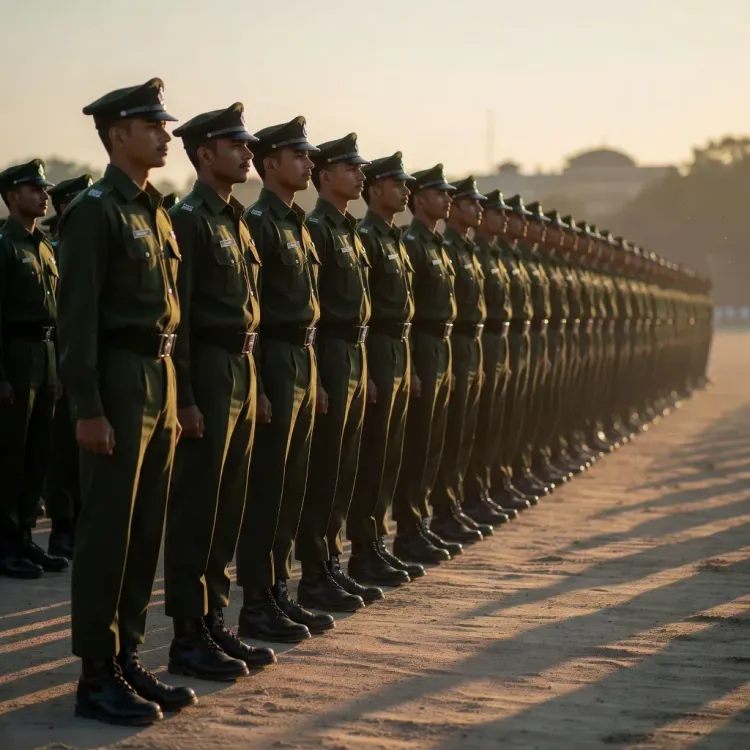
The Union Cabinet has approved a two-year 'Second Tour of Duty' for Agniveers under the Agnipath scheme, extending total service to six years and opening a formal regularisation track to permanent military service for those who meet selection criteria.
Key Takeaways
The Union Cabinet approved a two-year Second Tour of Duty for Agniveers on 4 November 2026 .
Agniveers can now serve for a total of up to six years — four initial plus two extended years.
Eligible Agniveers who meet defined selection criteria will gain access to permanent regular military service .
The decision aims to better utilise the training and skills of Agniveers already in service and strengthen Indian Armed Forces capability.
Specific selection criteria and implementation guidelines for both the second tour and regularisation are yet to be released by the Ministry of Defence .
The original Agnipath scheme was launched in June 2022 , replacing permanent recruitment with a four-year contractual model.
A reform that stirred fierce debate when it launched in 2022 just got a significant new chapter. Union Agriculture Minister Shivraj Singh Chouhan, welcoming the decision on Wednesday, 4 November 2026, announced that the Union Cabinet — under the leadership of Prime Minister Narendra Modi — has approved a two-year 'Second Tour of Duty' for Agniveers under the Agnipath scheme.
Posting in Hindi on X, Chouhan wrote: 'आज केंद्रीय कैबिनेट ने अग्निपथ योजना के तहत अग्निवीरों के लिए दो वर्ष के सेकंड टूर ऑफ ड्यूटी को मंजूरी दी है' — 'Today the Union Cabinet has approved a two-year Second Tour of Duty for Agniveers under the Agnipath scheme.' Beyond simply extending service, the Cabinet decision also opens the door to regular military service for Agniveers who meet defined selection criteria — a pathway that critics of the original scheme had demanded from day one.
What the original Agnipath scheme promised — and left open
When Agnipath was unveiled in June 2022, it replaced the decades-old model of permanent military recruitment with a four-year contractual stint. Young recruits, re-designated 'Agniveers,' would serve for four years, receive training and a tax-free severance corpus, and — in theory — take their discipline and skills into civilian life or paramilitary forces. Only a fraction would be retained for permanent service. The announcement triggered protests in several states, with aspirants arguing the scheme robbed them of job security and pension rights they had trained years to earn. The government's consistent counter-argument: a younger, fitter force profile, reduced long-term pension liabilities, and a pipeline of skilled, disciplined young citizens feeding the broader economy. The debate never fully settled — it simply moved from the streets to policy corridors.What the Second Tour of Duty actually changes
The new Cabinet approval adds a concrete two-year extension after the original four-year term — meaning an Agniveer who completes the first cycle can now serve up to six years in total. More consequentially, the decision links this extended service to a formal regularisation track: Agniveers who fulfil the prescribed selection criteria will be eligible for permanent induction into the Indian Armed Forces. Chouhan framed the twin benefit precisely: the move will 'make better use of the experience, training and skills of our young Agniveers' while simultaneously 'further strengthening the capabilities of the Indian Armed Forces.' That is not just a morale message — it is an acknowledgement that four years of field-trained personnel walking out of service represented an under-utilised national asset.The selection criteria question that now takes centre stage
The critical detail still pending is the exact selection criteria for both the Second Tour and the regularisation route. How competitive will the bar be? Which categories — combat arms, technical trades, logistics — will offer permanent slots? Will all three services (Army, Navy, Air Force) implement uniform standards? These are the questions Agniveers, their families, and defence analysts will be watching the Ministry of Defence answer in its implementation guidelines. For now, the Cabinet decision establishes the architecture. The fine print will determine whether this reform graduates from political promise to ground-level reality for the hundreds of thousands of Agniveers already mid-service or approaching the end of their first term. For a generation of young Indians who signed up under uncertainty, today's Cabinet approval is not the finish line — it is the first clear signal that the door to a longer military career has been left open.Point of View
The Cabinet preserves the original structural logic of the scheme (shorter tenures, younger force profile) while defusing the loudest criticism — that it offered youth a career dead end. The move also signals the BJP's intent to insulate Agnipath from becoming an electoral liability ahead of state polls, by giving serving Agniveers a concrete incentive to stay invested in the programme. How generous the selection criteria for permanent induction turn out to be will reveal whether this is a substantive reform or a pressure-release valve.
NationPress
4 Nov 2026
Frequently Asked Questions
What is the Agnipath Second Tour of Duty approved by Cabinet?
The Cabinet approved an additional two-year service extension for Agniveers who complete their initial four-year term under the Agnipath scheme, allowing them to serve a total of up to six years.
Can Agniveers now get a permanent job in the Indian Army?
Yes, the Cabinet decision includes a pathway to regular, permanent military service for Agniveers who meet the specified selection criteria after their extended service period.
What is the Agnipath scheme and when was it launched?
Agnipath is a defence recruitment reform launched in June 2022 that replaced permanent military enlistment with a four-year contractual service model for young recruits called Agniveers.
What happens to Agniveers after the Second Tour of Duty?
Agniveers who complete the second tour and meet the selection criteria will be eligible for permanent induction; details of the criteria are expected in forthcoming Ministry of Defence implementation guidelines.
Why was the Agnipath scheme controversial?
Agnipath faced protests in 2022 because recruits feared losing job security and pension benefits guaranteed under the older permanent-service model, with only a small percentage originally slated for retention.