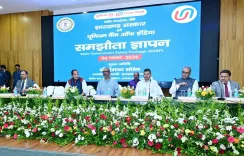
CM Majhi backs Cabinet nod for Agniveer 'Second Tour of Duty'
Synopsis
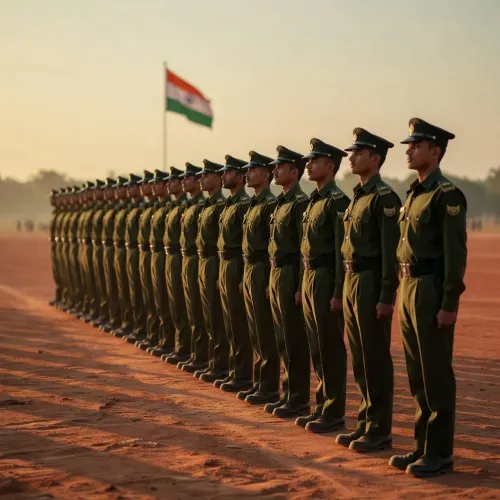
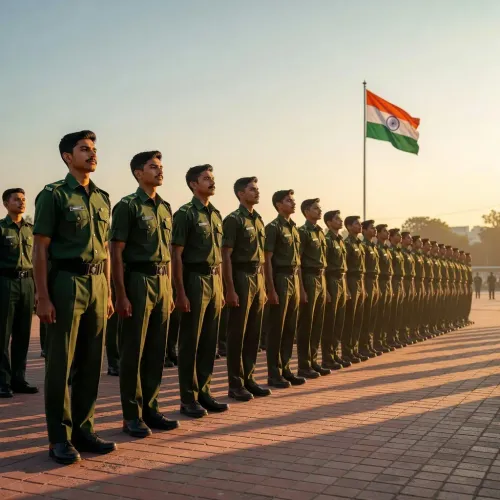
The Union Cabinet approved a two-year 'Second Tour of Duty' for Agniveers under the Agnipath Scheme, also opening a pathway to regular soldier enrolment. Odisha CM Mohan Charan Majhi praised Prime Minister Modi for the reform, calling it a step toward a younger, technologically advanced armed force.
Key Takeaways
The Union Cabinet approved a two-year 'Second Tour of Duty' for Agniveers under the Agnipath Scheme on November 4, 2026 .
Willing Agniveers may now be considered for enrolment as regular soldiers after their initial tenure, subject to prescribed selection criteria.
The Agnipath Scheme was originally launched in June 2022 with four-year contracts and a 25 per cent retention ceiling.
Odisha CM Mohan Charan Majhi publicly endorsed the decision, crediting Prime Minister Narendra Modi for the forward-looking initiative.
The reform is framed around building a younger, fitter and technologically advanced force ready for modern warfare challenges.
Official gazette notifications detailing selection criteria for regular enrolment across the Army, Navy, and Air Force are now awaited.
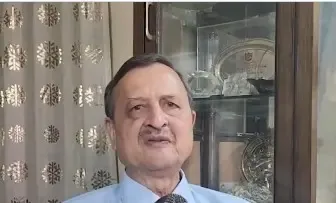
A quiet but consequential shift in India's military recruitment architecture arrived on Wednesday, November 4, 2026, when the Union Cabinet approved a two-year 'Second Tour of Duty' for Agniveers under the Agnipath Scheme — and Odisha Chief Minister Mohan Charan Majhi was among the first voices welcoming the move as a 'significant step towards strengthening India's defence preparedness.'
What the Cabinet decision actually changes for Agniveers
Under the original Agnipath Scheme, launched in June 2022, personnel were enrolled on a fixed four-year contract with only 25 per cent eligible for retention as regular soldiers. The Cabinet's latest approval layers an additional two-year window onto that structure — a 'Second Tour of Duty' that extends the service opportunity before the final retention decision is made.
Crucially, the decision also introduces a provision for willing Agniveers to be considered for enrolment as regular soldiers, subject to prescribed selection criteria, after their initial tenure. That pathway — conditional but explicit — addresses one of the loudest criticisms levelled at the original scheme since its contested rollout four years ago.
Agnipath's turbulent road from 2022 to this revision
The Agnipath Scheme was designed to reshape the demographic profile of India's armed forces: younger troops, reduced long-term pension obligations, and a force oriented toward technology-intensive warfare. When Prime Minister Narendra Modi's government announced it in June 2022, protests broke out across several states, with young aspirants arguing the short-term contract model stripped away the job security that had made military service an attractive career.
Four years on, the scheme has completed at least one full cohort cycle. The Cabinet's move signals that the government has absorbed the feedback — not by abandoning Agnipath, but by extending its runway and institutionalising the route to permanent service more clearly.
CM Majhi's reading: a 'forward-looking initiative'
Chief Minister Majhi, posting on X, framed the development through the lens of modern warfare readiness. 'With a focus on building a younger, fitter and technologically advanced force,' he wrote, 'this initiative reinforces the ongoing efforts to equip our Armed Forces for the emerging challenges of modern warfare.' He extended explicit gratitude to Prime Minister Modi for the decision.
Odisha, like several other states, has a significant tradition of military enlistment and a sizeable population of Agniveer recruits — lending Majhi's statement more than ceremonial weight. His endorsement also signals BJP-governed states' alignment with the Centre's defence reform narrative ahead of the scheme's next phase.
What officials and Agniveers will be watching next
The critical details now awaited are the official gazette notifications spelling out the exact selection criteria for the regular-enrolment consideration. The devil, as always in recruitment policy, lives in the eligibility thresholds — physical standards, merit benchmarks, and vacancy ceilings across the Army, Navy, and Air Force. State governments, including Odisha, are also expected to revisit their Agniveer welfare and re-employment frameworks in light of the extended service window.
The two-year extension is not a guarantee of permanence — but for thousands of Agniveers mid-contract today, it is a meaningful second chance to prove themselves on the terms that matter most: service itself.
Point of View
Whose CMs are publicly amplifying the decision, this is also a consolidation of the party's defence-reform narrative ahead of potential electoral cycles. The real test, however, will come in the gazette notifications: how selective the regular-enrolment criteria are will determine whether this is a genuine career bridge or a narrow valve. If the thresholds remain tight, the second tour may ease political pressure without substantially improving Agniveers' long-term prospects.
NationPress
4 Nov 2026
Frequently Asked Questions
What is the Agnipath Scheme Second Tour of Duty?
The Union Cabinet approved a two-year extension called the 'Second Tour of Duty' for Agniveers, allowing them to serve beyond their initial four-year contract under the Agnipath Scheme and be considered for regular soldier enrolment subject to selection criteria.
Can Agniveers become permanent soldiers now?
Yes, under the new Cabinet decision, willing Agniveers can be considered for enrolment as regular soldiers after their initial tenure — but this is subject to prescribed selection criteria, details of which are yet to be notified officially.
When was the Agnipath Scheme launched?
The Agnipath Scheme was launched in June 2022 by the government of Prime Minister Narendra Modi to induct military personnel below officer rank on short-term four-year contracts.
Why did Odisha CM Mohan Majhi comment on the Agnipath decision?
CM Majhi welcomed the Cabinet decision as a significant step in strengthening India's defence preparedness, expressing gratitude to PM Modi. Odisha has a strong tradition of military enlistment, making defence recruitment policy particularly relevant to the state.
What protests happened over the Agnipath Scheme?
When the Agnipath Scheme was announced in June 2022, protests erupted across several Indian states as young military aspirants objected to the short-term contract model, arguing it replaced secure military careers with temporary enlistment.