Agnipath scheme revamped: Agniveers get 2-year extension option after 4-year term
Synopsis
The Centre has quietly but significantly redrawn the Agnipath scheme's exit map. The 75 per cent of Agniveers previously released after four years will now get a two-year extension and a formal shot at regular service — announced just as the first batch reaches the end of its term. It is the most substantive concession the government has made since protests rocked the scheme's 2022 launch.
Key Takeaways
The Union Cabinet has approved a second two-year service term for Agniveers , announced on 4 November 2026 .
75 per cent of Agniveers — those not absorbed after the initial four years — will be eligible for the extended term.
After the second term, all Agniveers will have an opportunity to be considered as regular soldiers , subject to willingness and selection criteria.
Selection will be merit-based, assessed on physical fitness , discipline , technical proficiency , and organisational requirements.
Agniveers in the extended term will receive higher pay and an increased service fund benefit .
The first batch of Agniveers is completing its four-year term this month, making the announcement immediately consequential.
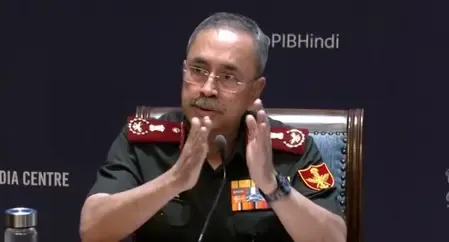
The Centre on Wednesday, 4 November 2026 announced a significant overhaul of the Agnipath scheme, introducing a second two-year service term for Agniveers who complete their initial four-year engagement — a move that opens a wider pathway to permanent induction into the Indian Armed Forces. The decision was unveiled by Chief of Defence Staff (CDS) General N.S. Raja Subramani at a press conference in New Delhi.
What the Cabinet Decision Changes
Under the existing framework, up to 25 per cent of Agniveers completing four years of service are inducted as regular soldiers. The remaining 75 per cent were previously released with a service fund package. Under the new arrangement, this larger cohort will now be offered a second two-year service term, after which all of them will have an opportunity to be considered for regularisation in the Armed Forces.
CDS General Subramani outlined two conditions for regularisation: the Agniveer must be willing to join, and must meet the prescribed selection criteria. He stated: "75 per cent of Agniveers will be offered a second engagement period of two years. After completing those two years, all Agniveers will be given an opportunity to become regular soldiers in the Indian Armed Forces. There are two conditions: they must be willing to join, and they must meet the prescribed selection criteria."
How Selection for Regular Service Will Work
The CDS clarified that selection after the second service term will be merit-based and objective. Agniveers are evaluated periodically throughout their service on parameters including physical fitness, motivation, morale, discipline, and technical proficiency. Post the additional two years, their efficiency, achievements, and the operational requirements of the Armed Forces will all be factored into any regularisation decision.
Notably, the first batch of Agniveers is completing its four-year service term this month — making the timing of this announcement particularly significant for thousands of personnel currently at the threshold of discharge.
Financial Benefits During the Extended Term
Agniveers who opt for the second service term will receive higher pay and an increased service fund benefit compared to their initial engagement, the CDS confirmed. This financial enhancement is intended to incentivise retention and reward the experience accumulated during the first four years.
The Strategic Logic Behind the Extension
The government framed the second service term as a measure to help the Armed Forces retain trained and experienced manpower. During their initial four years, Agniveers undergo military training, discipline, and operational exposure across various responsibilities. The additional two years are designed to deepen this experience and improve long-term force readiness.
This comes amid sustained criticism of the Agnipath scheme since its launch in 2022, with opposition parties and veterans' groups arguing that the short service model left too many trained personnel without career security. The revised framework — offering a structured second term and an explicit regularisation window — is widely seen as a direct response to those concerns. The new arrangement aims, in the government's framing, to balance organisational requirements, operational effectiveness, and individual career prospects for Agniveers.
What Happens Next
Implementation details, including revised pay scales and the specific selection criteria for regularisation after the second term, are expected to be formalised in the coming weeks. The Armed Forces' operational and organisational requirements will continue to govern the final numbers inducted as regular soldiers, the CDS said. For the first batch completing service this month, the new option arrives just in time — giving thousands of Agniveers a decision to make about their immediate futures.
Point of View
Motivated personnel with nowhere to go after four years. Extending service by two years and attaching a regularisation window addresses the scheme's most politically damaging flaw, but the government has yet to specify what percentage of the extended cohort will ultimately be absorbed as regulars. If the selection ceiling is not raised meaningfully above the existing 25 per cent trajectory, the second term risks becoming a holding pattern rather than a genuine career ladder. The timing — with the first batch completing service this month — is as much political management as it is defence policy.
NationPress
4 Nov 2026
Frequently Asked Questions
What is the new change to the Agnipath scheme announced on 4 November 2026?
The Union Cabinet has introduced a second two-year service term for Agniveers who complete their initial four-year engagement. The 75 per cent of Agniveers not absorbed as regular soldiers after four years will now have the option to serve for an additional two years, after which all of them will be considered for regularisation in the Indian Armed Forces, subject to willingness and selection criteria.
Will all Agniveers automatically become regular soldiers after the second term?
No. Regularisation after the second two-year term is not automatic. Agniveers must be willing to join and must meet prescribed selection criteria, which include performance, physical fitness, discipline, technical proficiency, and the Armed Forces' operational requirements, according to CDS General N.S. Raja Subramani.
Why was the Agnipath scheme revised?
The revision comes amid sustained criticism that the original four-year short-service model left trained personnel without long-term career security. The first batch of Agniveers is completing its service this month, making the timing of the change directly relevant to thousands of personnel currently at the point of discharge.
What financial benefits will Agniveers receive during the second service term?
Agniveers who opt for the second two-year term will receive higher pay and an increased service fund benefit compared to their initial engagement. The CDS announced the financial enhancement as an incentive to encourage experienced personnel to continue serving.
Who announced the Agnipath scheme revision and when does it apply?
Chief of Defence Staff General N.S. Raja Subramani announced the Union Cabinet decision at a press conference in New Delhi on 4 November 2026. The change applies immediately to Agniveers, including the first batch currently completing its four-year term this month.