CM Dhami Hails Cabinet's 2-Year Agniveer Service Extension
Synopsis
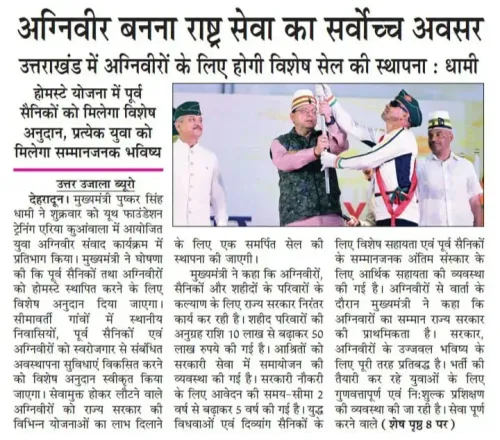
Uttarakhand CM Pushkar Singh Dhami welcomed the Union Cabinet's decision under PM Modi to extend Agniveer service tenure by two years, calling it a vital step honouring youth dedication to national service under the Agnipath scheme.
Key Takeaways
The Union Cabinet, under PM Narendra Modi , approved a two-year service extension for Agniveers under the Agnipath scheme.
CM Pushkar Singh Dhami publicly welcomed the decision on November 4, 2026 , calling it a significant move in the interest of India's youth.
The Agnipath scheme was originally launched in June 2022 , offering four-year military contracts with only 25 percent permanent retention.
The scheme faced widespread protests at launch over limited job security and absence of pension benefits.
Uttarakhand is among India's highest per-capita military recruitment states, giving Dhami's endorsement added political weight.
Implementation details — eligible batches, opt-in rules, and revised retention ratios — are expected in subsequent defence ministry notifications.
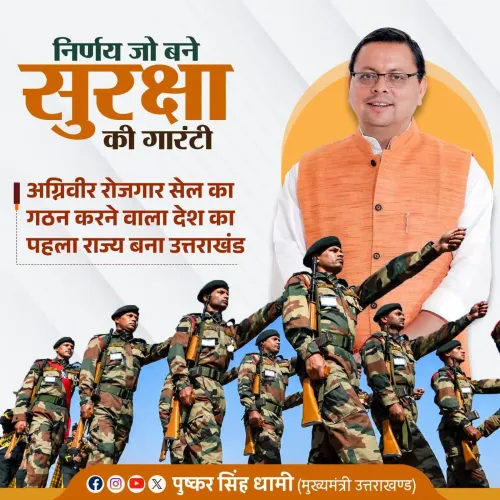
A quiet but consequential decision out of New Delhi just redrawn the career horizon for thousands of young soldiers. Uttarakhand Chief Minister Pushkar Singh Dhami on Wednesday, November 4, 2026, welcomed the Union Cabinet's decision — taken under Prime Minister Narendra Modi — to grant Agniveers a two-year extension in service tenure, calling it a significant step in the interest of India's youth.
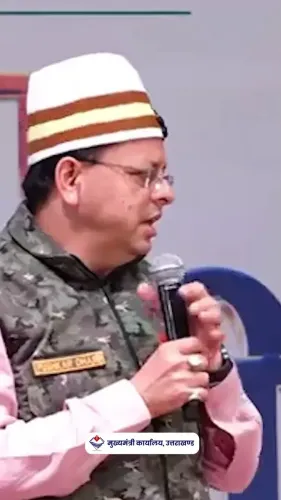
Posting on X in Hindi, CM Dhami wrote: 'Agnipath' — 'This decision is an important initiative in the direction of showing trust in the capabilities of youth and honouring their dedication to national service.' He extended his 'heartfelt gratitude' to the Prime Minister and the Union Cabinet for the move.
What the Agnipath Scheme is — and Why This Matters
Launched in June 2022, the Agnipath scheme replaced the traditional permanent-enlistment model for soldiers, sailors, and airmen with short-term four-year contracts. Only 25 percent of each intake would be absorbed into permanent service at the end of the term — the rest would be released with a one-time 'Seva Nidhi' package. The scheme's stated goal: build a younger, leaner force profile for the Indian military.
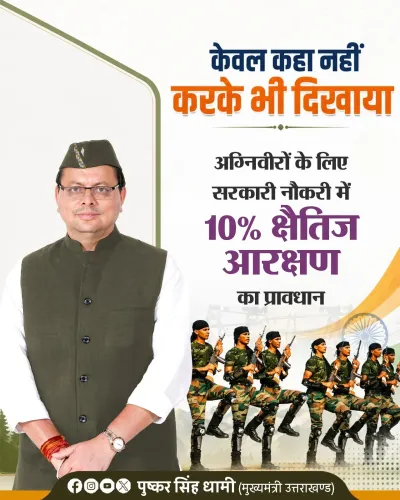
The rollout ignited fierce protests across states, including Uttar Pradesh, Bihar, and Rajasthan, as aspirants rejected what they saw as insecure, pension-less service. The government responded with a series of adjustments — age-limit relaxations, reservations for Agniveers in central paramilitary and state police forces, and corporate-sector engagement for post-service employment. The two-year extension now adds another buffer for recruits navigating that uncertain transition.
Dhami's Political Signal — and Uttarakhand's Stake
Uttarakhand has an outsized emotional and demographic stake in military recruitment. The state has historically been among India's highest per-capita contributors to the armed forces, with districts like Pauri Garhwal, Almora, and Pithoragarh sending generations of soldiers to the military. Any policy touching Agniveer service conditions resonates sharply here.
CM Dhami's swift endorsement — framing the Cabinet move as 'trust in youth capability' — reinforces the BJP's consistent messaging that Agnipath is an evolving, responsive framework rather than a fixed contract. For the party, defending and refining the scheme in a defence-sensitive state like Uttarakhand carries both governance and electoral logic.
What State Governments Will Now Watch For
The Centre's extension announcement will likely be followed by defence ministry notifications detailing implementation: which batches qualify, whether the extension is mandatory or optional, and any revisions to the 25 percent permanent-retention ratio. State governments — especially those with large military recruitment footprints — will also watch for updated timelines on Agniveer reservations in state police recruitment rolls.
Four years on from Agnipath's turbulent launch, the trajectory is clear: each iterative adjustment chips at the scheme's roughest edges while keeping its structural logic intact. The two-year extension is the latest chip — and, for tens of thousands of Agniveers mid-contract, potentially the most consequential one yet.
Point of View
Police reservations, now a tenure buffer — reflects ongoing pressure from states with heavy military recruitment footprints, of which Uttarakhand is a prime example. CM Dhami's rapid and emphatic endorsement signals that BJP chief ministers see the revised scheme as a defensible electoral asset, particularly in the Kumaon-Garhwal belt where army careers are generational. The underlying tension between the scheme's cost-efficiency logic and recruits' demand for long-term security, however, remains structurally unresolved.
NationPress
4 Nov 2026
Frequently Asked Questions
What is the Agnipath scheme and how does it work?
The Agnipath scheme, launched in June 2022, recruits soldiers, sailors, and airmen on four-year short-term contracts. At the end of the tenure, only 25 percent of recruits are absorbed into permanent service, while the rest receive a one-time financial package called 'Seva Nidhi'.
What is the new Agniveer service extension decision?
The Union Cabinet under PM Narendra Modi has approved a two-year extension in the service tenure of Agniveers, effectively increasing the contract period beyond the original four years for eligible recruits.
Why did the Agnipath scheme face protests in 2022?
Agnipath faced widespread protests across states like Uttar Pradesh, Bihar, and Rajasthan because recruits objected to the scheme's short contract duration, absence of pension benefits, and the limited 25 percent permanent absorption rate, which created significant job insecurity.
Why did CM Pushkar Singh Dhami welcome the Agniveer extension?
CM Dhami praised the Cabinet decision as a step honouring youth dedication to national service, framing it as the government's trust in young soldiers' capabilities. Uttarakhand has historically been a major contributor to India's armed forces, making military recruitment policy particularly significant for the state.
What changes can Agniveers expect after the two-year extension?
Agniveers will serve a longer tenure before transitioning out of the military. Specific details — including which recruitment batches qualify, whether the extension is mandatory or voluntary, and any revisions to retention percentages — are expected in subsequent defence ministry notifications.