Nadda invokes Emergency arrest, challenges Congress on EVM hackathon
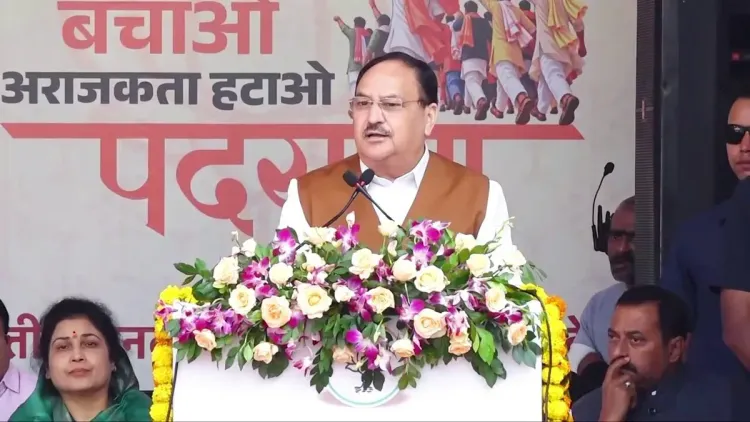
Synopsis
BJP national president J. P. Nadda invoked his personal Emergency-era arrests to challenge Congress and Rahul Gandhi over their EVM integrity claims, asking why they boycotted the Election Commission's 2017 hackathon open challenge.
Key Takeaways
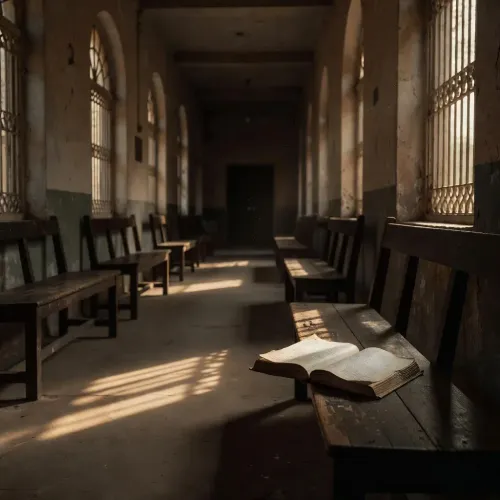
Nadda stated he was arrested twice from a classroom during the 1975–1977 Emergency .
He said entire families were jailed during the Emergency, contrasting that period with the current electoral framework.
The Election Commission of India issued an open EVM hackathon challenge to political parties in 2017 ; Congress did not participate .
Nadda used the proverb 'नाच न जाने, आंगन टेढ़ा' to argue that electoral losers blame the voting machine rather than their own campaigns.
The post was tagged #SaveDemocracyRemoveAnarchy , part of BJP's broader messaging framing EVM doubts as anti-democratic.
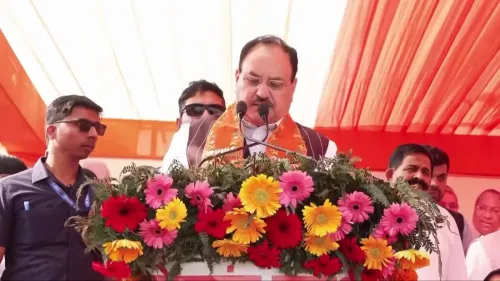
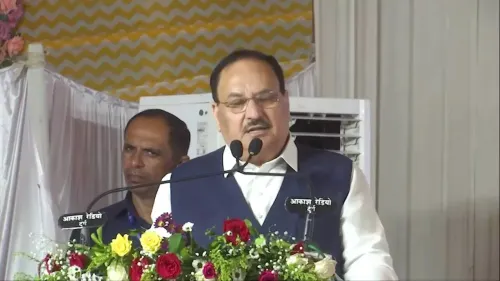
A personal arrest inside a classroom during India's darkest democratic chapter — that is where Union Health Minister and BJP national president J. P. Nadda opened his broadside against the opposition on Wednesday, 4 November 2026, turning a debate over Electronic Voting Machines into a pointed question about political courage and historical amnesia.
From a classroom arrest to a floor of Parliament — Nadda's Emergency testimony
Nadda's post, written in Hindi, begins with a stark personal declaration: 'मैं इमरजेंसी का भुक्तभोगी हूं' — 'I am a victim of the Emergency.' He states that police took him away from his classroom twice during the 1975–1977 suspension of civil liberties, a period under Prime Minister Indira Gandhi when opposition leaders, students, and journalists were jailed without trial. 'Entire families were put behind bars,' he wrote, grounding an abstract constitutional debate in lived memory.
That framing is deliberate. For BJP leaders, the Emergency is not merely history — it is a rhetorical anchor, a fixed reference point that places Congress on the wrong side of democracy every time the word is invoked. The harder the opposition presses its EVM grievance, the sharper that contrast becomes.
The unanswered hackathon challenge of 2017
The core accusation in Nadda's post is specific and on the record: in 2017, the Election Commission of India issued an open challenge to all recognised political parties, inviting them to demonstrate any vulnerability in EVMs through a formal hackathon. Nadda asked directly — 'कांग्रेस और राहुल गांधी उसमें शामिल क्यों नहीं हुए?' — 'Why did Congress and Rahul Gandhi not participate in it?' It is a question that has circled Indian political discourse since that challenge went unanswered by the principal party that had been loudest in its suspicions.
Rahul Gandhi and the Indian National Congress have repeatedly raised doubts about EVM integrity following election defeats, arguing that the machines are susceptible to manipulation. The Election Commission has consistently defended the machines' technical architecture, pointing to their standalone, non-networked design. The 2017 challenge — which no major opposition party accepted on the Commission's terms — remains the most concrete data point in that defence.
The proverb, the hashtag, and the politics of blame
Nadda reached for a pointed Hindi proverb to close the argument: 'नाच न जाने, आंगन टेढ़ा' — roughly, 'A bad dancer blames the courtyard.' The implication is unsparing: parties that cannot win the public's trust should not blame the instrument of counting. His post carried the hashtag #SaveDemocracyRemoveAnarchy, situating the remark inside a broader BJP messaging campaign that frames the opposition's EVM rhetoric as an attack on democratic institutions themselves.
The exchange is part of a recurring cycle in Indian politics: EVM doubts intensify after each major electoral loss, the Election Commission reiterates the machines' security credentials, and BJP counters with the 2017 non-participation. What gives this round an extra charge is the personal testimony Nadda leads with — a minister who can say he was physically removed from a classroom by the state now asking who truly stands with democratic norms.
The question Congress must eventually answer — in Parliament, in a court, or at a future hackathon — is whether it will contest the machine or contest the election on the ground. Until then, the 2017 challenge sits on the table, unanswered.
Point of View
Then pivot to the procedural vacuum left by Congress's 2017 hackathon absence. The personal testimony of classroom arrests is strategically valuable precisely because it is irrefutable and emotionally resonant — it pre-empts any 'whataboutery' about current institutional bias. The unresolved 2017 challenge is the sharper political weapon, however, because it is verifiable and unanswered. If Congress does not formally engage the EVM question on the Election Commission's terms, it cedes the procedural high ground every election cycle, handing BJP a ready-made riposte that will outlast any individual poll result.
NationPress
4 Nov 2026
Frequently Asked Questions
What is J. P. Nadda's connection to the Emergency of 1975?
Nadda has stated that he was arrested twice from his classroom during the 1975–1977 Emergency , when the government of Prime Minister Indira Gandhi suspended civil liberties and jailed thousands of opposition figures, students, and activists.
What was the Election Commission's EVM hackathon challenge?
In 2017 , the Election Commission of India invited all recognised political parties to a formal open challenge — a hackathon — where they could attempt to demonstrate any hacking vulnerability in Electronic Voting Machines. The Commission has maintained that EVMs are standalone, non-networked devices that cannot be remotely tampered with.
Did Congress or Rahul Gandhi participate in the EVM hackathon?
According to the research available, the Indian National Congress and Rahul Gandhi did not participate in the Election Commission's 2017 EVM hackathon challenge, a point Nadda directly raised in his post.
What does the Hindi proverb 'नाच न जाने, आंगन टेढ़ा' mean?
The proverb translates roughly to 'A bad dancer blames the courtyard.' Nadda used it to argue that political parties unable to win public support blame the Election Commission and EVMs rather than their own electoral performance.
What is the BJP's #SaveDemocracyRemoveAnarchy campaign about?
The hashtag #SaveDemocracyRemoveAnarchy is part of BJP's political messaging that frames opposition allegations of EVM manipulation as an attack on India's democratic institutions, contrasting such claims with the Congress-era Emergency when democratic rights were actually suspended.