Nadda Hits Out at Rahul, Congress Over EC and Court Criticism
Synopsis
BJP national president J. P. Nadda accused Rahul Gandhi and Congress of intimidating the Election Commission, Supreme Court, and other constitutional institutions, charging them with blaming the poll body only when they lose elections. The post, tagged #SaveDemocracyRemoveAnarchy, continues a long-running BJP-Congress battle over institutional credibility.
Key Takeaways
Nadda , Union Health Minister and BJP national president, posted a sharp attack on Rahul Gandhi and Congress on October 30, 2026 .
He accused them of trying to 'bully' the Election Commission of India , the Supreme Court , and constitutional institutions for political gain.
Nadda's core charge: Congress claims credit for wins but blames the Election Commission for defeats.
The post was tagged #SaveDemocracyRemoveAnarchy , signalling a broader BJP framing of opposition criticism as anti-democratic.
Congress has a documented history of raising EVM and Election Commission concerns after the 2019 and 2024 Lok Sabha results.
The BJP and Congress have traded this 'who owns democracy' argument repeatedly over the past several election cycles.
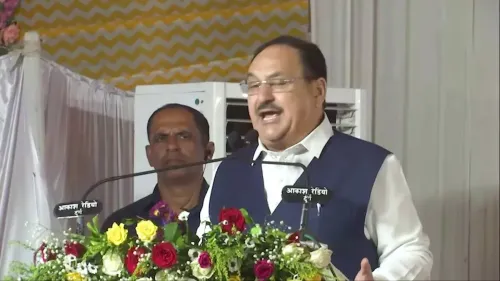
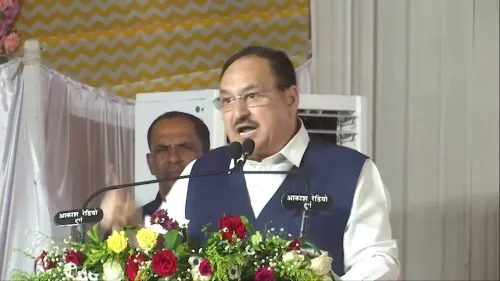
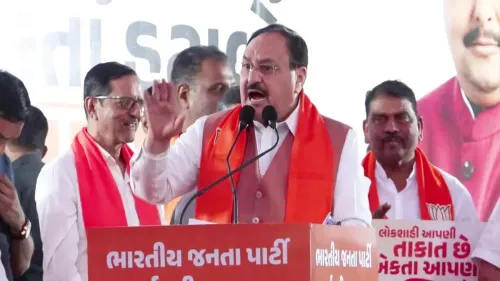
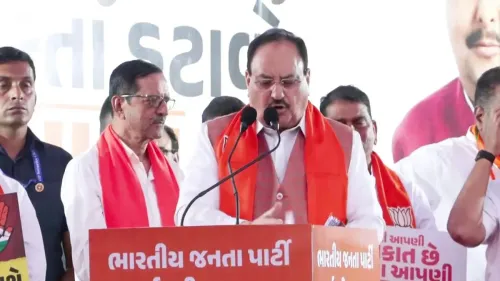
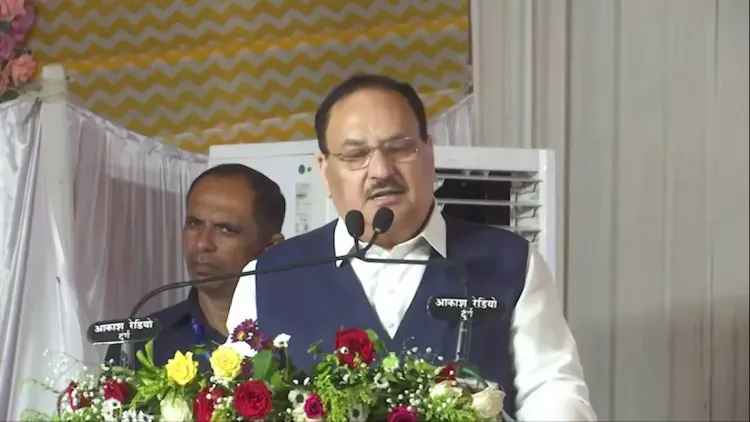
Win and it is your own brilliance; lose and it is the Election Commission's fault — that is the charge Union Health Minister and BJP national president J. P. Nadda levelled at Rahul Gandhi and the Indian National Congress in a sharp post on Friday, October 30, 2026, accusing them of trying to intimidate constitutional institutions to serve their political ends.
Nadda wrote in Hindi: 'कुछ लोग चुनाव आयोग, सुप्रीम कोर्ट और संवैधानिक संस्थाओं को डराकर अपना उल्लू सीधा करना चाहते हैं' — 'Some people want to bully the Election Commission, the Supreme Court, and constitutional institutions to get their way.' He closed with a direct tag: 'This is the politics of Rahul Baba and Congress.'
The 'Win-Lose' Accusation at the Heart of Nadda's Attack
The central thrust of Nadda's post is a symmetry argument: that the Congress accepts electoral victories as proof of its own merit but attributes defeats to institutional failure. It is a familiar charge in Indian politics — and one with a documented paper trail. After the 2019 Lok Sabha results, Congress leaders publicly questioned the integrity of Electronic Voting Machines and demanded greater transparency from the Election Commission of India. Similar concerns were aired again following the 2024 general elections, with opposition parties collectively calling into question the Commission's functioning.
Nadda's framing — captured in the hashtag #SaveDemocracyRemoveAnarchy — positions that pattern of institutional criticism not as accountability but as intimidation: a deliberate effort to delegitimise adverse outcomes rather than contest them through legitimate democratic channels.
A Long-Running Battle Over Who Owns 'Democracy'
The BJP and Congress have spent the better part of a decade trading exactly this argument, each accusing the other of weaponising constitutional bodies. The ruling coalition's line is that opposition pressure on the Election Commission and the judiciary amounts to an assault on democratic institutions. The Congress counter-argument, consistently, is that scrutiny of powerful bodies is the lifeblood of accountability in a republic — not anarchy.
Nadda, as BJP national president, is the party's most authoritative voice on organisational matters. His choice to invoke both the Supreme Court of India and the Election Commission in a single broadside signals that the BJP views the opposition's critique of institutions as a coordinated political strategy — and one it intends to contest loudly ahead of any upcoming electoral contests.
Whether Congress responds formally, and whether the Election Commission weighs in on the public controversy, will shape how this particular skirmish lands. For now, Nadda has drawn the battle line in unmistakable terms: those who question the umpire, he argues, only do so when they lose the match.
Point of View
The party reframes it as institutional sabotage rather than accountability. By directly naming Rahul Gandhi rather than Congress as a collective, Nadda personalises the attack — a tactical choice that keeps Gandhi at the centre of the BJP's political messaging. The hashtag #SaveDemocracyRemoveAnarchy also suggests the BJP is building a sustained campaign frame around institutional legitimacy, likely in anticipation of upcoming state elections. The broader pattern — both sides claiming to defend democracy against the other — reflects a deepening erosion of shared institutional trust that has been building through successive election cycles.
NationPress
30 Oct 2026
Frequently Asked Questions
What did J. P. Nadda say about Rahul Gandhi and the Election Commission?
Nadda accused Rahul Gandhi and the Congress party of trying to intimidate the Election Commission, the Supreme Court, and other constitutional bodies to serve their political interests, and of blaming these institutions only when they lose elections.
What is the hashtag #SaveDemocracyRemoveAnarchy about?
#SaveDemocracyRemoveAnarchy is a BJP-framed hashtag used in Nadda's October 30, 2026 post to position the Congress party's criticism of constitutional institutions as a threat to democratic order.
Has Congress previously criticised the Election Commission of India?
Yes. After both the 2019 and 2024 Lok Sabha elections, Congress and other opposition parties publicly questioned the reliability of EVMs and raised concerns about the Election Commission's functioning.
Why is J. P. Nadda significant in this debate?
As BJP national president as well as a Union Cabinet minister, Nadda is the party's top organisational voice — making his public attacks on the Congress carry official party weight, not just personal opinion.
What is the BJP's main argument against Congress on institutional criticism?
The BJP argues that Congress accepts electoral victories without question but delegitimises institutions — particularly the Election Commission — whenever it suffers a defeat, amounting to selective and politically motivated pressure on constitutional bodies.