Nadda Targets Rahul Gandhi Over Election Fraud Claims
Synopsis
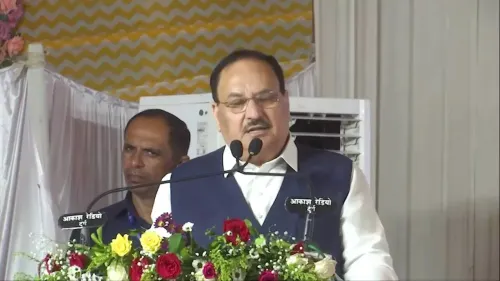
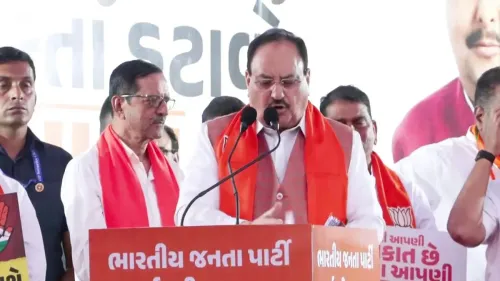
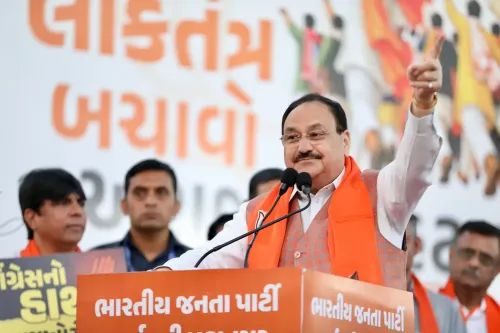
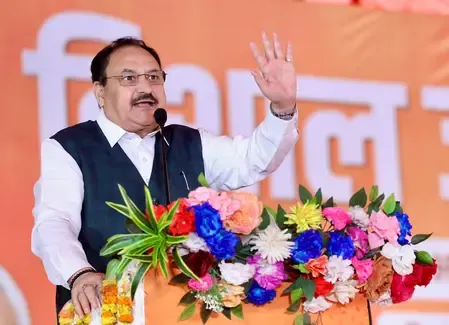
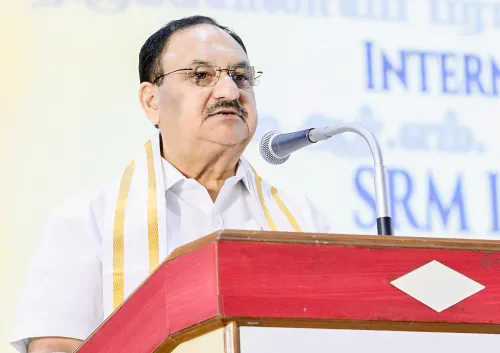
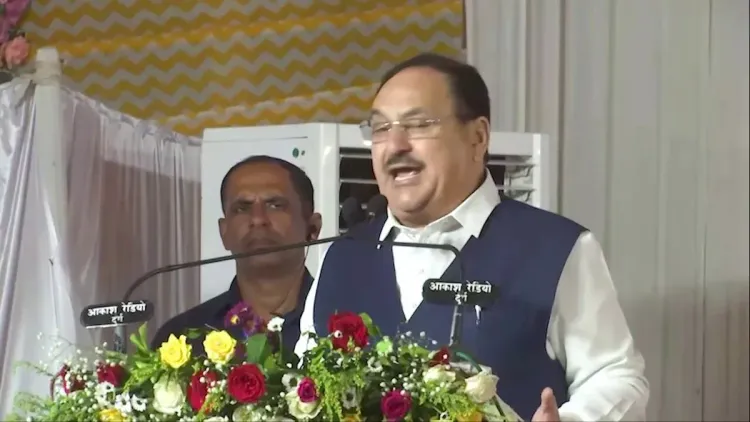
BJP national president J. P. Nadda accused Rahul Gandhi of making public allegations of electoral fraud in Karnataka, Maharashtra and Haryana while filing no formal affidavit with the Election Commission, calling it a 'run-and-accuse' political strategy that undermines constitutional institutions.
Key Takeaways
BJP national president and Union Minister J.
Nadda posted a direct attack on Rahul Gandhi on October 30, 2026 , accusing him of a strategy of making allegations and fleeing accountability.
Nadda specifically cited Karnataka, Maharashtra, and Haryana as states where Gandhi raised vote-rigging charges without filing a formal affidavit with the Election Commission of India .
The post accused Congress of undermining democratic and constitutional institutions through unsubstantiated public rhetoric.
The BJP deployed the hashtag #SaveDemocracyRemoveAnarchy , indicating a coordinated messaging campaign beyond a single post.
Under Indian election law, aggrieved parties have formal legal channels — affidavits and court petitions — to contest electoral outcomes, channels Nadda says Congress is bypassing.
Accuse loudly, file nothing — that is the political strategy Union Health Minister and BJP national president J. P. Nadda is attributing to Leader of the Opposition Rahul Gandhi in a sharp post on X on Friday, October 30, 2026. Nadda charged that Gandhi has made sweeping allegations of vote-rigging in Karnataka, Maharashtra, and Haryana while conspicuously refusing to back those claims with a formal affidavit before the Election Commission of India.
The Allegation Without the Affidavit
Nadda's core charge, translated from Hindi, is direct: 'Rahul Gandhi rajneeti mein aarop lagakar bhaagne ki ranniti apna rahe hain' — 'Rahul Gandhi is adopting a strategy of levelling accusations and then running away from politics.' He argued that despite loudly questioning electoral integrity in three major state contests, Gandhi has not placed a single sworn statement before the Election Commission — the precise constitutional channel designed to adjudicate such grievances.
Under Indian election law, any candidate or party that believes fraud has occurred has a defined legal path: file a petition or affidavit with the Election Commission of India, or approach an appropriate court. Nadda's post frames Gandhi's public rhetoric as a deliberate bypass of those remedies.
Constitutional Institutions in the Crossfire
The BJP president went further, accusing the Indian National Congress of using these unsubstantiated allegations as cover for a broader assault on constitutional bodies. 'Congress's attitude reflects its intolerance towards democracy and constitutional institutions,' he wrote, deploying the hashtag #SaveDemocracyRemoveAnarchy — a tag that signals this is part of a coordinated BJP messaging push, not an isolated comment.
The Election Commission of India, established under Article 324 of the Constitution, operates as an independent body insulated from the executive. Attacks on its credibility — and counter-attacks defending it — have become a recurring feature of Indian political discourse, particularly in the wake of closely contested state elections.
A Pattern Older Than Any Single Election
This exchange fits a well-worn arc in Indian politics. Opposition parties periodically raise alarms about electoral irregularities, especially after unexpected defeats, and the ruling dispensation responds by pointing out the gap between public allegations and formal legal action. The distinction matters: an affidavit is a sworn, legally accountable document; a social media post is not.
Congress has a history of contesting election outcomes through both public channels and, selectively, legal ones — the party approached courts over certain constituency results in past cycles. Whether formal proceedings follow Nadda's challenge in the three states he named will determine whether this remains a political volley or escalates into an institutional confrontation.
The hashtag is trending. The affidavit, according to Nadda, is not.
Point of View
The ruling party reframes the debate around procedural accountability — 'if you believe it, prove it in writing.' The 'accuse and flee' framing is designed to shift the burden of credibility back onto the opposition, making Gandhi's public allegations look like political theatre rather than genuine democratic grievance. With the hashtag #SaveDemocracyRemoveAnarchy, this is clearly part of a broader, coordinated BJP counter-narrative ahead of what appears to be a politically charged period. The deeper contest is over who owns the 'defender of democracy' label — a fight both parties know is won in public perception, not in affidavits.
NationPress
31 Oct 2026
Frequently Asked Questions
What did J. P. Nadda say about Rahul Gandhi and elections?
Nadda accused Rahul Gandhi of making allegations of vote-rigging in Karnataka, Maharashtra and Haryana without filing any formal affidavit with the Election Commission of India, calling it a strategy of 'levelling accusations and running away.'
Why is filing an affidavit with the Election Commission important?
An affidavit is a sworn legal document that formally places a complaint before the Election Commission of India — the constitutional body empowered to investigate electoral irregularities. Without it, allegations remain unverified public statements with no legal standing.
Has Congress contested election results in Karnataka, Maharashtra or Haryana?
Congress has periodically raised concerns about electoral processes in state elections, though formal affidavits or petitions before the Election Commission are a separate step that Nadda says the party has not taken in these specific cases.
What is the hashtag #SaveDemocracyRemoveAnarchy about?
The hashtag appears to be part of a coordinated BJP messaging campaign defending constitutional institutions like the Election Commission against what the party characterises as baseless opposition attacks on their credibility.
What is Rahul Gandhi's position in Parliament?
Rahul Gandhi is the Leader of the Opposition in the Lok Sabha and a senior leader of the Indian National Congress.