JP Nadda challenges Rahul Gandhi: Why no affidavit to EC on Karnataka voter roll claims?
Synopsis
BJP president JP Nadda turned the electoral roll debate on its head in Ahmedabad — not by defending the SIR process, but by demanding why Rahul Gandhi, after publicly alleging one lakh invalid votes in Mahadevapura, has not filed the affidavit the Election Commission formally requested. It reframes the controversy: from whether rolls were manipulated, to whether the Opposition is willing to prove its own claims.
Key Takeaways
BJP president Jagat Prakash Nadda challenged Rahul Gandhi on 27 October to explain why he had not filed an affidavit or formal complaint with the Election Commission over alleged irregularities in Karnataka's electoral rolls.
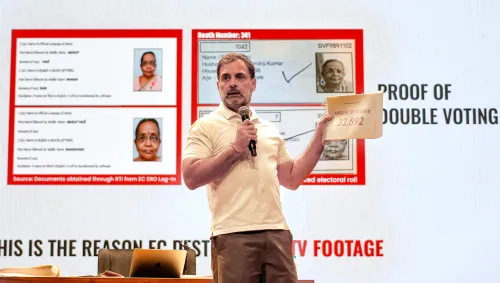
Gandhi had alleged around one lakh invalid votes in the Mahadevapura Assembly segment ; the EC had formally requested a supporting affidavit.
Nadda said approximately 13 crore entries were flagged for verification — not deleted — covering absent, shifted, deceased, and duplicate voters.
The Special Intensive Revision (SIR) has been conducted 12 times in total: 10 times under Congress governments and twice under BJP governments.
Around 10.24 lakh BLOs and 12.62 lakh BLAs — including Opposition representatives — participated in the verification exercise covering a 95 crore -strong voter base.
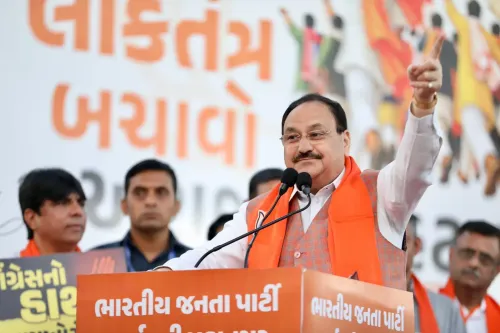
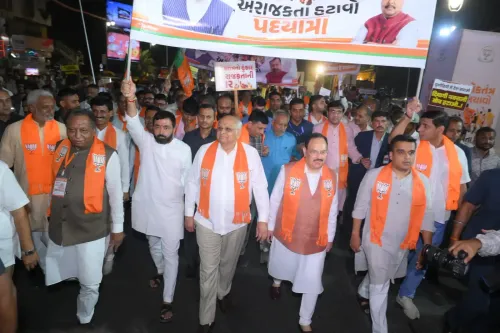
Gujarat CM Bhupendra Patel and Deputy CM Harsh Sanghavi attended the 'Save Democracy, Remove Anarchy' rally in Ahmedabad .
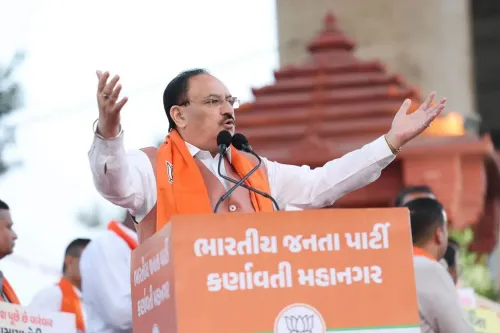
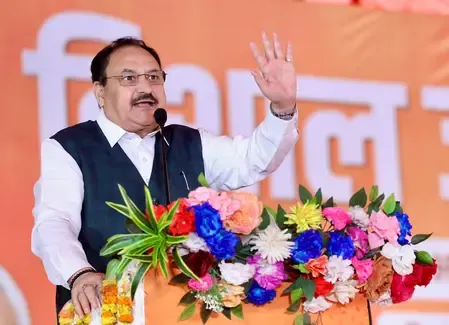
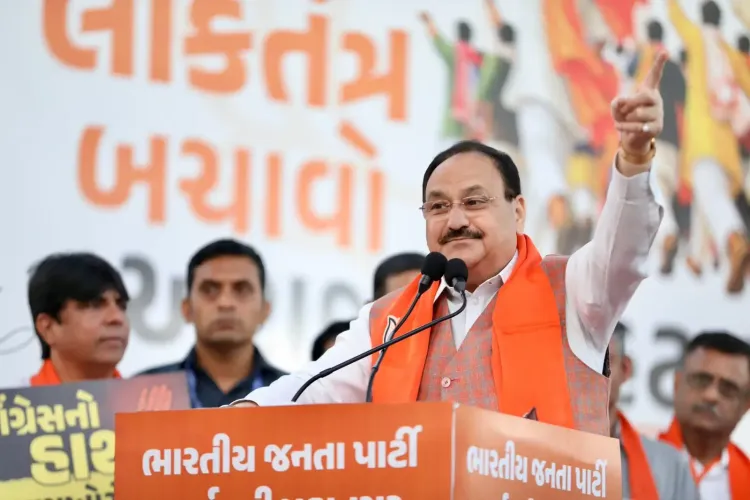
Bharatiya Janata Party (BJP) president and Union Health Minister Jagat Prakash Nadda on Tuesday, 27 October launched a sharp attack on Congress leader Rahul Gandhi at a party rally in Ahmedabad, demanding to know why Gandhi had not filed a formal complaint or affidavit with the Election Commission of India (ECI) despite publicly alleging irregularities in Karnataka's electoral rolls.
The Core Challenge
Nadda pointed out that Gandhi had alleged roughly one lakh invalid votes in the Mahadevapura Assembly segment but had not responded to the poll body's formal request for a supporting affidavit and complaint — the prescribed route for investigating such allegations. 'If the Election Commission asked him to submit an affidavit and file a complaint so that it could identify and investigate the matter, why has he not approached the Commission? Can a thousand people gathered at Connaught Place mortgage the country?' Nadda asked, speaking at BJP's 'Save Democracy, Remove Anarchy' rally.
The remarks represent a direct escalation in the BJP's counter-offensive against the Opposition's criticism of the Special Intensive Revision (SIR) of electoral rolls — a nationwide exercise that has become one of the most contested political flashpoints of recent months.
Defending the Electoral Roll Revision
Nadda defended the SIR process as methodical and inclusive, detailing its scale. According to him, around 10.24 lakh Booth Level Officers (BLOs) conducted door-to-door verification, while approximately 12.62 lakh Booth Level Agents (BLAs) — including representatives from Opposition parties — monitored the exercise. 'The exercise covered a voter base of around 95 crore,' he said.
He categorically rejected the Opposition's claim that approximately 13 crore votes had been deleted, arguing the figure represented entries flagged for verification rather than outright deletions. He broke down the numbers: around three crore entries involved voters absent from registered addresses, 6.3 crore related to people who had shifted, approximately one crore were duplicate entries, and another 2.8 crore pertained to deceased voters.
Historical Context and BJP's Counterargument
Nadda also pushed back on the narrative that SIR was an unusual or partisan exercise, noting it had been conducted 12 times in total — 10 times under Congress governments and twice under BJP governments. He cited the example of Bihar, where the electorate declined from approximately 7.89 crore to 7.42 crore following the revision, yet voter turnout reached 66% and the National Democratic Alliance (NDA) won 202 of 243 Assembly seats — an outcome he argued validated the roll's integrity rather than undermined it.
He also cited the 2024 Lok Sabha elections, referencing Mahant Haridas Udasin, for whom 10 Election Commission personnel trekked approximately 10 kilometres through Gujarat's Gir forest to ensure the religious figure could cast his vote — invoking it as evidence of the Commission's commitment to universal enfranchisement.
West Bengal and Illegal Migrant Allegations
The minister also alleged that electoral rolls had previously contained names of illegal migrants, citing rising voter numbers in several West Bengal districts bordering Bangladesh as grounds for scrutiny. He argued that identifying absent, shifted, deceased, and duplicate voters was essential to maintaining the integrity of a democratic exercise affecting 95 crore eligible electors.
Nadda also accused the Congress of inconsistency, alleging the party challenged Electronic Voting Machines (EVMs) after electoral defeats and demanded ballot papers on other occasions — a pattern he described as opportunistic rather than principled.
Who Was at the Rally
Gujarat Chief Minister Bhupendra Patel, Deputy Chief Minister Harsh Sanghavi, and several other senior BJP leaders were present at the Ahmedabad rally. The event is part of BJP's broader mobilisation campaign framing the Opposition's electoral roll criticism as an attack on constitutional institutions.
With assembly elections and ongoing political battles over voter list integrity dominating the national conversation, the BJP's counter-offensive is likely to intensify as the Congress faces pressure to formally substantiate its allegations before the Election Commission.
Point of View
Which Nadda himself raised, cuts both ways: if demographic flux warrants scrutiny there, critics will ask why the same rigour is not applied uniformly across states. The SIR's credibility ultimately rests not on the number of BLOs deployed, but on whether the verification outcomes are independently auditable — a question neither side has fully addressed in public.
NationPress
28 Oct 2026
Frequently Asked Questions
What did JP Nadda accuse Rahul Gandhi of at the Ahmedabad rally?
Nadda accused Gandhi of publicly alleging around one lakh invalid votes in Karnataka's Mahadevapura Assembly segment without filing a formal complaint or affidavit with the Election Commission — even after the poll body formally requested one. He argued the Congress was making allegations against a constitutional institution without following the prescribed legal process.
What is the Special Intensive Revision (SIR) of electoral rolls?
The SIR is a structured exercise to update and clean electoral rolls through door-to-door verification by Booth Level Officers. Nadda said the current round covered a voter base of around 95 crore and involved 10.24 lakh BLOs and 12.62 lakh BLAs, including agents from Opposition parties. He noted the exercise has been conducted 12 times, including 10 times under Congress governments.
Did the Election Commission delete 13 crore votes as the Opposition claims?
Nadda rejected this claim, saying the 13 crore figure represented entries flagged for verification — not deleted votes. He broke these down as roughly three crore voters absent from registered addresses, 6.3 crore who had shifted, one crore duplicate entries, and 2.8 crore deceased voters.
What was the Bihar example Nadda cited?
Nadda cited Bihar, where the electorate declined from approximately 7.89 crore to 7.42 crore after the revision, yet voter turnout reached 66% and the NDA won 202 of 243 Assembly seats. He used this to argue that a cleaner roll did not suppress participation.
Why did Nadda mention West Bengal in the context of electoral rolls?
Nadda alleged that electoral rolls in several West Bengal districts bordering Bangladesh showed notable increases in voter numbers, which he cited as evidence that rolls had previously included ineligible entries such as illegal migrants. He argued the SIR was necessary to correct such anomalies.