BJP's 'Save Democracy' marches in Gujarat target Congress over poll process row
Synopsis
BJP's Gujarat unit staged twin marches under its 'Save Democracy, Remove Anarchy' banner, with J.P. Nadda defending the Special Intensive Revision of voter rolls and accusing Congress of a selective relationship with electoral institutions — accepting wins as mandates while blaming the ECI for losses. The rallies signal BJP's intent to make 'institutional credibility' a centrepiece political argument heading into the next electoral cycle.
Key Takeaways
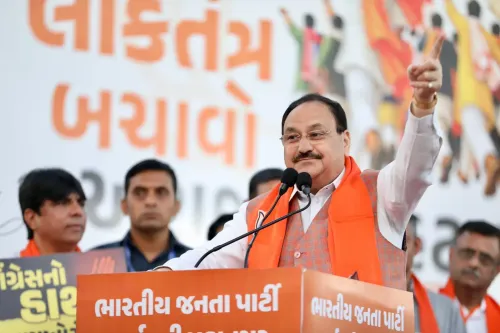
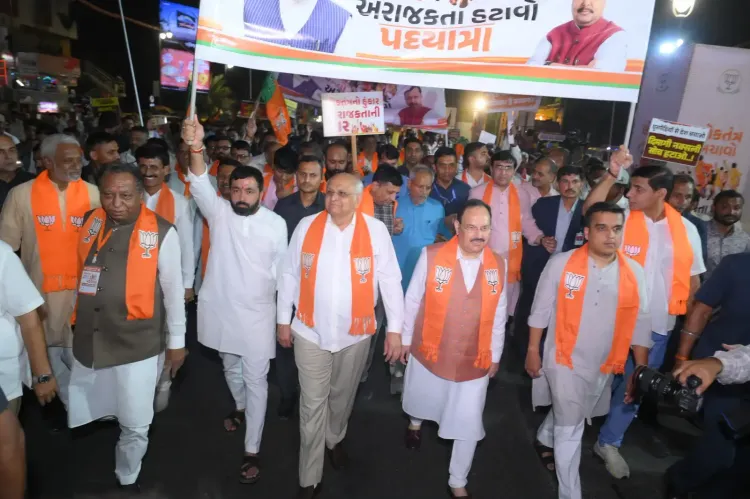
BJP Gujarat held 'Save Democracy, Remove Anarchy' marches in Ahmedabad and Rajkot on 27 October 2026 .
Nadda defended the Special Intensive Revision (SIR) of electoral rolls, calling it a standard, non-partisan process.
Nadda cited an 'unusual increase' in voter numbers in nine West Bengal districts bordering Bangladesh, calling for verification.
Deputy CM Harsh Sanghavi accused Congress of shifting from EVM complaints to broader institutional challenges after electoral defeats.
Tarun Chugh questioned why Congress objected to the SIR and ECI after losses but not after wins in Kerala and Tamil Nadu .
State president Jagdish Vishwakarma called on Congress to refrain from language targeting the personal lives of political opponents' families.
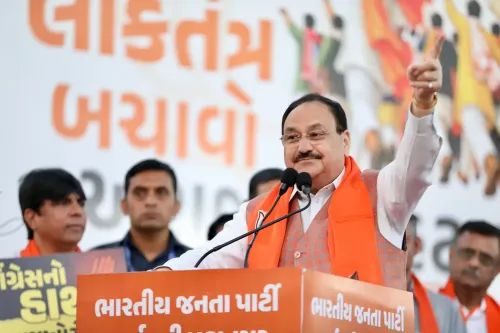
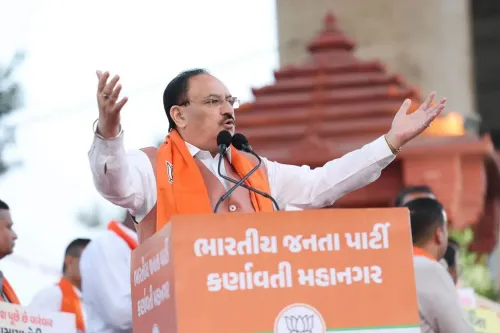
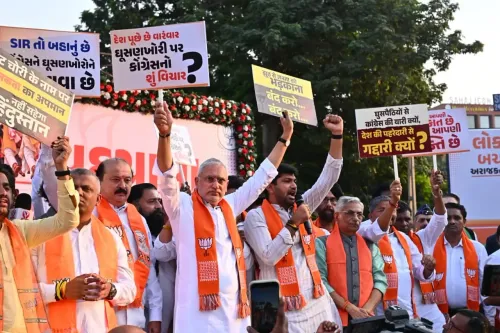
The Gujarat unit of the Bharatiya Janata Party (BJP) took to the streets on Tuesday, 27 October 2026, holding parallel marches in Ahmedabad and Rajkot under its 'Save Democracy, Remove Anarchy Campaign'. Senior leaders accused the Indian National Congress of systematically undermining constitutional institutions — particularly the Election Commission of India (ECI) — by challenging electoral outcomes only when it loses.
Key Figures and Venues
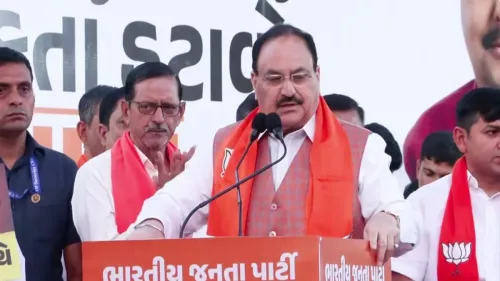
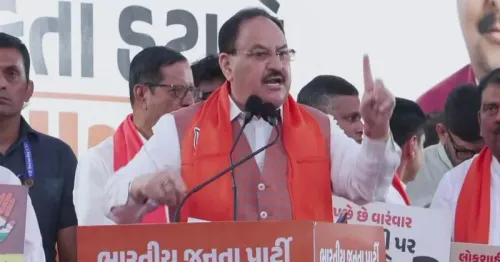
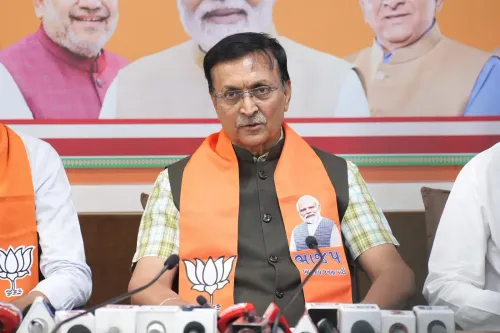
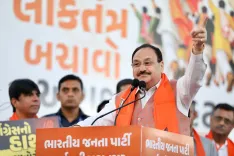
Union Minister and former BJP national president J.P. Nadda headlined the Ahmedabad march at Nava Vadaj, alongside Chief Minister Bhupendra Patel and Deputy Chief Minister Harsh Sanghavi. In Rajkot, state BJP president Jagdish Vishwakarma and party state in-charge Tarun Chugh led the programme. Both gatherings drew party workers, elected representatives, community leaders, and residents, with slogans such as 'Save Democracy, Remove Anarchy' and 'The roar of democracy, the defeat of anarchy' echoing through the venues.
Nadda Defends Electoral Roll Revision
Addressing party workers in Ahmedabad, Nadda mounted a strong defence of the Special Intensive Revision (SIR) of electoral rolls, describing it as a necessary exercise to ensure only eligible citizens are enrolled. He said the process was designed to weed out deceased voters, migrants, duplicate registrations, and those unavailable at their registered addresses.
'SIR is not a new process,' Nadda said, pointing out that electoral roll revisions had been carried out under previous administrations, including Congress-led governments. He accused Congress of accepting victories as the people's mandate while blaming the Election Commission when it faces defeats — a charge the party has not publicly responded to as of this report.
Nadda also cited what he described as an 'unusual increase' in voter numbers in nine districts of West Bengal bordering Bangladesh, calling for intensive verification of rolls in those areas. He referred to Congress leader Rahul Gandhi's allegations of irregularities in Karnataka's Mahadevapura constituency, claiming the ECI had sought supporting details including an affidavit through the prescribed procedure, but that Congress had not completed the subsequent formalities.
'Today, several countries across the world look at India's electoral process and the functioning of the Election Commission as examples,' Nadda said, adding that the ECI, the Supreme Court, and other constitutional bodies had demonstrated the strength of Indian democracy. He also noted that the inclusion of the Leader of the Opposition in the appointment process for the Chief Election Commissioner was an important step towards transparency.
Sanghavi and Chugh on EVMs and the INDIA Alliance
Deputy Chief Minister Sanghavi accused Congress of first targeting Electronic Voting Machines (EVMs) and, having failed to make that charge stick, now questioning other aspects of the electoral system after poll defeats. He argued that political parties need to engage with citizens, understand their concerns, and earn public trust rather than resorting to institutional allegations. 'Prime Minister Narendra Modi enjoys the strong support and love and trust of 1.4 billion citizens of the country,' Sanghavi said.
In Rajkot, Chugh invoked the Emergency imposed by former Prime Minister Indira Gandhi, saying BJP workers had historically mobilised whenever democracy was threatened. He accused Rahul Gandhi and the INDIA alliance of attempting to weaken democratic institutions, asserting that India's democracy would neither be intimidated nor capitulate. Chugh also questioned why Congress raised objections to the SIR and the ECI after defeats but voiced no similar concerns when it or its allies won elections in Kerala and Tamil Nadu.
Vishwakarma on Congress and Political Decorum
State BJP president Vishwakarma alleged that Congress was disturbing public peace following repeated electoral setbacks. Referring to Congress president Mallikarjun Kharge's remarks about Prime Minister Modi's late father, he said: 'Political differences should not lead to insulting language about family members.'
Broader Context
The marches come amid a sustained national debate over electoral integrity, triggered by Opposition claims about EVM reliability and voter roll accuracy — claims the ECI and the Supreme Court have repeatedly addressed. This is the latest in a series of BJP mobilisation drives framing itself as a defender of constitutional institutions against Opposition 'anarchy' — a political narrative the party has deployed with increasing frequency ahead of upcoming state elections. Whether Congress responds formally to the SIR-related charges or the Mahadevapura affidavit issue will likely shape the next phase of this political exchange.
Point of View
The party would be on stronger ground welcoming independent audits rather than defending the process primarily through rallies. The invocation of West Bengal's border-district voter rolls introduces a sensitive demographic undertone that could escalate the dispute well beyond Gujarat. What this episode ultimately reveals is that the battle over institutional legitimacy — once a fringe debate — has moved to the centre of Indian electoral politics.
NationPress
28 Oct 2026
Frequently Asked Questions
What is the BJP's 'Save Democracy, Remove Anarchy Campaign' in Gujarat?
It is a political mobilisation drive launched by the Gujarat unit of the Bharatiya Janata Party, under which marches were held in Ahmedabad and Rajkot on 27 October 2026. The campaign targets Congress's criticism of the Election Commission and electoral processes, accusing the party of undermining constitutional institutions after poll defeats.
What is the Special Intensive Revision (SIR) of electoral rolls that J.P. Nadda defended?
The SIR is an exercise conducted by the Election Commission of India to update and clean voter rolls by identifying deceased voters, migrants, duplicate entries, and those unavailable at registered addresses. Nadda argued it is a longstanding, non-partisan process carried out under multiple governments, including Congress-led ones.
Why did BJP raise concerns about West Bengal's voter rolls?
J.P. Nadda cited what he described as an 'unusual increase' in voter numbers in nine West Bengal districts bordering Bangladesh, and called for intensive verification of rolls in those areas. He presented this as evidence of the need for rigorous electoral roll revision nationally.
What did BJP allege about Congress and the Mahadevapura constituency complaint?
Nadda alleged that Congress leader Rahul Gandhi had raised irregularity claims about Karnataka's Mahadevapura constituency, but that the Election Commission had sought the necessary documentation — including an affidavit — through the prescribed procedure, and Congress had not completed the subsequent formalities.
What is the broader political significance of these marches?
The rallies reflect an escalating national dispute over electoral credibility, with BJP framing itself as a defender of the Election Commission and other constitutional bodies against what it calls Opposition 'anarchy'. The campaign signals that institutional legitimacy — not just policy — will be a key battleground in upcoming electoral cycles.