Nadda joins BJP's 'Save Democracy' march in Ahmedabad
Synopsis
BJP national president J. P. Nadda joined a 'Save Democracy, Remove Anarchy' padyatra in Ahmedabad on 27 October 2026, attacking Congress for questioning the Election Commission and EVMs while invoking their imposition of the 1975 Emergency. He also pledged completion of the SIR voter-roll revision process.
Key Takeaways
Union Health Minister and BJP National President J.
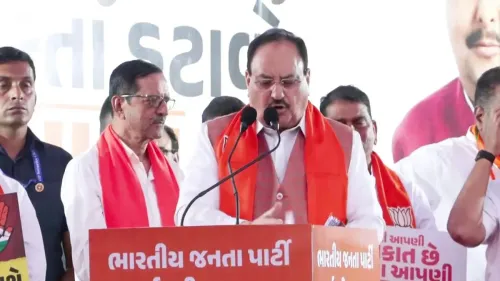
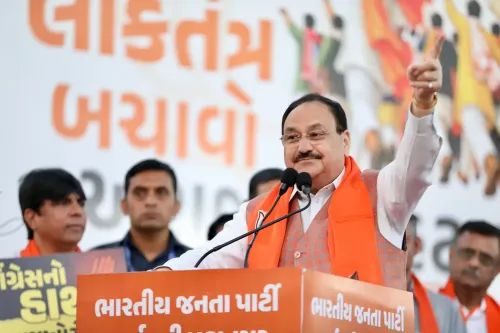
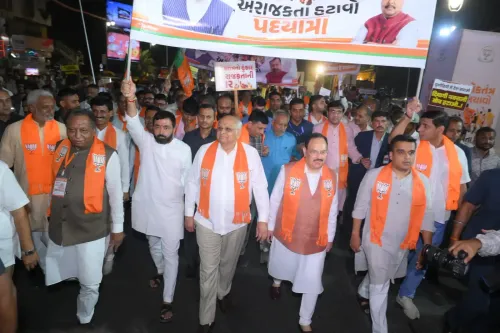
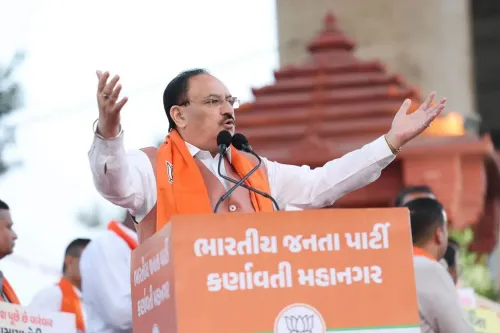
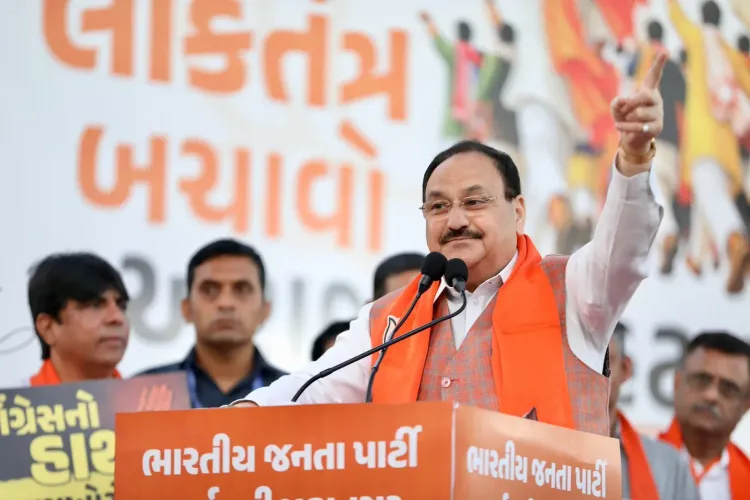
Nadda participated in the Loktantra Bachao, Arajkata Hatao padyatra in Ahmedabad on 27 October 2026 .
Nadda accused Congress and the I.N.D.I.A. alliance of displaying 'double character' by questioning democratic institutions while having imposed the 1975 Emergency for 21 months.
He cited serial Congress challenges to EVMs , ballot paper systems, and the Election Commission as signs of frustration over electoral losses rather than legitimate democratic concern.
Nadda pledged that the SIR voter-roll revision process would be completed and electoral roll integrity ensured.
He invoked Prime Minister Narendra Modi 's trust among 140 crore Indians as the ruling party's primary democratic mandate.
The march signals a broader BJP grassroots push ahead of upcoming assembly elections, with party workers described as 'committed to a democratic counter' to opposition messaging.
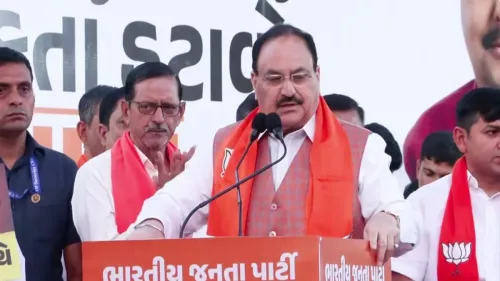
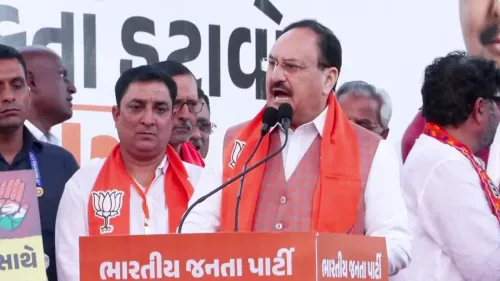
A padyatra rolling through Ahmedabad on Tuesday, 27 October 2026 became the stage for Union Health Minister and BJP National President J. P. Nadda to deliver a pointed broadside against the Congress and the I.N.D.I.A. alliance — accusing them of questioning constitutional institutions while carrying the legacy of India's 1975 Emergency.
Joining the 'Loktantra Bachao, Arajkata Hatao' ('Save Democracy, Remove Anarchy') march organised by BJP Gujarat, Nadda said the Congress's repeated challenges to the Election Commission of India, electronic voting machines, and the ballot-paper system amounted to what he called 'double character' — demanding democratic respect while having once suspended democracy itself for 21 months.
The Emergency charge that never fades
The 1975 Emergency, imposed by the then-Congress government under Indira Gandhi, remains the BJP's most durable political cudgel — and Nadda wielded it with precision. 'The country's public knows that the Congress, which strangled democracy by imposing the Emergency, is today invoking democracy's name,' he said, in a line designed to land hardest with voters who lived through those 21 months of suspended civil liberties.
The argument has particular texture in the current moment: after successive election losses, the opposition has raised doubts about EVM reliability and the integrity of voter rolls, charges the Election Commission and the ruling party have consistently denied. Nadda framed each such challenge not as legitimate democratic scrutiny but as the frustration of a party unable to reconcile with defeat.
SIR, voter-roll integrity, and the pitch to young Indians
Nadda's sharpest forward-looking line targeted a voter-list revision exercise — referred to as the SIR process — which he said would be completed and the purity of the electoral roll ensured. He drew a clear line between citizenship and franchise: 'India's future will be decided by the country's youth and aware voters — not by infiltrators.'
The remark signals that electoral-roll cleanliness, specifically the question of who is legitimately enrolled, will be a live issue in the BJP's campaign messaging in the months ahead. It also frames the march itself as part of a sustained organisational drive: Nadda said BJP's 'crores of workers' were committed to answering the opposition's anarchy 'in a democratic way.'
Modi as mandate — the closing argument
Nadda ended on the ruling party's familiar authority claim: that Prime Minister Narendra Modi's greatest strength is the trust and blessings of 140 crore Indians. 'A mandate in democracy comes not from the politics of lies but from earning the trust and blessings of 140 crore fellow citizens,' he said — a line pitched as much at wavering opposition voters as at the BJP faithful marching beside him.
With assembly elections in several states on the horizon and the opposition coalition keeping up institutional criticism, Ahmedabad's padyatra is less a one-day event and more the opening salvo of a ground-level counter-narrative the BJP intends to carry street by street.
Point of View
The BJP flips the opposition's institutional-integrity narrative into a credibility attack. The SIR voter-roll pledge adds a policy hook that keeps the story alive beyond the march itself. More broadly, the I.N.D.I.A. alliance's continued institution-questioning after electoral losses has handed the BJP a counter-narrative that requires no new policy — only historical memory. The real test is whether these street-level events translate into voter sentiment shifts in the states heading to polls.
NationPress
28 Oct 2026
Frequently Asked Questions
What is the 'Loktantra Bachao, Arajkata Hatao' padyatra?
'Loktantra Bachao, Arajkata Hatao' translates as 'Save Democracy, Remove Anarchy.' It is a march organised by BJP Gujarat in Ahmedabad on 27 October 2026, aimed at countering what the party describes as the opposition's attempts to undermine constitutional institutions such as the Election Commission.
Why does the BJP keep bringing up the 1975 Emergency against Congress?
The 1975 Emergency, imposed by the Congress government, suspended fundamental rights and democratic processes for 21 months. The BJP regularly invokes it to argue that Congress lacks the moral standing to question democratic institutions, especially when the opposition raises doubts about EVMs or election results.
What is the SIR process that Nadda mentioned?
SIR refers to a voter electoral roll revision exercise intended to verify and clean up voter lists. Nadda pledged that the process would be completed to ensure only legitimate voters are enrolled, framing it as a safeguard for electoral integrity.
What has Congress said about EVMs and the Election Commission?
After several election defeats, Congress and allied parties have publicly questioned the reliability of electronic voting machines and the neutrality of the Election Commission. The ruling BJP and the Election Commission have consistently rejected these allegations.
Who is J. P. Nadda and what is his role in BJP?
J. P. Nadda is India's Union Minister of Health and Family Welfare and Minister of Chemicals and Fertilizers. He also serves as the national president of the Bharatiya Janata Party, making him the organisation's chief alongside his cabinet responsibilities.