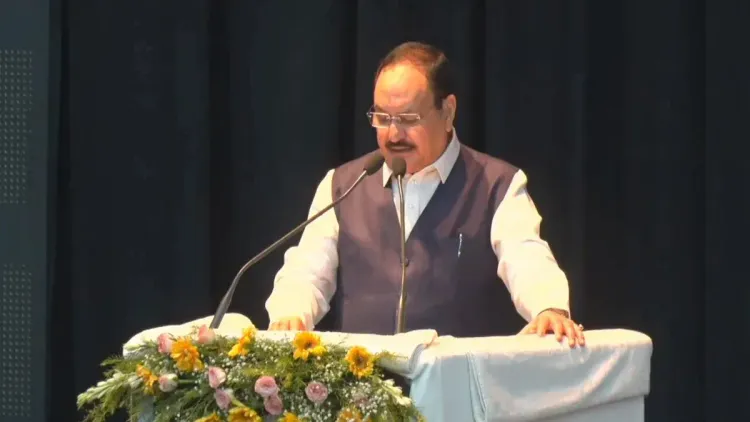
Nadda marks Emergency anniversary, slams Indira Gandhi
Synopsis
Union Health Minister J. P. Nadda marked the 51st Emergency anniversary on 25 June 2026, condemning Indira Gandhi for imposing authoritarian rule after an Allahabad High Court verdict and citing over 1.31 lakh arbitrary detentions — calling it harsher than British colonial-era repression.
Key Takeaways
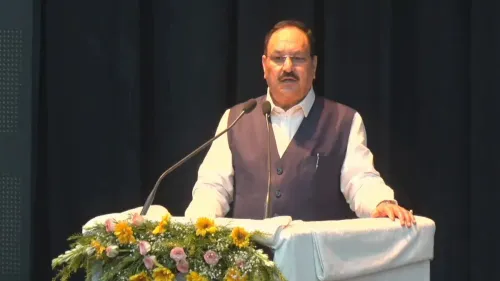
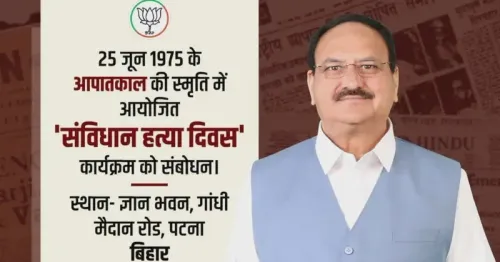
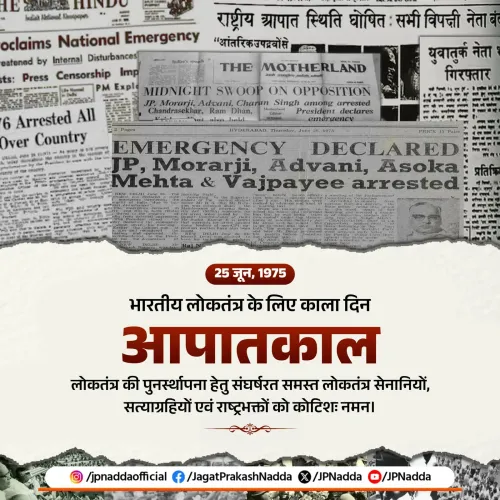
Nadda , Union Health Minister and BJP national president, posted on 25 June 2026 marking the 51st anniversary of the Emergency under the hashtag #SamvidhanHatyaDiwas .
Justice Jagmohan Lal Sinha of the Allahabad High Court found Indira Gandhi guilty of corrupt electoral practices on 12 June 1975 , triggering the constitutional crisis.
The Emergency was proclaimed on 25 June 1975 under Article 352 and lasted 21 months until March 1977.
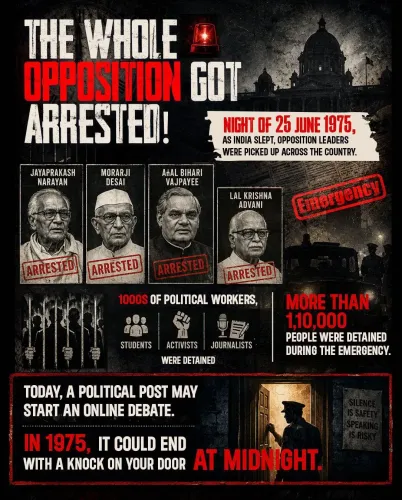
Nadda cited a figure of more than 1 lakh 31 thousand people jailed without cause during the Emergency period.
He described the crackdown as more brutal than anything carried out by British colonial rulers , framing it as a personal power-preservation move by Indira Gandhi.
The BJP has established 25 June as an annual political commemoration, with fresh official programmes from the Culture and Law Ministries expected to be watched in coming days.
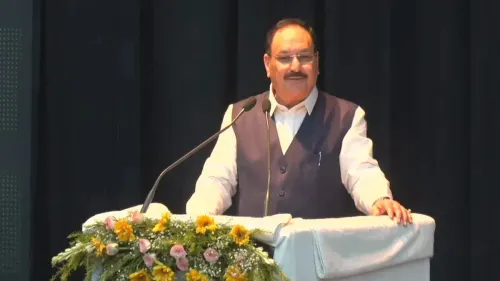
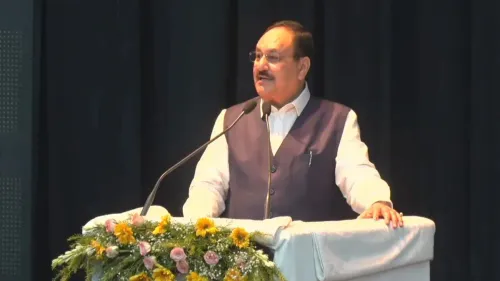
Union Health Minister J. P. Nadda on 25 June 2026 invoked the 51st anniversary of the Emergency to condemn the 1975 suspension of constitutional order, asserting that then-Prime Minister Indira Gandhi imposed authoritarian rule solely to protect her own office after a court found her guilty of electoral malpractice. Nadda posted on X under the hashtag #SamvidhanHatyaDiwas — which translates as 'Constitution Murder Day' — calling the crackdown more brutal than anything carried out by British colonial rulers.
Context
Nadda's post directly references the 12 June 1975 judgment by Justice Jagmohan Lal Sinha of the Allahabad High Court, which found Indira Gandhi guilty of corrupt electoral practices in the 1971 Lok Sabha election and declared her election void. The ruling barred her from holding elected office for six years. Thirteen days later, on the night of 25–26 June 1975, Gandhi advised President Fakhruddin Ali Ahmed to proclaim a state of internal Emergency under Article 352 of the Constitution, citing threats to national security.
Nadda's post quotes the figure of more than 1 lakh 31 thousand people jailed without cause during the Emergency period. He writes: 'Indira Gandhi ne apni kursi bachane ke liye desh par aapatkaal thopa' — 'Indira Gandhi imposed Emergency on the country to save her own chair.' He adds that such cruelty was never inflicted even by the British.
Policy Backdrop
The Emergency lasted 21 months, from June 1975 to March 1977, during which fundamental rights were suspended, press censorship was enforced, and mass preventive detentions were carried out under the Maintenance of Internal Security Act (MISA). Opposition leaders, journalists, and civil society activists were among those imprisoned without trial across the country.
The BJP has for several years designated 25 June as Samvidhan Hatya Diwas — a framing that positions the Emergency as a deliberate assault on India's constitutional framework. This annual commemoration has become a fixture of the party's political calendar, typically accompanied by statements from senior leaders and parliamentary references around the anniversary.
Stakeholders and Impact
The post is directed at a broad public audience but carries pointed political significance for the Congress party, which governed under Indira Gandhi during the Emergency. For citizens whose family members were detained during 1975–77, the anniversary carries personal historical weight. Civil liberties organisations and constitutional scholars also mark the date as a reference point for debates about executive overreach and judicial independence in India.
As BJP national president, Nadda's statement carries organisational weight beyond his ministerial role, signalling that the party intends the commemoration to remain a live political issue rather than a purely historical footnote.
What's Next
Observers will watch whether the Union Ministries of Culture and Law announce fresh official commemoration programmes around the anniversary, and whether the theme surfaces in Parliament when the monsoon session convenes. The BJP's sustained messaging on the Emergency suggests the issue will continue to feature in political discourse, particularly as the party seeks to draw contrasts with the Congress on questions of democratic and constitutional conduct.
Point of View
' keeping the Emergency's legacy as a live political liability for the Congress rather than settled history. By invoking Justice Jagmohan Lal Sinha's verdict alongside the detention figures, the statement anchors an ideological argument — that personal political survival drove the constitutional rupture — in legal and numerical specifics that are harder to dismiss. The comparison to British colonial brutality is rhetorically escalatory, designed to maximise moral contrast. As BJP national president, Nadda's dual role means this is simultaneously a government-adjacent statement and a party mobilisation signal ahead of any electoral cycle.
NationPress
24 Sept 2026
Frequently Asked Questions
What is Samvidhan Hatya Diwas?
'Samvidhan Hatya Diwas,' meaning 'Constitution Murder Day,' is the designation used by BJP leaders for 25 June to mark the anniversary of the 1975 Emergency proclaimed by Prime Minister Indira Gandhi, which they characterise as an assault on India's constitutional order.
Why did Indira Gandhi impose the Emergency in 1975?
On 12 June 1975, the Allahabad High Court found Indira Gandhi guilty of corrupt electoral practices in the 1971 election and declared her election void. Thirteen days later she advised President Fakhruddin Ali Ahmed to proclaim an internal Emergency under Article 352, citing threats to national security.
Who was Justice Jagmohan Lal Sinha?
Justice Jagmohan Lal Sinha was the Allahabad High Court judge who delivered the landmark 12 June 1975 ruling finding Indira Gandhi guilty of corrupt electoral practices in the 1971 Lok Sabha election and invalidating her victory.
How many people were jailed during the 1975 Emergency?
J. P. Nadda's post cites a figure of more than 1 lakh 31 thousand people detained without cause during the Emergency. This is a widely cited estimate; precise figures vary across official and unofficial records.
How long did the Emergency last in India?
India's internal Emergency lasted approximately 21 months, from 25 June 1975 to March 1977, during which fundamental rights were suspended, press censorship was enforced, and mass preventive detentions were carried out under laws such as the Maintenance of Internal Security Act.