CM Yogi Marks Completion of Ram Temple in Ayodhya
Synopsis
Uttar Pradesh Chief Minister Yogi Adityanath announced on 30 October 2026 that the grand temple of Lord Ram in Ayodhya has been fully constructed, describing it as the fulfilment of a generational resolve rooted in the 2019 Supreme Court verdict and the 2020 foundation stone laid by PM Modi.
Key Takeaways
CM Yogi Adityanath declared on 30 October 2026 that the Ram Temple in Shri Ayodhya Dham has been fully constructed.
The Supreme Court of India allocated the disputed Ayodhya site for temple construction in its November 2019 verdict.
Prime Minister Narendra Modi laid the foundation stone of the Shri Ram Janmabhoomi Temple in August 2020 .
The temple is built at the site regarded by millions of Hindus as the birthplace of Lord Ram in Ayodhya, Uttar Pradesh .
Ayodhya has undergone extensive infrastructure development — airports, roads, riverside ghats — alongside the temple's construction.
Attention now shifts to ceremonial milestones and the full opening of the complex to pilgrims.
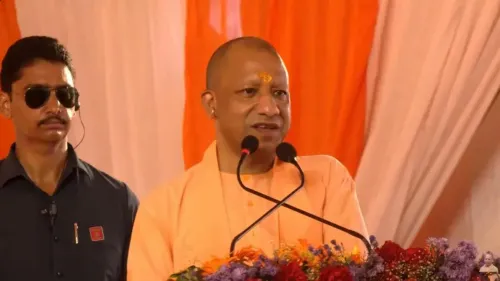
A resolve that once seemed distant has been turned to stone and sanctity: Uttar Pradesh Chief Minister Yogi Adityanath declared on Friday, 30 October 2026, that the grand temple of Lord Ram in Shri Ayodhya Dham has been fully constructed — a moment he described as the fulfilment of a sacred promise.
In his post on X, CM Yogi wrote: 'Sankalp tha ki mandir avashya banega... Shri Ayodhya Dham mein Bhagwan Shri Ram ke bhavy mandir ka nirman ho gaya...' — 'There was a resolve that the temple would certainly be built... The grand temple of Lord Shri Ram in Shri Ayodhya Dham has been constructed.'
A Disputed Site, a Court Verdict, and a Cornerstone
The road to this declaration stretches across decades of litigation and political assertion. In November 2019, the Supreme Court of India delivered a unanimous verdict, allocating the disputed site in Ayodhya for the construction of a Hindu temple while directing that an alternative plot be provided for a mosque. The ruling resolved one of independent India's most protracted legal battles over the site regarded by millions as the birthplace of Lord Ram.
Prime Minister Narendra Modi laid the foundation stone of the Shri Ram Janmabhoomi Temple in August 2020, marking the formal start of construction at the site of the former Babri Masjid, which had been demolished in December 1992. The project was entrusted to the Shri Ram Janmabhoomi Teerth Kshetra Trust, set up by the central government following the court's direction.
What the Moment Represents for Ayodhya
For CM Yogi, whose political identity is inseparable from the temple movement, this declaration carries weight beyond brickwork. As head of the Gorakhnath Math and a saffron-robed chief minister, he has long been one of the most visible faces of the cause. His post frames the completion not as a government project but as the honouring of a collective sankalp — a solemn vow.
Ayodhya itself has undergone sweeping transformation in parallel with the temple's rise: widened roads, an expanded airport, upgraded ghats along the Saryu river, and a rebranded identity as a global pilgrimage and tourism hub. The completion of the temple anchors that wider reinvention.
What Comes Next for the Shrine and the City
With construction now declared complete, attention will turn to the full opening of the temple complex to pilgrims and to related consecration or ceremonial milestones that may follow. The development projects that have reshaped Ayodhya's infrastructure are also expected to continue drawing investment and footfall to the region.
A promise made across generations — and litigated through courts, politics, and grief — has, in Yogi Adityanath's telling, finally been kept. The temple stands. The city will never be the same.
Point of View
Not merely an infrastructure project — a framing that reflects how the BJP has long positioned the Ayodhya cause at the centre of its cultural politics. The announcement arrives as Ayodhya itself transitions into a major pilgrimage economy, meaning the temple is simultaneously a religious symbol and an economic anchor for the region. For Yogi personally, whose identity as a Hindu monk-politician was built around this cause, the moment consolidates his legacy as the chief minister who presided over the temple's completion. The post's language — 'sankalp' (resolve) rather than 'yojana' (plan) — signals that the BJP intends this to be read as a moral and spiritual fulfilment, not just a policy delivery.
NationPress
31 Oct 2026
Frequently Asked Questions
Has the Ram Temple in Ayodhya been fully completed?
Uttar Pradesh Chief Minister Yogi Adityanath declared on 30 October 2026 that the grand temple of Lord Ram in Shri Ayodhya Dham has been fully constructed.
Who laid the foundation stone of the Ayodhya Ram Temple?
Prime Minister Narendra Modi laid the foundation stone of the Shri Ram Janmabhoomi Temple in August 2020 , formally beginning construction at the site.
What was the Supreme Court verdict on the Ayodhya land dispute?
In November 2019 , the Supreme Court of India delivered a unanimous verdict allocating the disputed site in Ayodhya for the construction of a Hindu temple, while directing that alternative land be provided for a mosque.
What is the significance of Ayodhya for Hindus?
Ayodhya is regarded by millions of Hindus as the birthplace of Lord Ram and is one of the holiest cities in the Hindu tradition.
What development projects have been undertaken in Ayodhya alongside the temple?
Alongside the temple's construction, Ayodhya has seen widened roads, an expanded airport, upgraded ghats along the Saryu river, and a broad rebranding as a global pilgrimage and tourism destination.