CM Yogi hails transformed Ayodhya as echo of Treta Yuga
Synopsis
Uttar Pradesh Chief Minister Yogi Adityanath invoked the mythological Treta Yuga to describe Ayodhya's transformation, posting on X on 14 August 2026. The remark reflects the BJP government's framing of Ayodhya's post-2019 redevelopment as both a cultural restoration and a developmental milestone.
Key Takeaways
CM Yogi Adityanath posted on 14 August 2026 that the transformed Ayodhya Dham evokes the Treta Yuga of Hindu tradition.
The 2019 Supreme Court verdict on the Ram Janmabhoomi title dispute was the legal turning point that enabled Ayodhya's large-scale redevelopment.
Infrastructure upgrades include road widening, Sarayu riverfront beautification, new airport connectivity, and expanded pilgrimage facilities.
Ayodhya's revival is part of a broader BJP-led pattern of upgrading major Hindu pilgrimage centres across Uttar Pradesh , including Varanasi and Mathura-Vrindavan.
CM Yogi heads the Gorakhnath Math and has consistently framed Ayodhya's development in both devotional and governance terms.
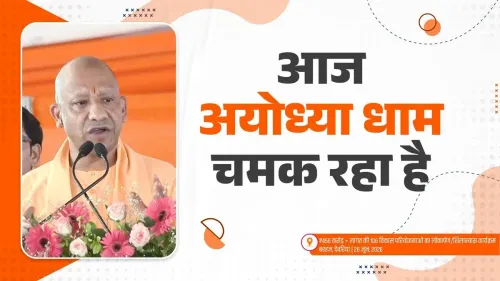
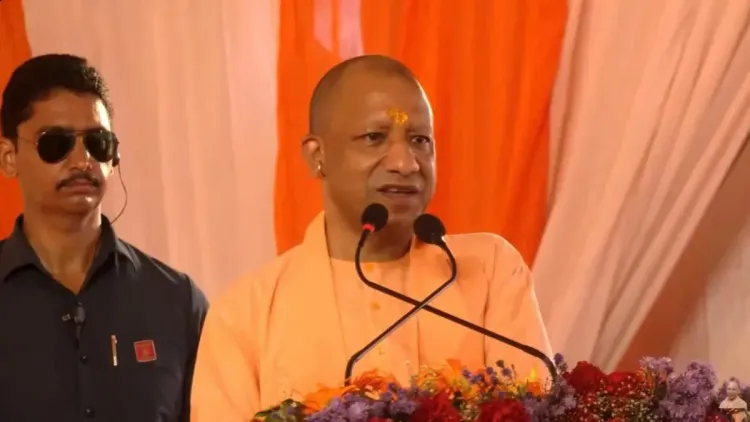
A city once defined by decades of legal dispute now draws pilgrims and tourists to gleaming ghats, widened boulevards, and a grand temple complex — and Uttar Pradesh Chief Minister Yogi Adityanath says the transformation is nothing short of a mythological homecoming. On Friday, 14 August 2026, he posted on X that the reborn Ayodhya Dham evokes memories of the Treta Yuga — the cosmic age in Hindu tradition when Lord Rama is said to have reigned.
In his post, CM Yogi wrote: 'आज का बदला हुआ श्री अयोध्या धाम हमें फिर से त्रेता युग का स्मरण कराता है...' — 'The transformed Shri Ayodhya Dham of today reminds us once again of the Treta Yuga.' The ellipsis carries weight: it is an open invitation to a feeling more than a policy statement.
From courtroom to consecration: Ayodhya's long arc
The city's reinvention did not happen overnight. The 2019 Supreme Court verdict resolved the decades-long Ram Janmabhoomi title dispute, allocating the contested land for temple construction and setting in motion a wave of urban and religious infrastructure investment. Ayodhya — revered across Hindu tradition as the birthplace of Lord Rama — became the focal point of one of independent India's most consequential cultural projects.
Under the BJP government in Uttar Pradesh, redevelopment extended well beyond the temple precincts: road widening, riverfront beautification along the Sarayu, new airport connectivity, and the upgrading of pilgrimage facilities have reshaped the city's physical fabric. The effort fits a broader pattern of state-led upgrades at major Hindu pilgrimage centres, from Varanasi's Kashi Vishwanath Corridor to Mathura-Vrindavan.
The Treta Yuga invocation and what it signals
The Treta Yuga reference is not casual. In Hindu cosmology, it is the second of four great ages — the era of the Ramayana, of dharmic kingship, of Ram Rajya. For Yogi Adityanath, who heads the Gorakhnath Math and has consistently framed Ayodhya's revival in devotional as much as developmental terms, the comparison is a deliberate cultural statement: the city is not merely modernised, it is restored to its spiritual essence.
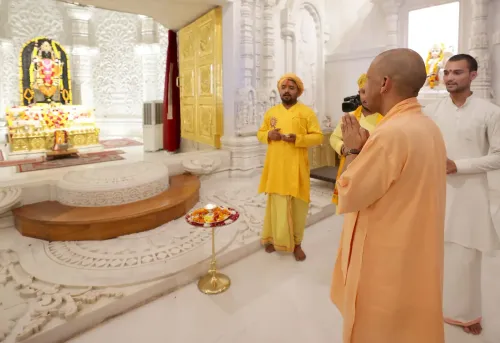
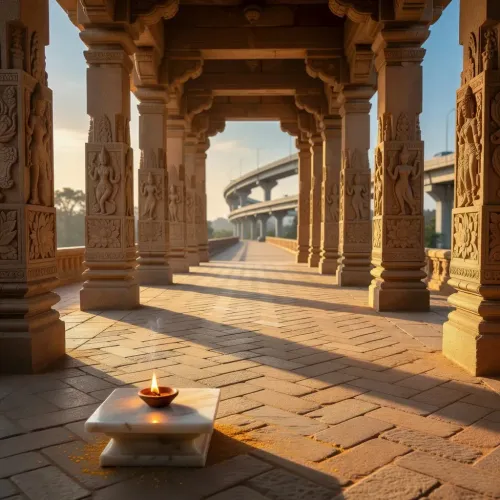
Pilgrims arriving at Ayodhya today encounter a landscape that pairs ancient ritual with contemporary infrastructure — a combination the state government has positioned as proof that cultural heritage and modern governance are not in conflict but in concert.
Tourism, connectivity, and what comes next
The immediate beneficiaries of Ayodhya's transformation are the pilgrimage and tourism sectors, which have seen surging footfall since the temple's consecration. Parallel projects at sites such as Varanasi suggest the model is being replicated across Uttar Pradesh's religious geography. Connectivity upgrades — rail, road, and air — are central to sustaining that momentum.
When a sitting Chief Minister frames a city's skyline as a window to a mythological golden age, he is doing more than celebrating brickwork. He is making a civilisational claim — and inviting every pilgrim who walks those streets to feel it.
Point of View
Deepening the BJP's narrative of Hindu cultural revival ahead of future electoral cycles. The post arrives on the eve of Independence Day, amplifying its resonance as a statement about national identity and heritage. For the BJP, Ayodhya is both a spiritual symbol and a governance showcase — proof that ideological commitment and administrative delivery can reinforce each other. The broader replication of this model at Varanasi and Mathura suggests a systematic, state-wide cultural-infrastructure strategy rather than a one-off project.
NationPress
28 Sept 2026
Frequently Asked Questions
What did CM Yogi Adityanath say about Ayodhya on 14 August 2026?
CM Yogi posted on X that the transformed Shri Ayodhya Dham reminds him of the Treta Yuga — the mythological era in Hindu tradition associated with Lord Rama's reign.
What is the Treta Yuga and why is it significant for Ayodhya?
The Treta Yuga is the second of four cosmic ages in Hindu cosmology and the era of the Ramayana, in which Lord Rama is believed to have ruled from Ayodhya. Invoking it frames Ayodhya's revival as a spiritual restoration, not just an urban project.
How has Ayodhya changed after the 2019 Supreme Court verdict?
Following the 2019 Supreme Court verdict that resolved the Ram Janmabhoomi title dispute, Ayodhya has seen large-scale redevelopment including temple construction, road widening, Sarayu riverfront beautification, new airport connectivity, and upgraded pilgrimage infrastructure.
What is Yogi Adityanath's role in Ayodhya's development?
As Chief Minister of Uttar Pradesh since 2017 and head of the Gorakhnath Math, Yogi Adityanath has been the principal political driver of Ayodhya's redevelopment, framing it in both devotional and administrative terms.
Are other religious cities in UP being developed like Ayodhya?
Yes. The Ayodhya model is being replicated across Uttar Pradesh, with parallel infrastructure and cultural upgrades underway at Varanasi and Mathura-Vrindavan under the BJP state government.