JP Nadda attacks Rahul Gandhi at Samvidhan Hatya Diwas, demands apology
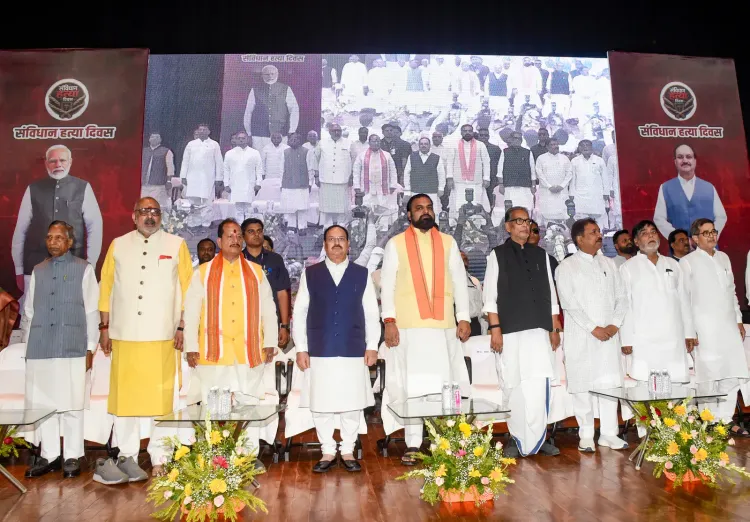
Synopsis
On the 50th anniversary of the Emergency, JP Nadda used Patna's Samvidhan Hatya Diwas stage to demand a public apology from Rahul Gandhi — framing the 42nd Constitutional Amendment and mass detentions as evidence that Congress's constitutional credentials are built on a contested foundation.
Key Takeaways
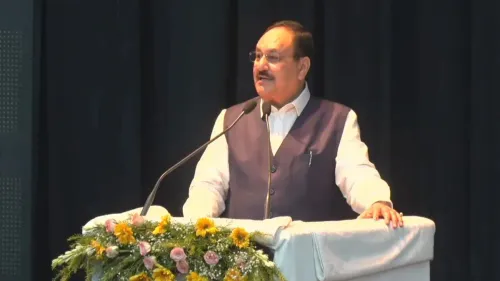
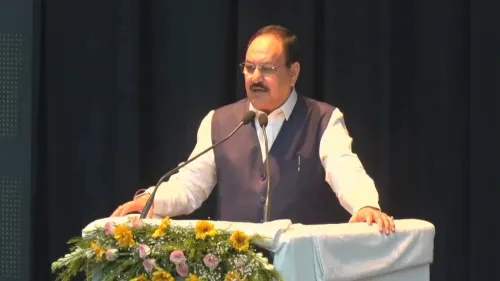
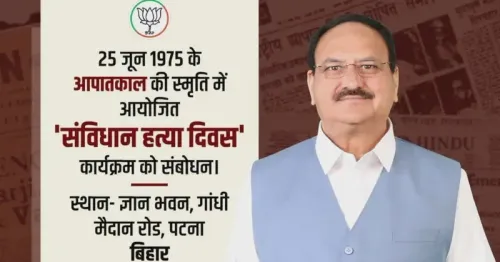
Jagat Prakash Nadda addressed a Samvidhan Hatya Diwas programme in Patna on 25 June , marking the anniversary of the 1975 Emergency .
Nadda demanded that Rahul Gandhi apologise for what he called anti-constitutional actions during the Emergency.
He alleged the 42nd Constitutional Amendment extended elected representatives' terms from 5 to 6 years and curtailed judicial oversight.
Nadda claimed more than 1.31 lakh people were detained and hundreds of journalists imprisoned during the Emergency.
He recalled Jayaprakash Narayan's historic Sampoorna Kranti call at Gandhi Maidan, Patna on 5 June 1974 .
The BJP frames 25 June as a day to educate younger generations on constitutional safeguards.
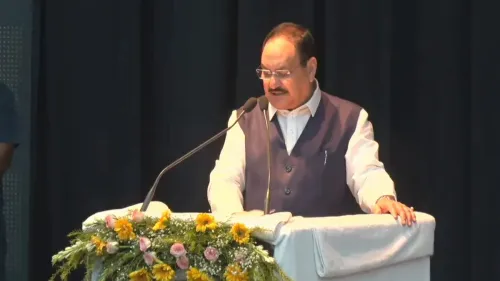
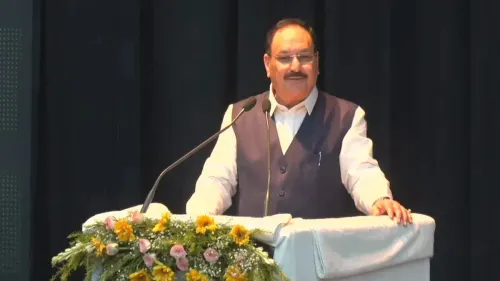
Union Minister Jagat Prakash Nadda launched a sharp political offensive against Leader of the Opposition Rahul Gandhi on 25 June in Patna, speaking at a programme marking Samvidhan Hatya Diwas — the day the Emergency of 1975 is commemorated as a constitutional assault. Nadda demanded that Gandhi publicly apologise to the country for what he described as anti-constitutional actions carried out by the Congress government during that period.
Key Accusations Against Congress
Nadda alleged that the Congress government, through the 42nd Constitutional Amendment enacted during the Emergency, extended the tenure of elected representatives from 5 to 6 years and sought to curtail judicial oversight over certain constitutional offices. He argued that those who publicly brandish copies of the Constitution today must first reckon with this record.
He specifically targeted the descendants of former Prime Minister Indira Gandhi, alleging they carry the Constitution during public events without, in his view, understanding its provisions. The remark was widely read as a direct reference to Rahul Gandhi.
Emergency Termed Greatest Attack on Democracy
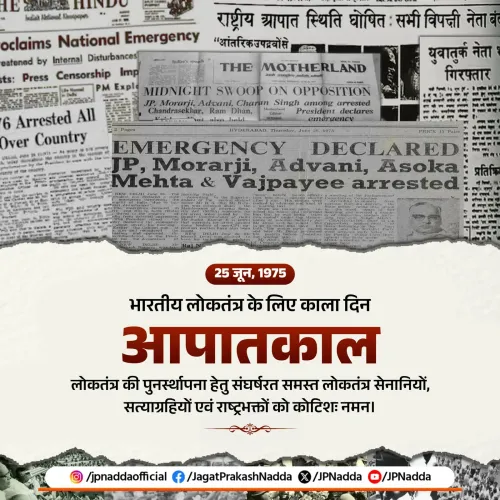
Nadda termed the Emergency imposed on 25 June 1975 as the gravest assault on Indian democracy, constitutional values, and civil liberties in independent India's history. He alleged that during this period, press freedom was curtailed, civil liberties were suspended, and constitutional institutions came under sustained pressure.
He claimed that more than 1.31 lakh people were detained, large-scale sterilisation drives affected millions, numerous houses were demolished in Delhi, and hundreds of journalists were imprisoned. These figures, he argued, represent a fundamental challenge to democratic principles — though the claims were presented without independent verification at the event.
Bihar's Role in the Anti-Emergency Movement
Nadda paid tribute to Bihar's historic role in the resistance against the Emergency, calling Patna a special ground in the struggle to restore democracy. He recalled that Gandhi Maidan in Patna witnessed the historic call for Sampoorna Kranti (Total Revolution) by Jayaprakash Narayan on 5 June 1974 — the movement that laid the groundwork for national agitation against Emergency rule.
The Union Minister noted that he personally participated in the student movement of that era and witnessed many of the events that eventually galvanised a nationwide uprising against the Emergency.
Purpose of Samvidhan Hatya Diwas
Nadda said the annual observance of Samvidhan Hatya Diwas is intended to educate younger generations about the Emergency period and to build awareness around safeguarding democratic institutions and constitutional values. This comes amid a broader political contest between the Bharatiya Janata Party (BJP) and Congress over who is the true custodian of the Indian Constitution — a debate that has intensified ahead of upcoming electoral cycles.
As the BJP continues to mark 25 June as a day of constitutional mourning, the Congress has consistently rejected the framing, arguing that its own record on constitutional governance stands scrutiny. The political battle over the Emergency's legacy shows no sign of abating.
Point of View
Who was a child during the 1975 Emergency, raises a legitimate question about inherited political accountability. More significantly, the BJP's own constitutional record — from Article 370 abrogation to the use of ordinances — means the 'Constitution protector' mantle is contested terrain for both parties. What mainstream coverage tends to miss is that this annual ritual is increasingly aimed at younger voters who have no lived memory of the Emergency, making the framing battle as much about future narratives as past facts.
NationPress
24 Sept 2026
Frequently Asked Questions
What is Samvidhan Hatya Diwas?
Samvidhan Hatya Diwas, or Constitution Murder Day, is observed on 25 June to mark the anniversary of the Emergency imposed by Prime Minister Indira Gandhi in 1975. The BJP observes this day annually to highlight what it describes as Congress's assault on constitutional values and democratic institutions during that period.
Why did JP Nadda demand an apology from Rahul Gandhi?
Nadda demanded that Rahul Gandhi apologise for actions taken by the Congress government during the 1975 Emergency, including the 42nd Constitutional Amendment, mass detentions, and alleged curtailment of press freedom. He argued that Congress leaders cannot claim to be defenders of the Constitution without acknowledging this record.
What was the 42nd Constitutional Amendment that Nadda referred to?
The 42nd Constitutional Amendment was enacted during the Emergency period and, among other provisions, extended the tenure of elected representatives from 5 to 6 years. Nadda alleged it also attempted to reduce judicial oversight over certain constitutional offices, which he described as an anti-constitutional act.
What is the significance of Patna and Gandhi Maidan in this context?
Patna's Gandhi Maidan was the site where Jayaprakash Narayan gave his historic call for Sampoorna Kranti, or Total Revolution, on 5 June 1974 — the movement that galvanised national opposition to the Emergency. Nadda cited Bihar's central role in the anti-Emergency struggle as the reason for holding the event in Patna.
How has Congress responded to BJP's Emergency narrative?
Congress has consistently rejected the BJP's framing of the Emergency as a defining measure of its constitutional record, arguing that its overall governance legacy withstands scrutiny. The party has not issued a formal response to Nadda's latest demand for an apology.