Anurag Thakur Welcomes Cabinet Nod to Expand Agniveer Absorption
Synopsis
The Union Cabinet has approved a revised Agnipath framework under PM Modi and Defence Minister Rajnath Singh: 25% of Agniveers are retained on merit after four years, while the remaining 75% now get an additional two-year service window with a pathway to permanent absorption. BJP MP Anurag Thakur welcomed the decision.
Key Takeaways
The Union Cabinet under PM Narendra Modi has approved an expansion of Agniveer absorption into regular Armed Forces service.
The existing 25% merit-based retention after the four-year tenure is formally retained.
The remaining 75% of Agniveers will now be offered an additional two-year engagement period , after which all who meet objective criteria can join permanently.
BJP MP Anurag Thakur from Hamirpur, Himachal Pradesh welcomed the decision, citing the state's deep military tradition.
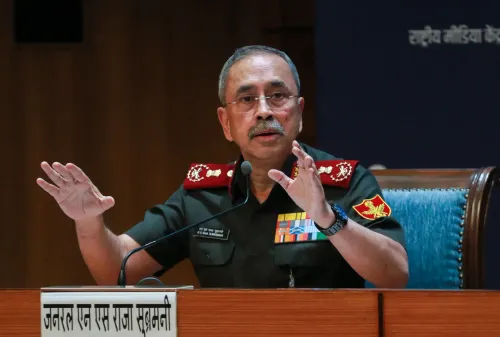
CDS General NS Raja Subramani and Integrated Defence Staff leadership were credited with driving the institutional push behind the revised framework.
The official gazette notification with detailed merit criteria and implementation timeline is still awaited.
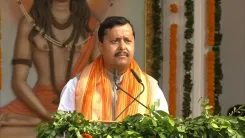
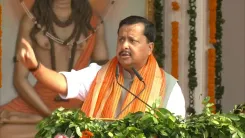
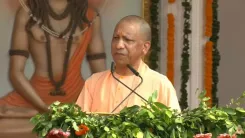
Four years after the Agnipath scheme upended military recruitment in India, the Union Cabinet has moved to address its most contested gap — what happens to the 75% of Agniveers who are not retained after their initial tenure. BJP MP Anurag Thakur, posting on Wednesday, 4 November 2026, called the Cabinet decision 'a truly significant day for the Indian Armed Forces and our brave Agniveers.'
What the Cabinet has now approved
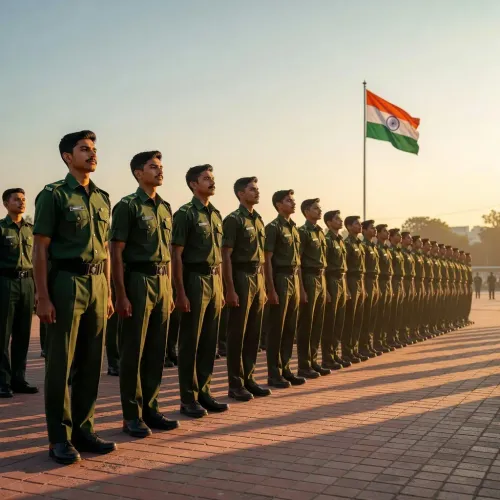
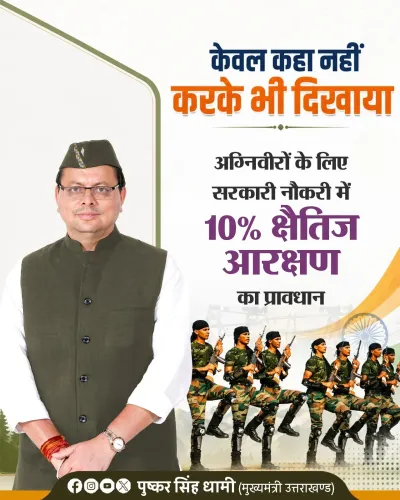
Under the original Agnipath model announced in June 2022, Agniveers served a four-year tenure, at the end of which 25% were absorbed into regular service on merit. The remaining majority exited with a one-time financial package — a provision that drew sustained criticism over employment prospects. The Cabinet, led by Prime Minister Narendra Modi and Defence Minister Rajnath Singh, has now approved two parallel changes: the 25% merit-based absorption into regular service is retained and formalised, while the remaining 75% are offered an additional two-year engagement period — after which all willing Agniveers who meet objective criteria can join the Indian Armed Forces permanently.
In practice, that means the door to a full military career is now open to every Agniveer who performs and qualifies — not just one in four. The core four-year structure stays intact; the exit ramp has simply been replaced by a bridge.
Himachal's voice — and why it carries weight here
Thakur, who represents Hamirpur, Himachal Pradesh — a constituency he describes as 'Veer Bhumi' (the land of brave soldiers) — framed the decision through a regional lens that resonates deeply. Himachal Pradesh sends a disproportionately large number of its sons into military service relative to its population, making Agnipath's post-tenure uncertainty a live political issue in the hill state. 'It recognises the dedication, discipline and potential of our youth in uniform and gives them a clearer future in service of the motherland,' he wrote.
CDS Subramani and the institutional push behind the change
Thakur singled out Chief of Defence Staff General NS Raja Subramani and the leadership at Integrated Defence Staff headquarters for a salute — signalling that the revised framework had strong military institutional backing rather than being a purely political course-correction. The CDS office and service chiefs have consistently worked to calibrate the scheme's retention ratios as performance data from the first cohorts filtered through the system.
The specific merit criteria and the official gazette notification detailing the implementation timeline for the two-year extension option are still awaited — and will determine how smoothly the revised pathway translates into actual career certainty for the tens of thousands of Agniveers currently in service or approaching the end of their tenures.
A scheme reshaped by its own first cohort
The Agnipath scheme was designed to lower the average age of the armed forces and manage the long-term pension liability of a large permanent cadre — twin objectives that have not changed. What has changed is the feedback loop: the first Agniveer cohorts, inducted after 2022, produced performance data that the military used to build the case for broader absorption. The revised model is, in that sense, the scheme validating itself — and then extending its own logic.
For India's recruitment-age youth, especially from states with deep military traditions, the message is now unambiguous: a four-year Agnipath contract can be a full career, not a trial run with an expiry date. Whether that message lands — in recruitment centres, in Himachal's valleys, and on the streets where protests once flared — will be the real test of this Cabinet call.
Point of View
The government is betting that the scheme's core logic (a younger, leaner force) can coexist with the career security that soldiers and their families have always demanded. For BJP leaders from military-heavy constituencies like Hamirpur, this is as much electoral arithmetic as it is defence policy. The real stress test comes when the first cohorts reach their six-year mark and the absorption machinery — merit criteria, vacancies, timelines — is put to live use.
NationPress
4 Nov 2026
Frequently Asked Questions
What is the new Agniveer absorption policy approved by the Cabinet?
The Cabinet has approved that 25% of Agniveers will continue to be enrolled as regular soldiers on merit after their four-year tenure, while the remaining 75% will be offered an additional two-year engagement period, after which all willing Agniveers who meet objective criteria can join the Armed Forces permanently.
What was the original Agnipath scheme retention rule?
Under the original Agnipath scheme launched in June 2022, only 25% of Agniveers were retained as regular soldiers after a four-year tour of duty; the other 75% exited with a financial package.
Why did Anurag Thakur specifically welcome this Agnipath decision?
Anurag Thakur represents Hamirpur in Himachal Pradesh, a state with a strong military service tradition. He welcomed the decision as one that gives youth from such regions 'a clearer future in service of the motherland.'
What role did CDS General NS Raja Subramani play in the Agniveer absorption change?
Anurag Thakur credited CDS General NS Raja Subramani and the Integrated Defence Staff leadership with this important step, suggesting the revised framework had strong military institutional backing.
When will the new Agniveer permanent absorption rules come into effect?
The official gazette notification detailing the merit criteria and implementation timeline for the two-year extension option is still awaited; the Cabinet approval has been announced but operational details are pending.