Nadda Invokes 1975 Emergency to Counter Congress on Democracy
Synopsis
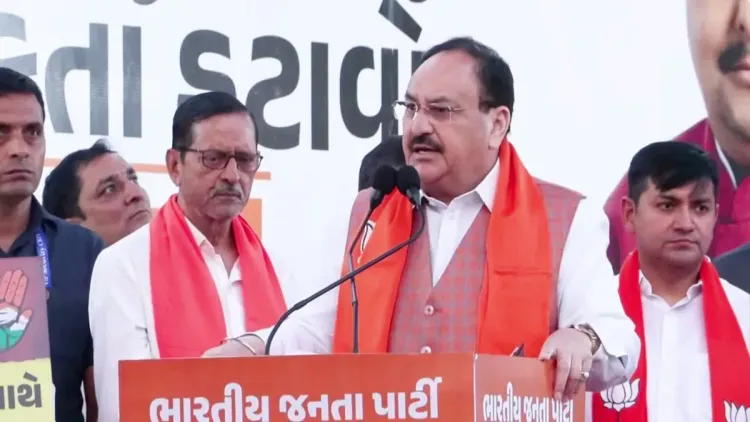
BJP national president J. P. Nadda on 27 October 2026 challenged Congress on democracy by invoking the 1975 Emergency, citing mass detentions under MISA and DIR and asking 'where was democracy fifty years ago?' — a pointed rhetorical strike on the Emergency's 50th year.
Key Takeaways
Nadda , Union Health Minister and BJP national president, posted a sharp attack on Congress citing the 1975 Emergency on 27 October 2026 .
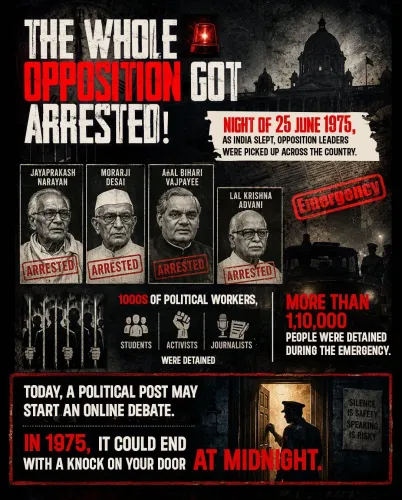
Nadda alleged 1,30,000 people were jailed under MISA and DIR for two years without cause — NationPress notes this figure is unverified in available records.
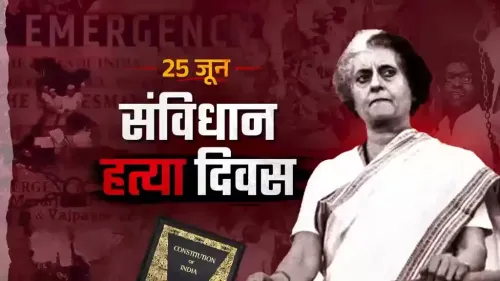
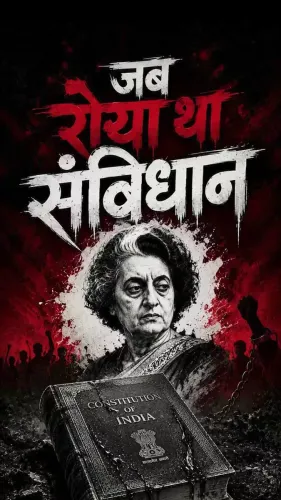
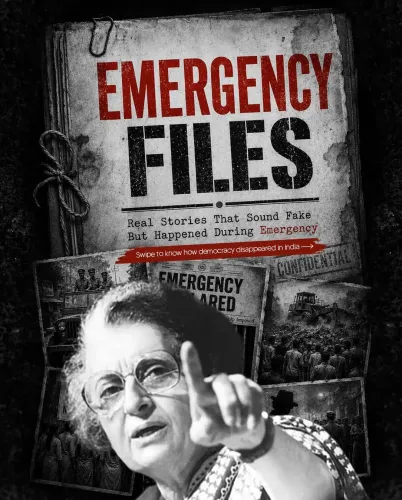
The national Emergency was declared by PM Indira Gandhi 's Congress government on 25 June 1975 and lasted until March 1977 .
The post used the hashtag #SaveDemocracyRemoveAnarchy , indicating a co-ordinated BJP messaging push.
The BJP has consistently used the 1975 Emergency as a counter-argument whenever Congress raises concerns about democratic standards under the current government.
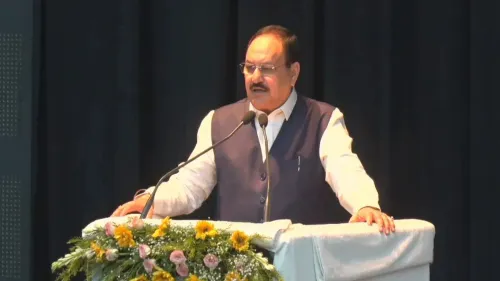
Fifty years after one of India's darkest constitutional chapters, Union Health Minister and BJP national president J. P. Nadda has turned the lens of history squarely on the Congress party — challenging its democratic credentials by invoking the 1975 Emergency and the mass detentions that defined it.
Posting on X on Tuesday, 27 October 2026, Nadda asked in Hindi: 'Aaj se 50 saal pehle loktantra kahan tha' — 'Where was democracy fifty years ago?' — pointing to the Congress government's use of preventive-detention laws MISA (Maintenance of Internal Security Act) and DIR (Defence of India Rules) to imprison what he described as 1,30,000 people for two years without cause. 'Is this what democracy looks like? Today Congress remembers democracy,' he wrote, tagging the post with #SaveDemocracyRemoveAnarchy.
The Emergency: What Congress Did in 1975
The national Emergency was declared on 25 June 1975 by the government of Prime Minister Indira Gandhi, suspending civil liberties and enabling sweeping preventive detentions. It lasted until March 1977. MISA, in particular, allowed authorities to detain individuals without trial, without disclosing the grounds, and without judicial review for extended periods — a provision that Opposition leaders, journalists, and activists said was systematically weaponised.
The Emergency remains the single most contested episode in post-Independence Indian political memory, invoked repeatedly across party lines whenever democratic norms are debated. NationPress notes that the specific detention figure cited by Nadda could not be independently verified from available records.
BJP's Long-Running Emergency Playbook
Nadda's post is not an isolated broadside — it sits within a deliberate BJP rhetorical strategy. Whenever the Congress or the broader Opposition raises concerns about institutional erosion or civil liberties under the current dispensation, BJP leaders pivot to 1975 as the definitive counter-argument: if Congress wants to talk about democracy, it must first answer for its own record.
That loop has accelerated in recent years as Opposition parties have sharpened their language around press freedom, judicial independence, and electoral integrity. The BJP's response has been consistent: frame the Emergency as the original sin of Indian democratic life, and cast the Congress as unfit to hold that particular torch.
Congress in the Crosshairs — Again
The hashtag #SaveDemocracyRemoveAnarchy signals that this is a co-ordinated messaging push, not a solo intervention. The timing — exactly fifty years after the Emergency era — gives the BJP a calendar hook to press the narrative through the coming weeks, potentially into state election cycles and any forthcoming Parliament session.
How Congress responds — whether it defends the Emergency record, pivots to present-day grievances, or stays silent — will shape the next beat of this particular political exchange.
History, in Indian politics, is rarely past tense. It is campaign material.
Point of View
The party responds not by defending the present but by indicting Congress's past. Invoking the Emergency's 50th year gives this move a strong calendar peg and emotional resonance with voters who lived through 1975-77 or have absorbed it as formative national memory. The #SaveDemocracyRemoveAnarchy hashtag reveals this is a structured campaign, not a spontaneous reaction — suggesting the BJP intends to ride this anniversary cycle through upcoming electoral battlegrounds. Whether Congress engages on the Emergency's historical record or attempts to redirect to present-day concerns will define the next phase of this long-running democratic-legitimacy contest.
NationPress
27 Oct 2026
Frequently Asked Questions
What did J. P. Nadda say about the 1975 Emergency?
Nadda posted on X on 27 October 2026 questioning Congress's democratic credentials by asking where democracy was fifty years ago, when the Congress government allegedly imprisoned 1,30,000 people under MISA and DIR during the Emergency.
What was the 1975 Emergency in India?
The national Emergency was declared on 25 June 1975 by Prime Minister Indira Gandhi's Congress government, suspending civil liberties and enabling preventive detentions without trial. It lasted until March 1977.
What were MISA and DIR used for during the Emergency?
MISA (Maintenance of Internal Security Act) and DIR (Defence of India Rules) were preventive-detention laws used by the Congress government during the 1975-77 Emergency to imprison political opponents, journalists, and activists without trial or disclosed charges.
Why is BJP bringing up the Emergency in 2026?
2026 marks roughly 50 years since the 1975 Emergency, giving the BJP a strong calendar hook. The party has consistently cited the Emergency to counter Congress's criticism of democratic backsliding under the current dispensation.
What is the hashtag #SaveDemocracyRemoveAnarchy about?
It is a BJP campaign hashtag used in Nadda's post, signalling a co-ordinated political messaging push framing the party as a defender of democracy against what it characterises as Congress's authoritarian legacy.