CM Sukhu Unveils Medical Education Reforms in HP
Synopsis
HP CM Sukhvinder Singh Sukhu announces smaller medical college batches of 60 students and a budget-linked stipend hike for interns, framing the moves as permanent systemic reform rather than routine governance.
Key Takeaways
CM Sukhvinder Singh Sukhu announced medical education reforms on 27 October 2026 .
Medical college batches of 120 students will be split into two groups of 60 each to improve learning quality.
Monthly stipend for intern doctors, currently ₹20,000 , will be revised upward during the next annual budget session.
The CM cited rising intern workload and night duties as the reason for the stipend review.
Sukhu framed the reforms as permanent systemic change, not routine five-year-term governance.
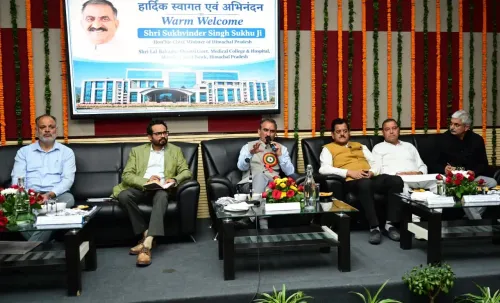
Smaller classrooms, heavier workloads acknowledged, and a stipend hike on the horizon — Himachal Pradesh Chief Minister Sukhvinder Singh Sukhu laid out a package of medical education reforms on Tuesday, 27 October 2026, signalling that his government intends to reshape how the state trains its doctors, not just manage the status quo.
Batch sizes cut, stipends set to rise
The centrepiece of the announcement is a structural change to classroom size. Sukhu said the government plans to split batches of 120 students into two groups of 60 each, so every medical student gets a genuine chance to learn and ask questions — a shift that addresses a long-standing complaint about overcrowded lecture halls in government medical colleges. Alongside that, he confirmed that the monthly stipend for intern doctors, currently set at ₹20,000, will be revised upward during the next annual budget session, citing the growing workload and night duties that interns carry.
The argument behind the push
Sukhu framed these steps in explicitly non-transactional terms, posting in Hindi: 'हमारी सरकार रूटीन की सरकार नहीं है' ('Our government is not a government of routine'). He argued that his administration is working not for a five-year term but for permanent, systemic change. The batch-size reform directly responds to a quality-of-training concern: when a single instructor faces more than a hundred students, interactive learning collapses into passive listening. Cutting the cohort in half is a structural fix, not a cosmetic one.
Indian states have periodically recalibrated medical college intake and intern support to lift training standards, and Himachal Pradesh's moves fit within that broader pattern of state-level medical education reform. National regulatory frameworks governing medical training have also been evolving, giving states both the impetus and some latitude to introduce their own operational changes.
What intern doctors are watching
For the state's intern doctors, the stipend revision is the line that matters most. Night duties in under-resourced district hospitals are a grinding reality, and ₹20,000 a month has drawn persistent criticism as inadequate given the hours and clinical responsibility involved. Sukhu stopped short of naming a specific revised figure, tying the decision to the budget session — which means the final number will be the real test of whether the commitment holds.
Two announcements are now on record; the budget session will decide whether the third — the stipend number — matches the ambition of the framing.
Point of View
Organised constituency, and addressing their grievances publicly — before the budget — sets expectations and signals intent. The batch-size reform is genuinely structural and aligns with national regulatory trends pushing states toward better training ratios. The stipend announcement, however, is deferred to the budget, which means its political weight depends entirely on whether the revised figure is seen as meaningful by the intern community when the time comes. Taken together, the moves position the Congress government in Himachal Pradesh as reform-oriented in a domain where state governments can demonstrate tangible delivery, offering a contrast narrative ahead of any electoral reckoning.
NationPress
27 Oct 2026
Frequently Asked Questions
What did CM Sukhu announce about medical education in Himachal Pradesh?
CM Sukhu announced two key reforms: splitting medical college batches from 120 students to 60-60 groups for better learning, and a revision of the ₹20,000 monthly intern stipend to be announced in the next state budget.
How much is the intern doctor stipend in Himachal Pradesh currently?
The current monthly stipend for intern doctors in Himachal Pradesh is ₹20,000. CM Sukhu has said this will be increased during the next annual budget session.
Why is Himachal Pradesh reducing medical college batch sizes?
The state government says cutting batches from 120 to 60 students each ensures every student gets adequate time to learn and ask questions, addressing long-standing concerns about overcrowded medical classrooms.
When will the intern stipend hike in Himachal Pradesh be announced?
CM Sukhu has linked the stipend revision to the next Himachal Pradesh annual budget session. No specific date or revised figure has been announced yet.
Is reducing medical college batch size a common reform in India?
Yes. Several Indian states have adjusted medical college batch sizes and intern support structures over the years to improve training quality, in line with evolving national medical education regulations.