CM Shivakumar Lays Out Rs 1 Lakh Crore Plan for Bengaluru
Synopsis
Chief Minister D.K. Shivakumar chairs a Bengaluru infrastructure review meeting at Krishna residence, announcing a Rs 1 lakh crore ten-year development plan covering roads, metro expansion, buses, Cauvery water supply Stage 6, and waste management reforms ahead of the city's 500th anniversary in 2037.
Key Takeaways
Rs 1 lakh crore earmarked for Bengaluru's development over the next 10 years , timed to the city's 500th anniversary in 2037 .
Road package includes a 40 km twin-tunnel road , 120 km elevated corridors , 500 km new roads , and 1,500 km of arterial road upgrades .
Namma Metro targeted to expand from 96 km to 170 km by 2027 ; 4,500 new buses to join the existing 7,000-strong fleet.
Cauvery Water Supply Stage 6 under implementation; 65 gram panchayats outside the GBA to get phased water, sewerage and road upgrades.
Waste management overhaul includes new tenders, mandatory GPS on collection vehicles, and stricter monitoring.
Government pledges equal fund allocation across all Bengaluru legislators' constituencies with no discrimination.
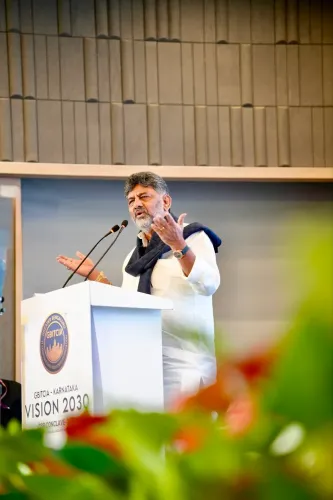
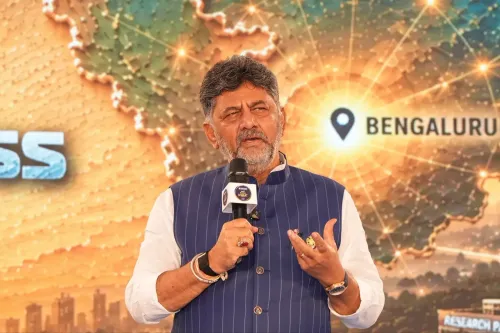
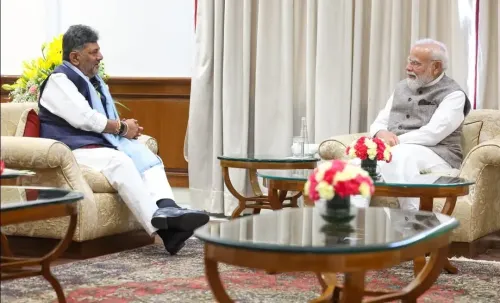
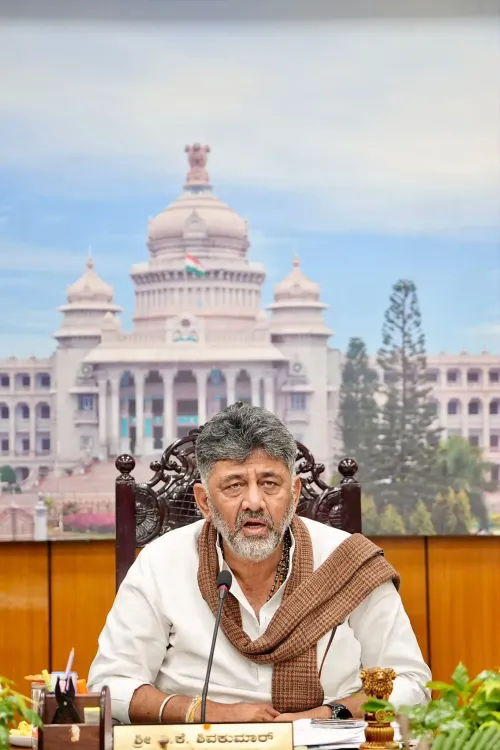
India's tech capital is getting a blueprint for the next decade — and the bill is Rs 1 lakh crore. Chief Minister D.K. Shivakumar chaired a high-level review meeting at his official residence Krishna in Bengaluru on Tuesday, 27 October 2026, bringing together city legislators and Legislative Council members to assess ongoing development works and chart a comprehensive growth plan for the city.
A city meeting its 500-year mark — and the price tag that comes with it
The timing of the announcement carries deliberate symbolic weight. By 2037, Bengaluru will mark 500 years since its founding — and the Karnataka government wants the decade leading up to that milestone to be the most transformative in the city's modern history. The Rs 1 lakh crore ten-year expenditure plan is the headline number anchoring that ambition.
The Chief Minister's Office confirmed the government's commitment to 'providing adequate funds to all legislators' constituencies without any discrimination, to build a well-connected, clean and future-ready city.' That explicit pledge to uniform allocation signals a direct response to long-standing friction among Bengaluru's MLAs over perceived imbalances in constituency-level spending.
Tunnels, elevated corridors, and 2,000 km of upgraded roads
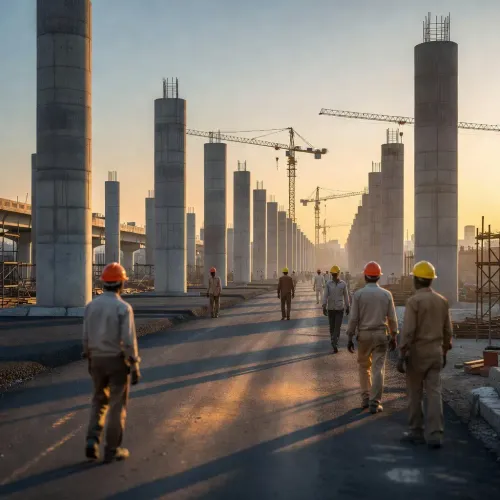
The road infrastructure package is the single largest component on the table. The plan calls for a 40 km twin-tunnel road, 120 km of elevated corridors, 500 km of new road connectivity, and the upgrade of 1,500 km of arterial and sub-arterial roads across the city. On top of that, the government has proposed redevelopment of 17 km of the Outer Ring Road, construction of a 37 km double-decker road, and 18 km of white-topping work on the city's periphery.
These are not small-scale patch jobs. The tunnel and elevated corridor proposals alone represent a structural rethink of how the city moves — particularly through its congested core, where surface-level expansion has long hit its limit.
Metro to hit 170 km, buses to swell by 4,500
Namma Metro — Bengaluru's urban rail backbone — is targeted to grow from its current 96 km network to 170 km by 2027, a figure that would make it one of the larger metro networks in the country. The public transport push doesn't stop at rail: the existing fleet of 7,000 buses is set to be reinforced with 4,500 new additions, and a 150 km suburban rail network is pegged for development by 2030.
Namma Metro's Phase-1 commercial operations date back to 2011, and the network's expansion through successive phases has been a recurring fixture of Karnataka's urban policy across governments. The latest target pushes the ambition further and faster than any previous phase.
Cauvery Stage 6 and water for 65 panchayats outside the GBA
Water stress remains one of Bengaluru's most politically charged challenges, and the meeting addressed it directly. Implementation of Cauvery Water Supply Scheme Stage 6 — the latest in a multi-decade series of augmentation projects stretching back to the 1970s — is now underway to meet the city's rising demand. The Greater Bengaluru Authority (GBA) boundary also came into focus: the plan includes phased rollout of drinking water, sewerage, and road infrastructure to 65 urbanised gram panchayats currently outside the GBA's jurisdiction — areas where rapid growth has outpaced civic services.
Mandatory GPS and new tenders to fix waste collection
Solid waste management — a perennial flashpoint for Bengaluru residents — gets a process overhaul under the plan. The government announced a fresh tendering process, mandatory GPS installation on all waste-collection vehicles, and stricter monitoring protocols to tighten accountability in disposal operations. It is a targeted, technology-backed fix for a problem that has defied simpler solutions for years.
Bengaluru is not the only Indian city pursuing this kind of integrated urban infrastructure push — national programmes like AMRUT and the Smart Cities Mission have created a template that state governments now build on with their own capital. But the scale of the Rs 1 lakh crore envelope, tied explicitly to a 500-year civic anniversary, sets this apart as a statement of intent as much as a project list. The real test will come in the tender rooms and budget sessions ahead.
Point of View
CM Shivakumar is attempting to neutralise intra-party friction among Bengaluru's diverse MLAs ahead of future electoral cycles. Anchoring the vision to the city's 500th anniversary gives the plan a long enough horizon to outlast immediate accountability, but the specificity of the numbers — metro km targets, bus counts, tunnel lengths — will make it unusually easy for citizens and opposition to benchmark progress. The integration of road, metro, suburban rail, water and waste management under a single framework mirrors the direction of national urban policy, suggesting Karnataka is positioning Bengaluru as a showcase for what state-led urban governance can deliver when aligned with central schemes.
NationPress
28 Oct 2026
Frequently Asked Questions
What is the total budget announced for Bengaluru's development plan?
The Karnataka government has announced an estimated Rs 1 lakh crore expenditure plan for Bengaluru's development over the next 10 years , ahead of the city's 500th anniversary in 2037 .
When will Namma Metro expand to 170 km?
The government has set a target to expand Namma Metro from its current 96 km network to 170 km by 2027 , as part of the broader Bengaluru infrastructure plan.
What is the Cauvery Stage 6 project for Bengaluru?
Cauvery Water Supply Scheme Stage 6 is the latest phase of a multi-decade water augmentation project now under implementation to meet Bengaluru's rising drinking water demand.
What road projects are planned for Bengaluru?
The plan includes a 40 km twin-tunnel road , 120 km elevated corridors , 500 km of new road connectivity , 1,500 km of arterial road upgrades , a 37 km double-decker road , and redevelopment of 17 km of the Outer Ring Road .
What changes are planned for waste management in Bengaluru?
The government announced a new tendering process, mandatory GPS installation on all waste-collection vehicles, and stricter monitoring to improve solid waste disposal across Bengaluru.