Sitharaman Marks 51st Anniversary of 1975 Emergency
Synopsis
Union Finance Minister Nirmala Sitharaman on 25 June 2026 marked the 51st anniversary of the 1975 Emergency, calling it a 'stark reminder of what must never return' and invoking the BJP's annual Samvidhan Hatya Diwas observance.
Key Takeaways
Union Finance Minister Nirmala Sitharaman posted on X on 25 June 2026 to mark the 51st anniversary of the Emergency.
The Emergency was imposed on 25 June 1975 by then PM Indira Gandhi and lasted until March 1977 .
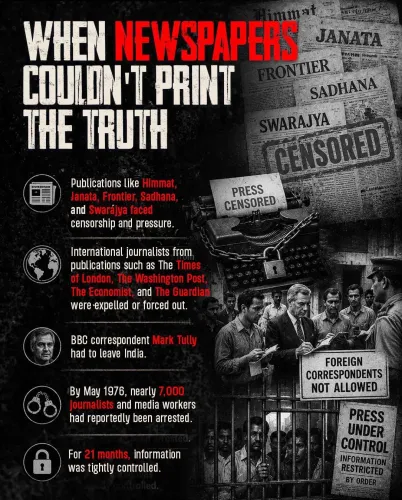
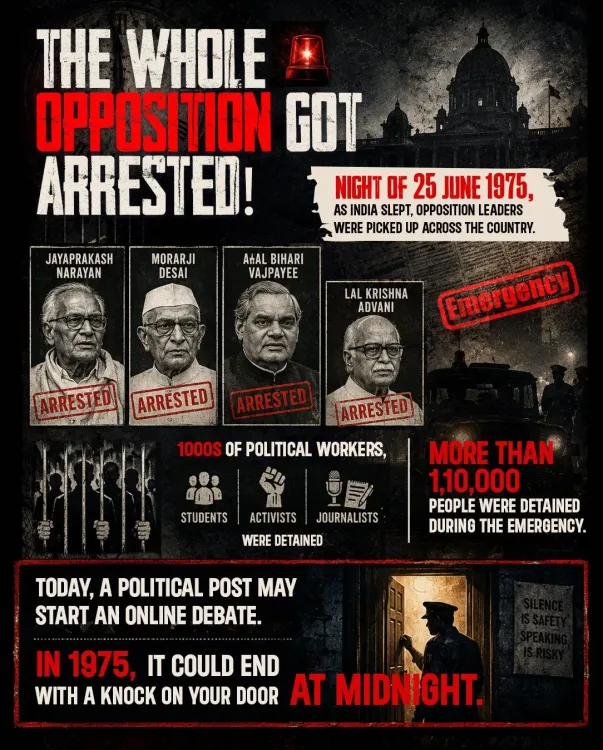
During the Emergency, opposition leaders were jailed, the press was censored, and civil liberties were suspended.
The 44th Constitutional Amendment (1978) introduced safeguards to prevent a future Emergency from being imposed as easily.
The BJP has observed 25 June as Samvidhan Hatya Diwas since at least 2024 .
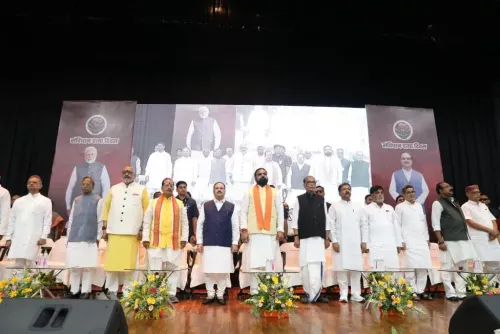
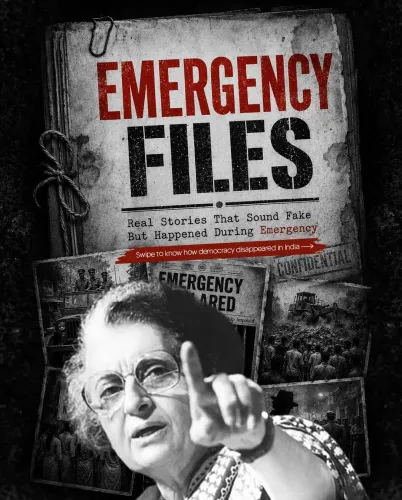
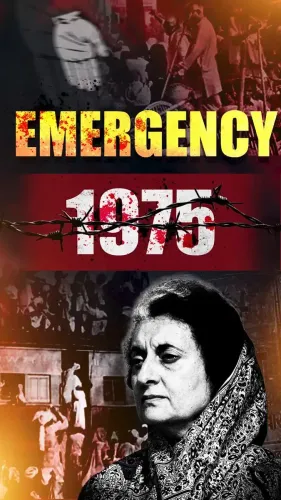
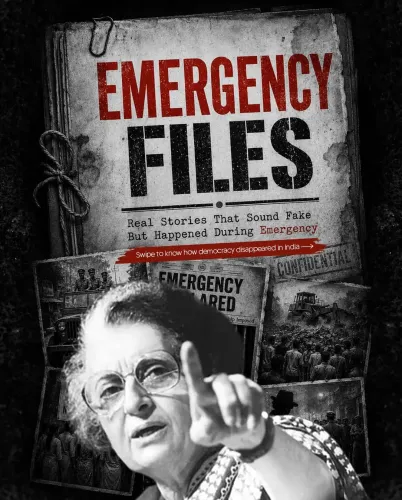
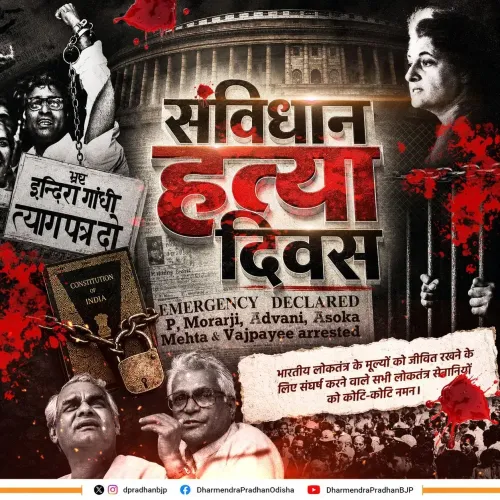
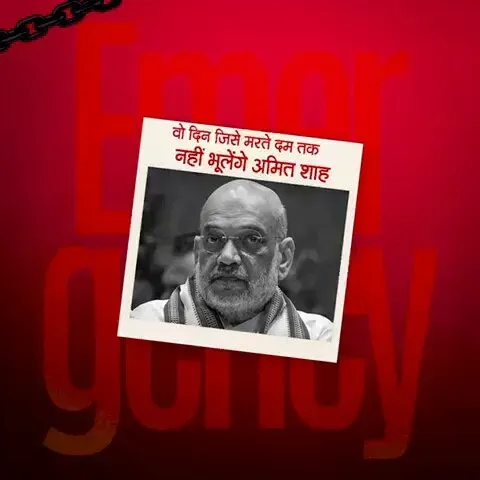
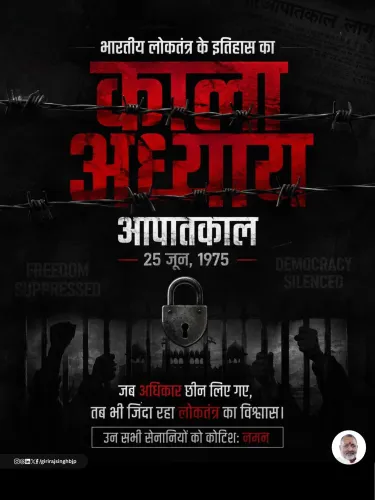
Sitharaman's post used the hashtag #SamvidhanHatyaDiwas and was accompanied by four images .
Union Finance Minister Nirmala Sitharaman on Thursday, 25 June 2026 marked the 51st anniversary of the Emergency imposed in 1975, calling it a moment when India's democracy was 'shattered' and urging that such a period must never return. The post, shared on X under the hashtag #SamvidhanHatyaDiwas, drew attention to the suspension of civil liberties, detention of opposition leaders, and silencing of the press that defined the 21-month Emergency period.
Context
On the night of 25 June 1975, then Prime Minister Indira Gandhi advised the imposition of a national Emergency under Article 352 of the Constitution, citing internal disturbance. What followed was one of the most contested chapters in Indian democratic history: opposition leaders across party lines were arrested, newspapers faced pre-publication censorship, and fundamental rights of ordinary citizens were suspended. The Emergency lasted until March 1977.
Sitharaman's post quoted the period plainly: 'Opposition leaders were jailed, the press was silenced, civil liberties were crushed and ordinary citizens lived in fear.' The language is direct and unambiguous, framing the Emergency not as a policy dispute but as a constitutional rupture.
Policy Backdrop
The constitutional safeguards introduced after the Emergency's end remain relevant to this day. The 44th Constitutional Amendment of 1978, passed by the Janata Party government that came to power after the Emergency, introduced significant checks on the executive's ability to impose a future Emergency — including requiring Cabinet approval in writing and making judicial review more accessible.
The Bharatiya Janata Party has observed 25 June as Samvidhan Hatya Diwas — roughly translated as 'Constitution Murder Day' — since at least 2024, institutionalising annual remembrance of the Emergency across party platforms and government functions. Sitharaman's post is consistent with that broader party-wide observance.
Stakeholders and Impact
For Indian citizens who lived through the Emergency, the date carries personal weight — memories of arbitrary detention, press blackouts, and the suspension of habeas corpus remain part of the collective democratic memory. Civil society groups and constitutional scholars have long argued that the Emergency's lessons must be embedded in civic education.
For opposition parties, particularly the Indian National Congress, the annual BJP observance of this date is a pointed political reminder of the Emergency's association with Congress leadership. The Congress has historically acknowledged the Emergency as a 'mistake' while disputing the framing of annual commemorations as politically motivated.
What's Next
The BJP is expected to continue observing Samvidhan Hatya Diwas as part of its annual political calendar, with the next observance falling on 25 June 2027. References to the Emergency are also likely to surface during parliamentary sessions, particularly in debates touching on press freedom, judicial independence, or executive overreach. As India's constitutional democracy approaches its 75th year, the Emergency continues to serve as a reference point in debates about the limits of state power.
Point of View
Party-wide political ritual the BJP has built around 25 June, designed to anchor the Emergency firmly in public memory as a Congress-era transgression against democracy. By invoking the language of shattered democracy and citizens living in fear, the messaging goes beyond historical commemoration — it functions as a standing contrast narrative between the present government's constitutional credentials and what the BJP frames as the Congress's authoritarian past. The annual observance of Samvidhan Hatya Diwas has given this narrative an institutional rhythm, ensuring it surfaces in the political conversation every year regardless of the news cycle. For the Congress, this creates a recurring reputational challenge that periodic acknowledgements of the Emergency as a 'mistake' have not fully neutralised.
NationPress
23 Sept 2026
Frequently Asked Questions
What is Samvidhan Hatya Diwas?
Samvidhan Hatya Diwas, meaning 'Constitution Murder Day,' is observed by the BJP on 25 June each year to mark the anniversary of the Emergency imposed in 1975, which suspended civil liberties and democratic norms for 21 months.
When was the Emergency imposed in India?
The Emergency was imposed on the night of 25 June 1975 by then Prime Minister Indira Gandhi and remained in force until March 1977, a period of approximately 21 months.
What did Nirmala Sitharaman say about the 1975 Emergency?
Sitharaman said the Emergency 'shattered' Indian democracy, with opposition leaders jailed, the press silenced, civil liberties crushed, and ordinary citizens living in fear, calling it a 'stark reminder of what must never return.'
What constitutional changes were made after the Emergency ended?
The 44th Constitutional Amendment of 1978, passed by the Janata Party government, introduced safeguards making it harder to impose a future Emergency, including requiring written Cabinet approval and expanding the scope of judicial review.
Why does the BJP observe 25 June every year?
The BJP observes 25 June as Samvidhan Hatya Diwas to commemorate the imposition of the 1975 Emergency and to highlight what it describes as the Congress party's record of undermining constitutional democracy.