CM Sukhu Pledges Stipend Hike for Jol Sappar Medical College Students
Synopsis
CM Sukhvinder Singh Sukhu has validated stipend demands from Jol Sappar Medical College students and pledged a budget-cycle increase. His government already doubled PG doctor pay to ₹1.30 lakh — matching AIIMS Delhi — while halving their duty hours from 24 to 12.
Key Takeaways
CM Sukhu publicly called the Jol Sappar Medical College students' stipend demand 'valid' and promised a revision at the next annual budget.
The Sukhu government previously cut PG (Senior Residency) duty hours from 24 hours to 12 hours per shift.
PG doctor stipends were simultaneously raised from ₹65,000 to ₹1.30 lakh per month , claimed to be at par with AIIMS Delhi .
The announcement signals Himachal Pradesh's intent to align state medical college pay with central government benchmarks.
Formal implementation of the student stipend hike is contingent on the next state budget session.
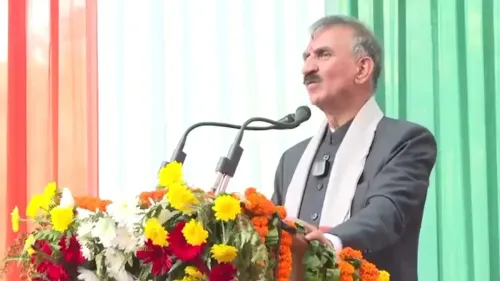
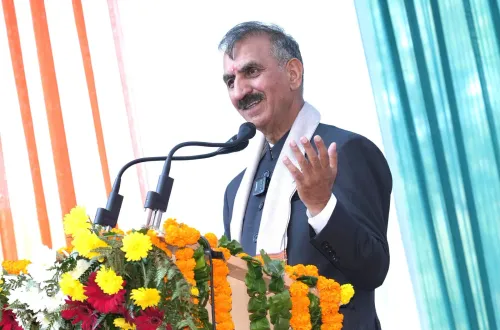
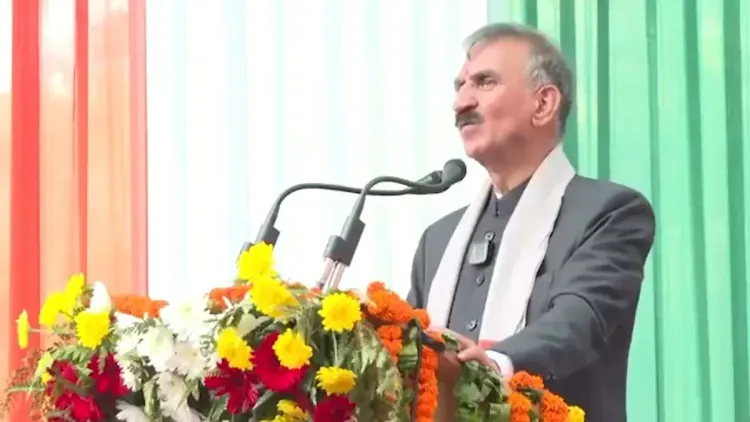
A stipend demand from medical students just got a direct answer from the top. Himachal Pradesh Chief Minister Sukhvinder Singh Sukhu on Tuesday, October 27, 2026, publicly acknowledged the demands of students at Jol Sappar Medical College, promising a stipend revision at the next annual budget — and pointing to reforms his government has already delivered for postgraduate doctors in the state.
Posting on X in Hindi, CM Sukhu stated: 'The demand of Jol Sappar Medical College students to increase their stipend is valid. Our government understands their concerns. An increase in student stipends will be made at the time of the annual budget.'
From 24-Hour Shifts to a 12-Hour Cap — The PG Reform Already Delivered
Sukhu did not stop at a promise. He cited a concrete reform already carried out for postgraduate doctors under the Senior Residency (SR) programme. Previously, resident doctors were expected to work 24-hour shifts in exchange for a stipend of ₹65,000 per month. His government cut duty hours to 12 hours and doubled the stipend to ₹1.30 lakh per month.
The benchmark he invoked matters: ₹1.30 lakh is described as equivalent to the stipend at AIIMS Delhi, the country's most prestigious central medical institution and the standard Indian state governments are typically measured against when setting trainee pay. For a hill-state government college to match that number is a significant positioning claim.
Why Resident Pay Has Become a Flash-Point Across Indian States
The politics of medical trainee compensation has intensified sharply across India in recent years. Resident doctors are the backbone of public hospital capacity — they handle wards, emergencies, and surgeries at a scale no senior faculty roster could cover alone. Yet their stipends in many state institutions have historically lagged far behind the central government's own norms, driving attrition and periodic strikes.
Himachal Pradesh's move — linking pay to AIIMS Delhi norms while simultaneously capping exhausting 24-hour duty cycles — is part of a broader trend of state governments competing to retain medical talent within the public system. The Sukhu government's public acknowledgement of the Jol Sappar students' demand signals the issue will be formally addressed in the next budget cycle rather than left unresolved.
The next Himachal Pradesh state budget will be the moment to watch. Until then, the Chief Minister has set an expectation — and the students have it in writing.
Point of View
Because it sets a nationally recognised, defensible ceiling rather than an arbitrary figure. The real test is whether the next budget actually delivers on the undergraduate stipend promise or whether students find themselves back at the same impasse after budget season. For the Congress government, keeping Himachal Pradesh's medical workforce loyal to public-sector service is both a governance priority and an electoral one.
NationPress
27 Oct 2026
Frequently Asked Questions
What did CM Sukhu announce about Jol Sappar Medical College students?
CM Sukhvinder Singh Sukhu acknowledged that the students' demand for a stipend hike is valid and announced that the increase will be implemented at the time of the next annual state budget.
How much is the new stipend for PG doctors in Himachal Pradesh?
The Sukhu government raised the monthly stipend for Senior Resident (SR) doctors to ₹1.30 lakh , up from ₹65,000 previously, and described it as being at par with AIIMS Delhi.
What change was made to PG doctor duty hours in Himachal Pradesh?
Duty hours for postgraduate doctors during their Senior Residency were reduced from 24 hours per shift to 12 hours per shift by the current Himachal Pradesh government.
Is the Himachal Pradesh PG stipend equal to AIIMS Delhi?
According to CM Sukhu, the revised stipend of ₹1.30 lakh per month for Senior Resident doctors in Himachal Pradesh is equivalent to what AIIMS Delhi offers its resident doctors.
When will the Jol Sappar Medical College student stipend be increased?
CM Sukhu indicated the stipend hike for Jol Sappar Medical College students will be announced and implemented during the next Himachal Pradesh annual budget.