CM Sukhu waives re-test for AIIMS, PGI senior residents in HP
Synopsis
CM Sukhu waives Himachal Pradesh's state re-test for SR candidates who cleared PGIMER or AIIMS Delhi exams, appoints 10 radiographers per medical college, and targets 80-85% staffing across state hospitals within a year.
Key Takeaways
Re-test waived: Doctors who cleared PGIMER Chandigarh or AIIMS Delhi entrance tests need no separate Himachal Pradesh exam for Senior Residency.
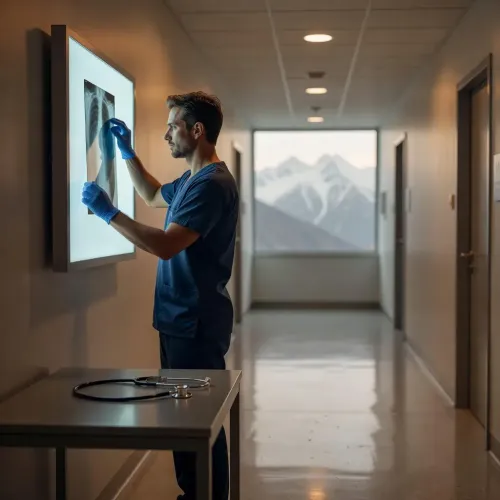
Radiographer appointments: 10 radiographers appointed at each state-run medical college to strengthen diagnostic services.
OTA appointments: Operation Theatre Assistants also freshly appointed across medical colleges.
Staffing progress: State staffing has improved from 35 percent to 70 percent of required strength through sustained recruitment.
One-year target: CM Sukhu has set a goal of reaching 80 to 85 percent staffing levels within the next year.
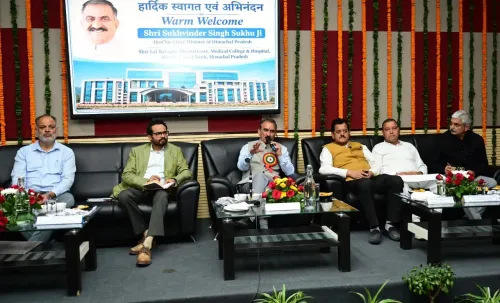
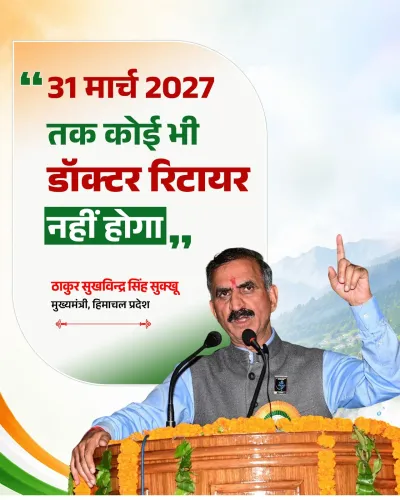
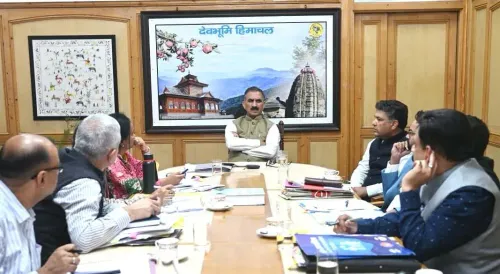
Himachal Pradesh is quietly rewriting the rules for specialist doctors — and the change could matter a great deal for patients in the hills. Chief Minister Sukhvinder Singh Sukhu announced on Sunday, 18 October 2026 that postgraduate doctors who have already cleared entrance tests at PGIMER Chandigarh or AIIMS New Delhi will no longer need to sit a separate state-level examination to take up Senior Residency (SR) positions in Himachal Pradesh.
In a post on X, the Chief Minister said: 'We have taken an important decision today — candidates who have passed the test at PGI or AIIMS Delhi after their PG will not need to appear for another test in Himachal to pursue their SRship.' The move directly removes a well-known friction point that has long made smaller states less attractive to specialist talent competing against better-resourced urban hospitals.The staffing gap Himachal is racing to close
The announcement came bundled with another concrete measure: 10 radiographers per medical college have been appointed across all state-run medical colleges, alongside fresh appointments of Operation Theatre Assistants (OTAs). Sukhu framed both moves as part of a sustained push to fix a structural under-staffing problem that had hobbled the state's public health system for years.
His numbers tell the story plainly. Where 100 employees were needed, only 35 were in post — a staffing level of 35 percent. Sustained recruitment drives have now pushed that figure to 70 percent. The government's stated target is to reach 80 to 85 percent within the next one year. That 15-percentage-point gap is not an abstraction: it translates directly into wards operating short-handed, equipment sitting idle, and patients travelling further for procedures that should be available locally.
Why recognising national institute tests changes the calculus
PGIMER and AIIMS Delhi are India's gold-standard postgraduate medical institutions. Their entrance examinations are rigorous, nationally competitive, and already accepted as proof of specialist competence across most of the country. For a postgraduate doctor weighing a Senior Residency in Shimla against one in a major metro, the added burden of a state re-test — with its preparation time, travel costs, and scheduling uncertainty — was a genuine deterrent. Eliminating it signals that Himachal Pradesh is competing seriously for specialist talent, not just advertising vacancies.
Indian states have increasingly moved in this direction, recognising that duplicating credentialling work that premier national institutes have already done is counterproductive. The policy aligns Himachal Pradesh with a broader national pattern of easing inter-state mobility for healthcare workers — particularly relevant for a hilly state where remote postings are the norm and retention has historically been difficult.
What the 80-85% target actually means on the ground
Closing the final gap — from 70 percent today to 80-85 percent in a year — will require sustained momentum on both the specialist and paramedical fronts. The radiographer and OTA appointments address the paramedical layer; the SR re-test waiver targets the specialist pipeline. Together, they point to a two-track approach: fill the technical support roles that keep operating theatres and imaging departments running, while simultaneously making it easier for qualified doctors to commit to the state.
Implementation will be the real test. Watchers will track whether the waived re-test policy translates into measurable SR vacancy fill rates at Himachal Pradesh's medical colleges, and whether quarterly staffing data reflects movement toward the announced target.
Point of View
Hilly postings — removing procedural friction is arguably as important as raising salaries. The parallel push on paramedical staffing (radiographers, OTAs) recognises that specialist doctors alone cannot run functional hospitals; the supporting layer matters equally. Whether the 80-85% target is met will be a credibility test for the Sukhu government's health administration agenda heading into the next electoral cycle.
NationPress
18 Oct 2026
Frequently Asked Questions
What is the new rule for senior residents in Himachal Pradesh?
Doctors who have completed PG and cleared the entrance test at PGIMER Chandigarh or AIIMS Delhi will no longer need to appear for a separate state-level test to take up Senior Residency positions in Himachal Pradesh.
How many radiographers has the HP government appointed?
The Himachal Pradesh government has appointed 10 radiographers at each of its state-run medical colleges as part of the latest health-staffing drive.
What is the current staffing level in HP government hospitals?
CM Sukhu stated that staffing has risen from about 35 percent of required strength to 70 percent , with a target of reaching 80-85 percent within a year.
Why did Himachal Pradesh waive the re-test for AIIMS and PGI doctors?
The waiver removes a deterrent that made SR positions in smaller states less attractive. Since AIIMS and PGIMER exams are already rigorous national-level tests, requiring a duplicate state exam was seen as unnecessary and counterproductive to recruitment.
What are OTA appointments in HP medical colleges?
OTA stands for Operation Theatre Assistant — paramedical staff essential for surgical operations. The HP government has made fresh OTA appointments across medical colleges alongside the radiographer drive.