Mandaviya Spotlights Barda Sanctuary's Pastoral-Wildlife Harmony
Synopsis
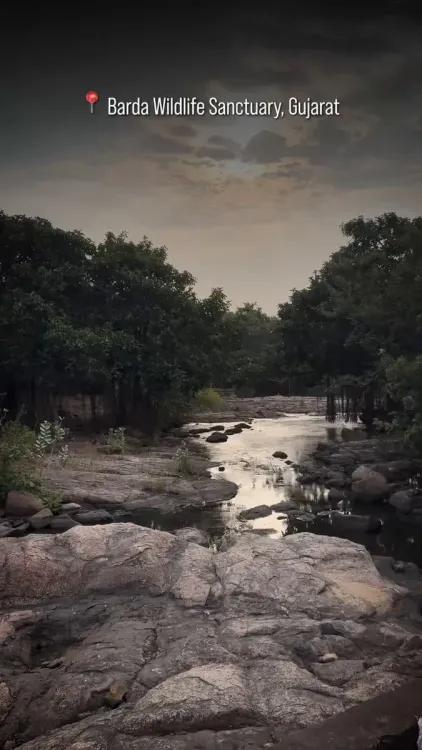
Union Minister Mansukh Mandaviya shared a video from Barda Wildlife Sanctuary in Porbandar, Gujarat, celebrating the rare coexistence of pastoral herders, nature, and wildlife — spotlighting a living conservation model that rarely makes national headlines.
Key Takeaways
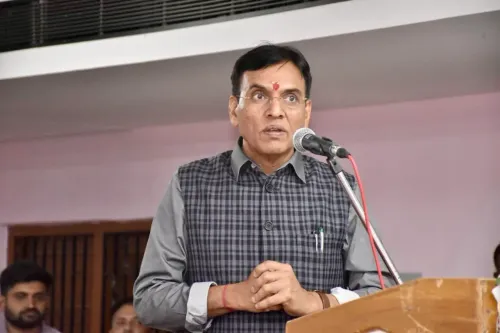
Mansukh Mandaviya , Union Minister for Labour & Employment and Youth Affairs & Sports, posted a video from Barda Wildlife Sanctuary on 18 October 2026 .
The Hindi caption translates as 'an extraordinary confluence of herdsmen, nature, and wildlife' — highlighting pastoral-wildlife coexistence.
Barda Wildlife Sanctuary is located in Porbandar district, Gujarat , and is known for its biodiversity and traditional pastoral communities.
Gujarat hosts several protected areas, including the famous Gir landscape , where pastoral groups have historically coexisted with wildlife.
India manages over 900 protected areas where community rights and conservation imperatives frequently intersect.
No specific policy announcement accompanied the post; the focus was on celebrating a long-standing coexistence model.
Where herders and wild animals share the same patch of Gujarat earth, something quietly remarkable has endured for generations. Union Labour and Sports Minister Mansukh Mandaviya turned the national spotlight on that quiet miracle on Sunday, 18 October 2026, sharing a video from Barda Wildlife Sanctuary in Porbandar district, Gujarat — capturing what he called 'pashupalak, prakriti aur vanya jeevon ka adbhut sangam' ('an extraordinary confluence of herdsmen, nature, and wildlife').
Barda's rare balance: where cattle trails cross wildlife corridors
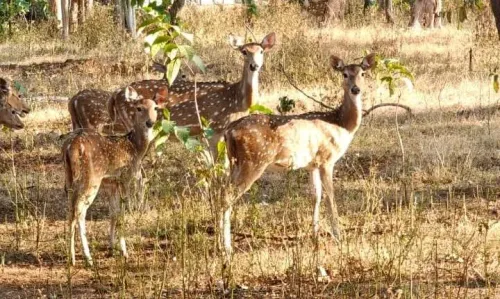
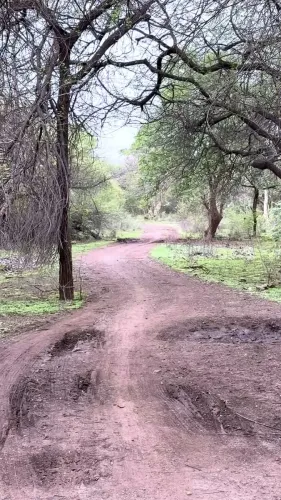
Barda Wildlife Sanctuary, nestled in the Porbandar district of western Gujarat, is one of the state's lesser-celebrated but ecologically significant protected areas. Unlike sanctuaries defined purely by exclusion zones, Barda has historically accommodated pastoral communities — pashupalaks — whose cattle-grazing traditions predate the conservation framework that later grew around them. The result is an unusual cohabitation: domestic livestock moving through habitat shared with wild species, a living example of the tensions and tolerances that define conservation in a densely populated country.
Gujarat hosts several such protected areas where the boundary between village economy and forest ecology is deliberately porous. The state's track record includes the famous Gir landscape — home to the last wild Asiatic lions — where the Maldhari pastoral community has coexisted with apex predators for over a century. Barda sits within the same cultural and ecological geography.
A minister from Gujarat amplifying his home state's conservation story
Mandaviya, a BJP leader with deep roots in Gujarat's Saurashtra region, has periodically used his social media presence to highlight natural and cultural landmarks from the state. This post carries no explicit policy announcement — its power is in the framing: a senior Union minister choosing to celebrate not a scheme or a statistic, but a centuries-old relationship between people and wildlife. That choice of framing is itself a signal about how the government prefers to narrate India's conservation story — as continuity and coexistence rather than conflict and displacement.
The video post, carrying no additional text beyond the location tag and the evocative Hindi caption, lets the visuals speak. In an era when wildlife policy debates often harden into binaries — conservation versus community rights — the imagery of herders and animals sharing the same space offers a deliberately softer counterpoint.
What Barda's model means for India's broader wildlife governance debate
India manages over 900 protected areas, and the tension between forest rights of indigenous and pastoral communities and the imperatives of habitat protection remains one of the sharpest fault lines in environmental governance. Barda's low-key coexistence model — functional, unglamorous, and largely out of national headlines — represents the kind of ground-level equilibrium that policy frameworks struggle to replicate at scale.
Any follow-up from state or central authorities on sanctuary management upgrades, eco-tourism infrastructure, or species-recovery plans at Barda would now land in a slightly higher-visibility context, given the ministerial attention. For now, the post is a rare, unhurried celebration of a living landscape.
In a news cycle dominated by infrastructure mega-projects and GDP milestones, a Cabinet minister pausing to film herdsmen walking their cattle through a wildlife sanctuary is, in its own way, a statement worth noting.
Point of View
Where pastoral identity is a live electoral variable. By spotlighting Barda rather than a headline scheme, the minister signals that community-compatible conservation is a value worth broadcasting at the national level. This also arrives at a moment when India's forest-rights and Protected Area governance frameworks face scrutiny from tribal and pastoral advocates, making the 'coexistence' framing a subtle but deliberate positioning. Whether it translates into concrete policy support for Barda's pastoral communities remains the real question.
NationPress
18 Oct 2026
Frequently Asked Questions
Where is Barda Wildlife Sanctuary located?
Barda Wildlife Sanctuary is located in Porbandar district in the western Indian state of Gujarat . It is a protected area known for its biodiversity and its history of pastoral communities coexisting with wildlife.
What did Mansukh Mandaviya post about Barda Sanctuary?
Mansukh Mandaviya shared a video from Barda Wildlife Sanctuary on 18 October 2026 , with a Hindi caption celebrating the 'extraordinary confluence of herdsmen, nature, and wildlife' at the sanctuary.
What wildlife is found in Barda Wildlife Sanctuary?
Barda Wildlife Sanctuary in Porbandar, Gujarat, supports diverse biodiversity. The sanctuary falls within the broader Saurashtra conservation landscape, though specific species data for Barda requires verification from forest department sources.
Why do pastoral communities live inside wildlife sanctuaries in Gujarat?
In Gujarat, communities such as the Maldharis of Gir and pastoral herders of Barda have traditionally lived and grazed cattle in forested areas for generations, predating formal conservation designations. India's conservation framework has historically accommodated some of these communities within protected area boundaries.
What is India's approach to communities living inside wildlife sanctuaries?
India manages over 900 protected areas and has ongoing legal and policy debates around forest rights and community co-existence. Frameworks such as the Forest Rights Act provide pathways for recognising traditional rights, though implementation varies significantly across states.