Gujarat CM announces ₹15 lakh aid for Maldhari relocation from Barda Sanctuary
Synopsis
Gujarat has put a price on voluntary forest exit: ₹15 lakh in cash plus a free plot for every Maldhari family that leaves Barda Wildlife Sanctuary. The move is less about welfare alone — it is a strategic clearing of human settlements to ready Barda as a second home for the Asiatic lion, a species that currently survives only in Gujarat.
Key Takeaways
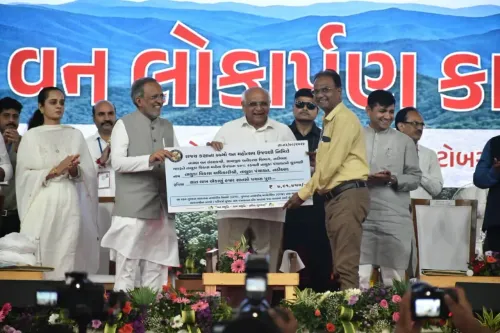
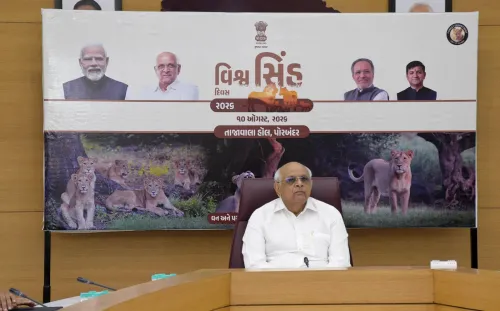
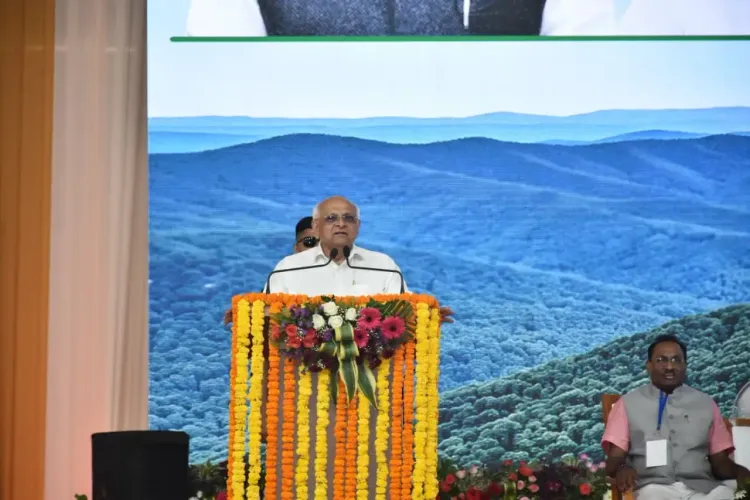
Chief Minister Bhupendra Patel announced the scheme on 1 October 2026 during the 77th Van Mahotsav in Porbandar .
Each voluntarily relocating Maldhari family receives ₹15 lakh in a single instalment and a free 100-square-yard residential plot.
Livestock-owning families may get an additional 100-square-yard plot, with its market value deducted from the ₹15 lakh package.
New plots must be at least 10 km from a municipal corporation and 5 km from a municipality boundary.
Barda Wildlife Sanctuary spans 192.31 sq km across Porbandar and Devbhumi Dwarka districts and is designated as Gujarat's second Asiatic lion habitat.
Relocation terms follow NTCA guidelines; once relocated, families forfeit all further rights in the Barda area.
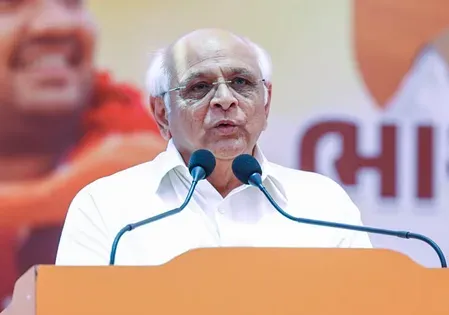
Gujarat Chief Minister Bhupendra Patel on 1 October 2026 announced a voluntary relocation scheme for Maldhari families residing inside Barda Wildlife Sanctuary in Porbandar, offering each eligible family a one-time cash assistance of ₹15 lakh along with a free 100-square-yard residential plot outside the protected area. The scheme was unveiled during the 77th Van Mahotsav celebrations in Porbandar.
What the Scheme Offers
Under the scheme, the ₹15 lakh assistance will be disbursed in a single instalment to every family that voluntarily relocates. In addition, each family will receive a 100-square-yard plot free of cost for housing purposes, subject to applicable rules. Families that own livestock may be allotted a further plot of up to 100 square yards for animal husbandry needs — though the market value of such land will be deducted from the ₹15 lakh package, with the remaining balance paid directly to the family.
Critically, once a family completes the relocation, the scheme will extinguish all further rights or interests they hold in the Barda area, and no additional compensation will be payable thereafter. The definition of a 'family' for the purpose of this scheme will follow guidelines issued by the National Tiger Conservation Authority (NTCA).
Land Allocation and Location Rules
The land allotted to relocating families must be situated outside the sanctuary and its Eco-Sensitive Zone, at a minimum distance of 10 km from the limits of a municipal corporation and 5 km from a municipality. The concerned District Collector or the district-level committee will identify suitable land near a village for this purpose.
The scheme is framed in accordance with NTCA guidelines — the same framework that governs tiger-reserve relocation across India — lending it an established procedural grounding.
Administrative Structure
A state-level oversight committee has been constituted, headed by the Principal Secretary, Forest and Environment Department. Its members include the Principal Chief Conservator of Forests and Head of Forest Force, the Chief Wildlife Warden, and the Director of the Social Welfare Department, with the Conservator of Forests, Wildlife Circle, Junagadh serving as member secretary.
At the district level, a parallel committee chaired by the concerned District Collector will verify eligible families, scrutinise documents, and oversee on-ground implementation. Its members include the District Development Officer, District Social Welfare Officer, District Agriculture Officer, and Executive Engineer, PGVCL.
Why Barda Sanctuary Matters
Spread across 192.31 square kilometres spanning Porbandar and Devbhumi Dwarka districts, Barda Wildlife Sanctuary is emerging as Gujarat's second habitat for the Asiatic lion — a species whose only wild population survives in the state. The voluntary relocation, according to the government, would substantially reduce human-wildlife conflict and ease the biotic pressure that human habitation places on the sanctuary's ecosystem.
Notably, this comes amid a wider national push to expand Asiatic lion range beyond Gir National Park, and Barda has been identified as a candidate site for secondary reintroduction. Reducing human settlements within the sanctuary is therefore seen as a prerequisite for that longer-term conservation goal.
Impact on Maldhari Families
The Maldhari community — traditionally pastoral herders — have historically lived inside Gujarat's wildlife sanctuaries for generations. The scheme is designed to incentivise, rather than compel, their movement, with the government promising improved access to education, healthcare, livelihood programmes, and civic infrastructure outside the protected zone. Whether uptake will be high enough to meaningfully reduce pressure on the sanctuary remains to be seen, as similar schemes in other states have recorded mixed results.
The scheme's implementation timeline and the precise number of Maldhari families currently living inside Barda have not been officially specified; the district-level committee will determine these figures as a first step.
Point of View
But the real story is strategic: Gujarat needs Barda depopulated before it can credibly pitch it as a second Asiatic lion site, easing pressure on the politically and ecologically fragile Gir ecosystem. The scheme's NTCA framing borrows credibility from tiger-reserve relocations, but those have produced mixed outcomes — some communities benefited, others found resettlement land inadequate. The district committees' role in verifying family numbers will be critical; under-counting Maldhari households, a risk in similar schemes elsewhere, would leave residual settlements and defeat the conservation objective. The voluntary nature is commendable, but without a clear timeline and uptake target, the scheme risks stalling at the announcement stage.
NationPress
1 Oct 2026
Frequently Asked Questions
What is the Gujarat Maldhari relocation scheme announced in October 2026?
It is a voluntary relocation scheme under which each Maldhari family living inside Barda Wildlife Sanctuary in Porbandar receives ₹15 lakh in a single instalment and a free 100-square-yard residential plot outside the protected area. The scheme was announced by Chief Minister Bhupendra Patel on 1 October 2026 during the 77th Van Mahotsav.
Who are the Maldhari and why do they live inside Barda Sanctuary?
The Maldhari are a traditional pastoral community in Gujarat who have historically lived inside wildlife sanctuaries, maintaining livestock-based livelihoods. Their long-standing presence inside Barda has created biotic pressure on the sanctuary's ecosystem, prompting the government to introduce a financial incentive for voluntary relocation.
What happens to a Maldhari family's rights after relocation?
Once a family voluntarily relocates under the scheme, it will no longer be recognised as having any rights or interests in the Barda area, and no further compensation will be payable. The extinguishment of rights is a one-time, final settlement.
Why is Barda Wildlife Sanctuary significant for Asiatic lions?
Barda Wildlife Sanctuary, spread across 192.31 square kilometres in Porbandar and Devbhumi Dwarka districts, is being developed as Gujarat's second habitat for the Asiatic lion — a species whose only wild population currently survives in Gir. Reducing human settlements in Barda is seen as essential to enabling a secondary lion population there.
How will the scheme be implemented and who oversees it?
A state-level committee headed by the Principal Secretary, Forest and Environment Department, will review and guide implementation. At the ground level, a committee chaired by the District Collector will identify eligible families, verify documents, and allocate resettlement land at least 10 km from a municipal corporation boundary.