Porbandar's ₹20-crore Sarvodaya Van blends Gandhi's ideals with cultural forest
Synopsis
In Gandhi's own birthplace, Gujarat has built a ₹20-crore forest that doesn't just plant trees — it embeds Gandhian philosophy, local mythology and coastal ecology into a single 14-hectare public space. Sarvodaya Van is the state's 25th cultural forest and its most thematically ambitious, arriving at a moment of renewed global interest in Gandhi's legacy.
Key Takeaways
Sarvodaya Van is a 14-hectare cultural forest developed at a cost of ₹20 crore in Oddar village , Porbandar, Gujarat.
Inaugurated by Chief Minister Bhupendra Patel on 1 October 2026 during the 77th state-level Van Mahotsav .
It is Gujarat's 25th cultural forest , built around Gandhi's philosophy of 'Sarvodaya' .
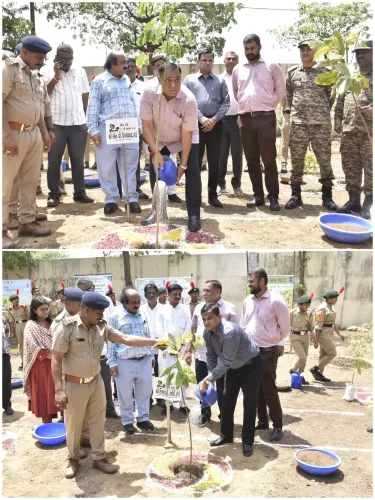
More than 1.5 lakh plants from over 70 species — including native and coastal varieties — have been planted across the site.
The forest features 13 major components , including Mahatma Van, Satya-Ahimsa Van, Krishna-Sudama Vatika and Mission LiFE Garden.
The site also supports local artisans from villages including Chingariya through a souvenir shop and handicraft display space.
A 14-hectare cultural forest built at a cost of ₹20 crore in Oddar village, Porbandar, Gujarat, is drawing tourists and nature lovers by weaving together environmental conservation, Mahatma Gandhi's philosophy and local heritage into a single public space. Named Sarvodaya Van, the site is now Gujarat's 25th cultural forest.
Inauguration and Background
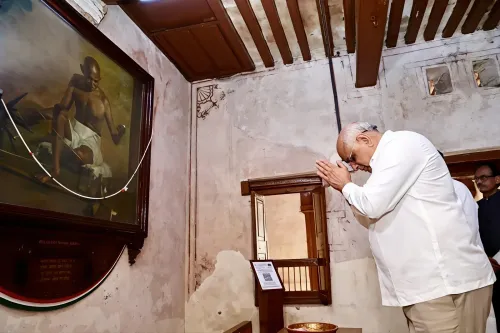
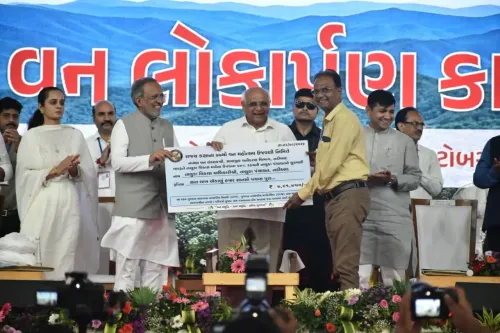
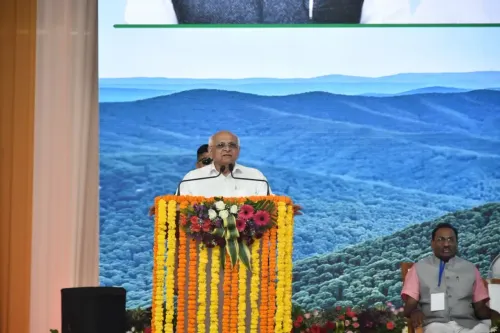
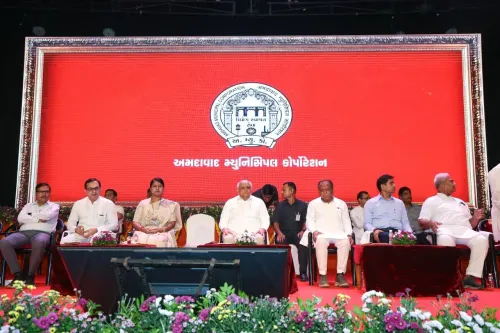
Gujarat Chief Minister Bhupendra Patel inaugurated Sarvodaya Van on 1 October 2026 as part of the 77th state-level Van Mahotsav. The project takes its name from Gandhi's philosophy of 'Sarvodaya' — meaning the welfare of all — and attempts to translate that ideal into a living landscape that connects ecological preservation with civic education and sustainable living.
Located in Porbandar, Gandhi's birthplace, the forest is positioned as a destination where younger generations can engage with his principles through themed gardens and public installations rather than museum exhibits alone.
Key Attractions and Design Themes
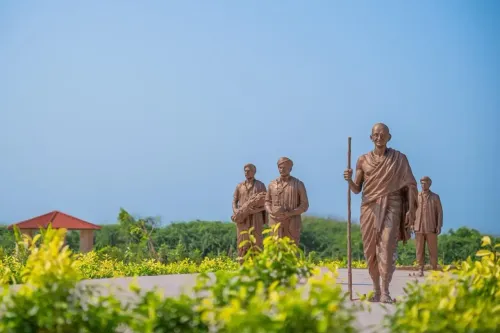
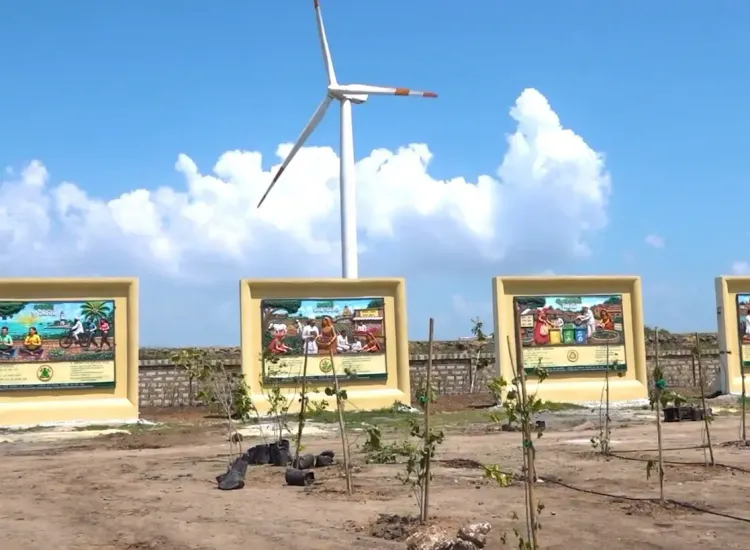
The forest has been organised around Gandhian values — truth, non-violence, peace, self-reliance, cleanliness and Gram Swaraj. Its 13 major components include Mahatma Van (depicting Gandhi's life journey), Satya-Ahimsa Van, the Ahimsa Stambh, Krishna-Sudama Vatika, Sea View Garden, Mission LiFE Garden, Van Kavach, Ayush Van, Barda Van, Aushadhi Van and a Plastic Mukti Path, among others.
R K Sugur, Principal Chief Conservator of Forests in Gandhinagar, highlighted the cultural depth of the site. 'Among these 13 major components of the forest, Sudama Vatika is especially noteworthy. Gandhi's struggle for non-violence has also been incorporated into the forest,' he said.
Plantation and Biodiversity
More than 1.5 lakh plants spanning over 70 species have been planted across the site. Native species include banyan, peepal, cluster fig and almond, while coastal varieties such as casuarina, pilu, portia and koadia reflect the site's proximity to the Arabian Sea.
Nilesh Bela, Range Forest Officer in Porbandar, described the breadth of concepts embedded in the design. 'Different forests have been created here, including Krishna-Sudama Matru Van, Satya-Ahimsa-Shanti Van, Barda Van, Aushadhi Van, Van Kavach, Mission LiFE and Plastic Mukti Path, among others. Different concepts have been incorporated within this forest,' he said.
Visitor Experience and Community Integration
Alongside its educational features, the site offers recreational infrastructure including gardens, slides and swings, making it family-friendly. Neeluben, a visitor, noted the added draw of its coastal location. 'There are different gardens, slides and swings. The sea is also nearby, so you can enjoy the view of the sea as well. It is a very enjoyable place,' she said.
Another visitor, Pareshbhai, said the forest offered an opportunity to learn about Gandhi while providing play facilities for children, and singled out the statue depicting Krishna and Sudama as a standout feature.
The site also supports local livelihoods: a souvenir shop and cafeteria are operational, and space has been allocated to display handicrafts by artisans from surrounding villages, including Chingariya. This comes amid broader state efforts to link eco-tourism with rural craft economies, a model several other Gujarat cultural forests have piloted.
Significance and What's Next
As the 25th cultural forest in Gujarat, Sarvodaya Van represents a maturing of the state's Van Mahotsav framework — moving beyond plantation drives toward integrated cultural and ecological destinations. With Gandhi's 155th birth anniversary observed in recent years drawing renewed global attention to his legacy, the forest's Porbandar location positions it to attract both domestic pilgrimage tourists and international visitors tracing Gandhi's roots. Authorities are expected to expand programming around school visits and craft fairs to deepen community engagement at the site.
Point of View
But their durability will depend on sustained budget lines beyond the launch year.
NationPress
27 Oct 2026
Frequently Asked Questions
What is Sarvodaya Van in Porbandar?
Sarvodaya Van is a 14-hectare cultural forest developed at a cost of ₹20 crore in Oddar village, Porbandar, Gujarat. It is Gujarat's 25th cultural forest, built around Mahatma Gandhi's philosophy of 'Sarvodaya' — welfare of all — and features 13 themed zones combining environmental conservation, Gandhian heritage and recreational facilities.
When was Sarvodaya Van inaugurated and by whom?
Sarvodaya Van was inaugurated by Gujarat Chief Minister Bhupendra Patel on 1 October 2026 as part of the 77th state-level Van Mahotsav. The event marked the forest's opening to the public in Gandhi's birthplace, Porbandar.
What are the main attractions inside Sarvodaya Van?
The forest has 13 major components including Mahatma Van, Satya-Ahimsa Van, the Ahimsa Stambh, Krishna-Sudama Vatika, Sea View Garden, Mission LiFE Garden, Van Kavach, Ayush Van, Aushadhi Van and a Plastic Mukti Path. A souvenir shop, cafeteria and handicraft display space are also available on-site.
How many plants have been planted in Sarvodaya Van?
More than 1.5 lakh plants from over 70 species have been planted across the 14-hectare site. These include native species such as banyan, peepal, cluster fig and almond, as well as coastal varieties including casuarina, pilu, portia and koadia.
Why is Sarvodaya Van located in Porbandar?
Porbandar is the birthplace of Mahatma Gandhi, making it a symbolically significant location for a forest built around his philosophy of Sarvodaya. The site aims to introduce visitors — especially younger generations — to Gandhi's principles of truth, non-violence and self-reliance in an immersive, outdoor setting.