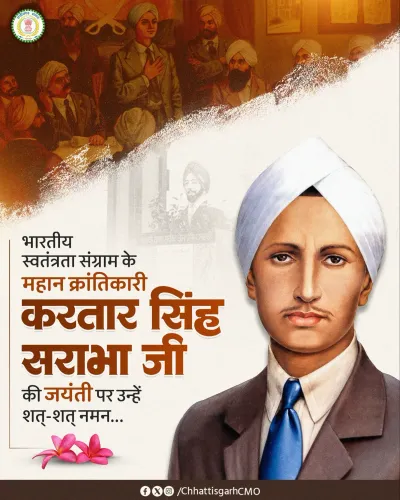
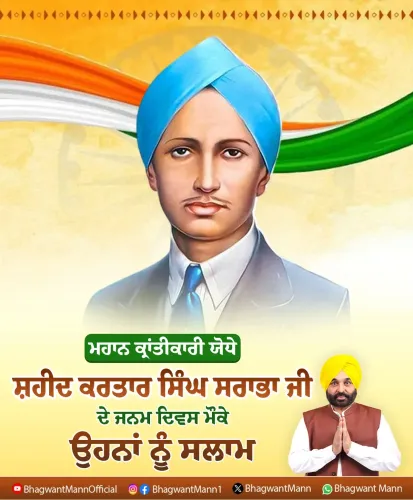
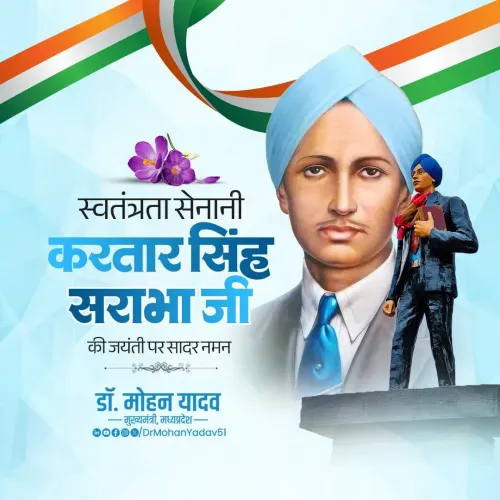
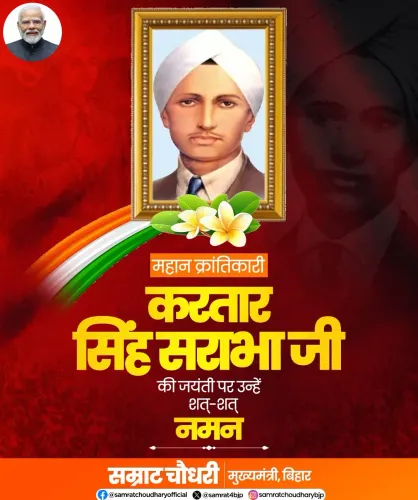
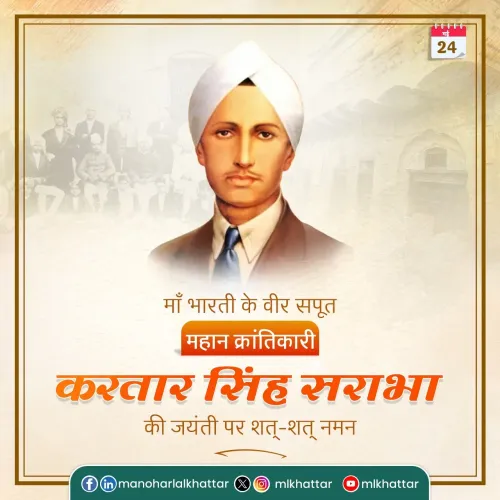
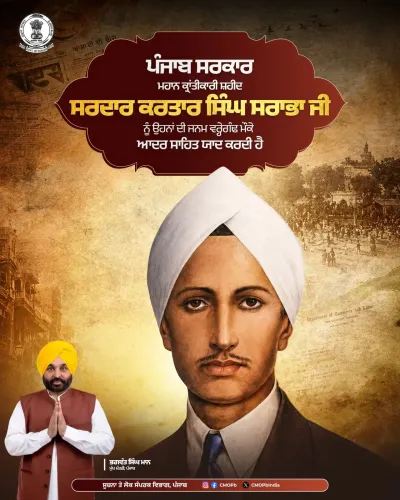
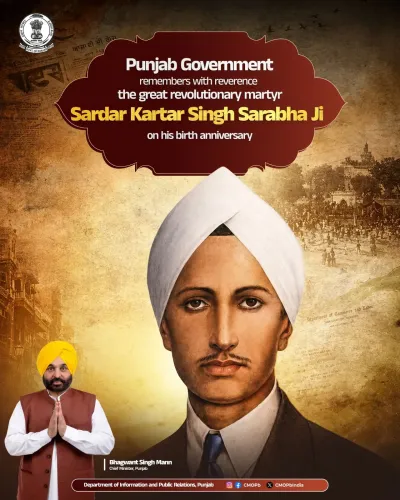
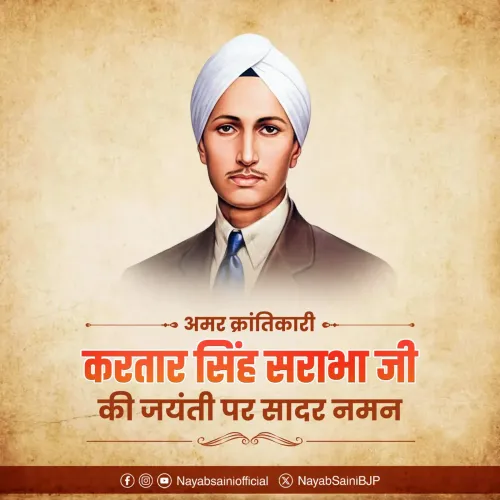
CM Nayab Saini Pays Tribute to Kartar Singh Sarabha on Martyrdom Day
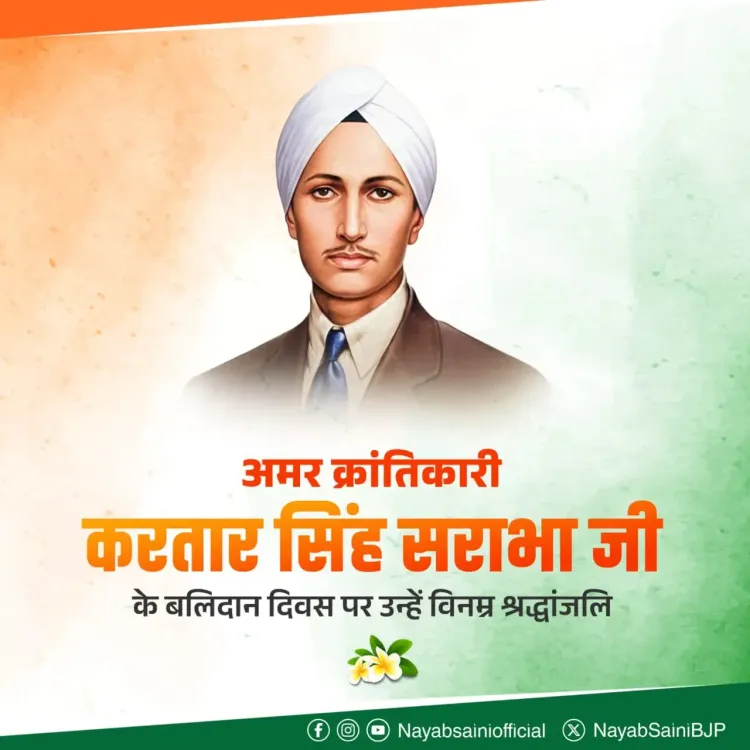
Synopsis
Haryana Chief Minister Nayab Singh Saini paid tribute to Ghadar revolutionary Kartar Singh Sarabha on his martyrdom anniversary, honouring his role in mobilising the Indian diaspora against British colonial rule through the Ghadar Party in the early 20th century.
Key Takeaways
Haryana CM Nayab Singh Saini paid tribute to Kartar Singh Sarabha on his martyrdom anniversary, November 16 .
Kartar Singh Sarabha was executed by British authorities in 1915 at the age of 19 following the Lahore Conspiracy Case.
Sarabha was a key member of the Ghadar Party , founded in 1913 in San Francisco to organise the Indian diaspora against British rule.
CM Saini described Sarabha's contributions as 'unparalleled' and called him an 'indelible inspiration for generations to come.' The tribute reflects a broader BJP pattern of amplifying revolutionary nationalist figures outside the Congress-era independence narrative.
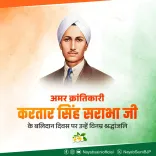
At just 19 years old, Kartar Singh Sarabha walked to the gallows at Lahore Central Jail on November 16, 1915 — and over a century later, his memory still commands reverence at the highest levels of Indian public life. Haryana Chief Minister Nayab Singh Saini marked Sarabha's martyrdom anniversary on Monday, November 16, 2026, with a tribute on X, calling the young revolutionary an 'unparalleled' force in uniting Indians abroad for the cause of independence.
Posting in Hindi, CM Saini wrote: 'अमर क्रांतिकारी करतार सिंह सराभा जी के बलिदान दिवस पर उन्हें शत-शत नमन' — 'Countless salutes to immortal revolutionary Kartar Singh Sarabha on his martyrdom day.' He praised Sarabha's role through the Ghadar Party in galvanising the Indian diaspora overseas, and described his dedication, patriotism, courage, and sense of duty as 'an indelible inspiration for generations to come.'
Who Was Kartar Singh Sarabha — and Why the Ghadar Party Mattered
Kartar Singh Sarabha was born in 1896 in Sarabha village in what is now Punjab. He travelled to the United States for education, but the experience of racial discrimination against Indian migrants — and the fire of anti-colonial thought — transformed him into a revolutionary. He became one of the most energetic young faces of the Ghadar Party, founded in 1913 in San Francisco by Indian expatriates determined to end British rule.
The Ghadar Party was a remarkable early chapter in diaspora-driven political action: through its Punjabi-language newspaper and an arms-smuggling network, it sought to ignite a mass mutiny across British India. Sarabha threw himself into the effort — producing propaganda, assembling explosives, and recruiting. British intelligence tracked him down. He was tried in the Lahore Conspiracy Case and hanged in 1915, at an age when most young men are still in college. Bhagat Singh, himself one of India's most iconic martyrs, reportedly carried a photograph of Sarabha in his pocket as a personal talisman.
BJP's Expanding Pantheon of Revolutionary Nationalists
CM Saini's tribute fits a deliberate, well-established pattern. BJP-led state governments have consistently sought to widen India's official memory of the independence struggle — amplifying figures like Sarabha, Lala Lajpat Rai, and other revolutionary nationalists whose legacies fall outside the dominant Congress-era narrative. For Haryana, with its large diaspora presence in countries like Canada, the United Kingdom, and the United States, invoking the Ghadar Party carries a layered resonance: these were Indians abroad who chose the freedom struggle over comfortable exile.
Sarabha's story, in particular, speaks directly to younger audiences. A teenager who crossed oceans, joined a revolutionary movement, and gave his life at 19 — it is precisely the kind of narrative that state governments are increasingly weaving into school curricula and public commemorations.
Over a hundred years on, the boy from Sarabha village still inspires salutes from chief ministers — proof that the youngest martyrs of 1915 have never really left the room.
Point of View
Whose large overseas diaspora shares a historical lineage with the early 20th-century Indian expatriate networks that funded and staffed that very movement. By framing Sarabha's sacrifice as 'an indelible inspiration for generations to come,' the CM simultaneously addresses domestic audiences, the Indian diaspora, and younger voters for whom a 19-year-old martyr is a more visceral symbol than a parliamentary resolution. The tribute cost nothing politically — but it quietly stakes a claim on a powerful piece of Punjab-rooted national memory.
NationPress
16 Nov 2026
Frequently Asked Questions
Who was Kartar Singh Sarabha?
Kartar Singh Sarabha was a Punjabi revolutionary born in 1896 who became a leading member of the Ghadar Party in the United States. He was executed by British authorities at Lahore in 1915 at the age of 19 for his role in anti-colonial activities including propaganda and arms smuggling.
What was the Ghadar Party?
The Ghadar Party was a revolutionary organisation founded in 1913 in San Francisco by Indian expatriates who sought to end British colonial rule in India. It mobilised diaspora Indians through its Punjabi-language newspaper and organised arms shipments to support a planned mutiny against the British.
Why is November 16 observed as Kartar Singh Sarabha's martyrdom day?
November 16, 1915 is the date on which British authorities hanged Kartar Singh Sarabha at Lahore Central Jail following his conviction in the Lahore Conspiracy Case. He was 19 years old at the time of his execution.
What did Haryana CM Nayab Singh Saini say about Kartar Singh Sarabha?
Haryana CM Nayab Singh Saini said that Sarabha's contribution in uniting Indians abroad for the cause of independence through the Ghadar Party was 'unparalleled,' and that his dedication, patriotism, and courage are 'an indelible inspiration for generations to come.'
What is the connection between Kartar Singh Sarabha and Bhagat Singh?
Bhagat Singh , one of India's most celebrated freedom fighters, deeply admired Kartar Singh Sarabha and reportedly carried a photograph of him as a personal inspiration, citing Sarabha's sacrifice as a formative influence on his own revolutionary path.