Chhattisgarh CMO pays tribute to Kartar Singh Sarabha on birth anniversary
Synopsis
The Chief Minister's Office of Chhattisgarh paid official tribute to Ghadar Party revolutionary Kartar Singh Sarabha on his birth anniversary on 24 May 2026, saluting the 19-year-old martyr executed by British authorities in 1915 for his role in an armed anti-colonial uprising.
Key Takeaways
The Chhattisgarh CMO posted an official tribute to Kartar Singh Sarabha on his birth anniversary on 24 May 2026 .
Kartar Singh Sarabha was born on 24 May 1896 and executed by British authorities on 16 November 1915 at age 19 .
Sarabha was a prominent member of the Ghadar Party , founded by Indian expatriates in North America to organise armed resistance against British rule.
Indian state governments have issued annual tributes to Sarabha since at least the 1970s , making this part of an established national commemorative practice.
The tribute reflects a pan-Indian embrace of revolutionary nationalism, with Chhattisgarh honouring a martyr rooted in Punjab's history.
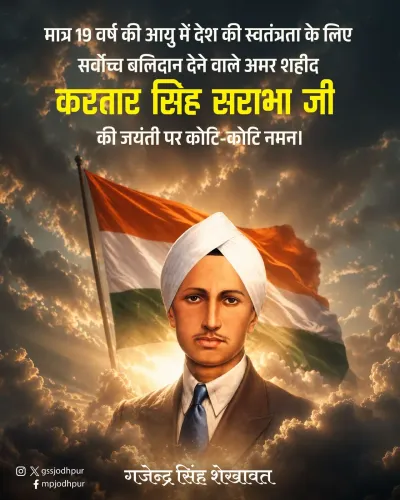
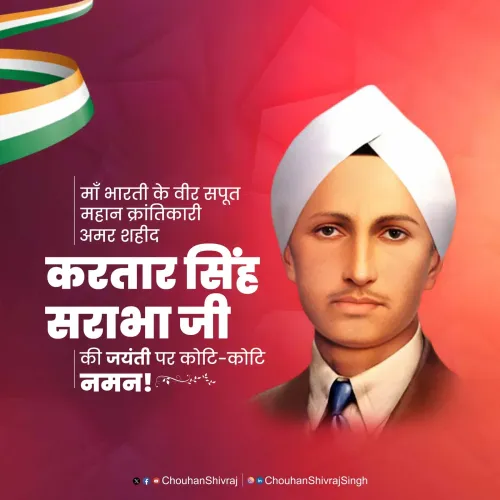
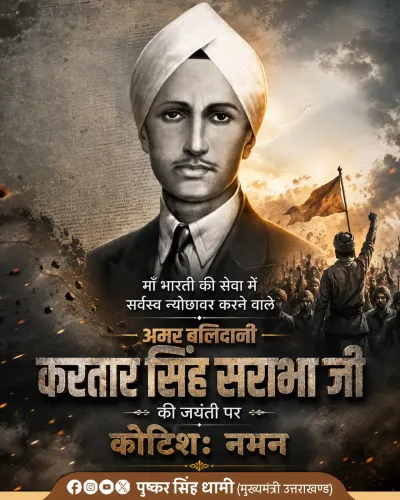
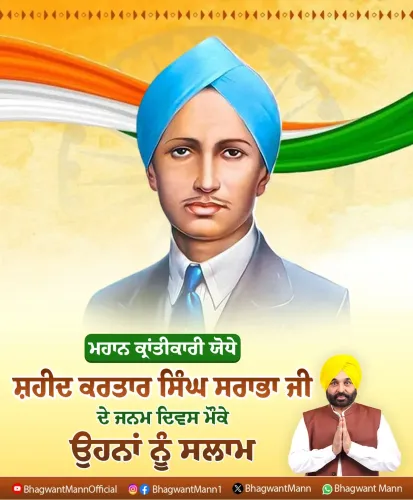
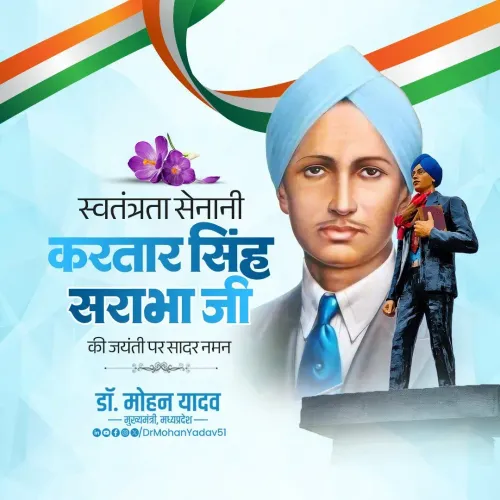
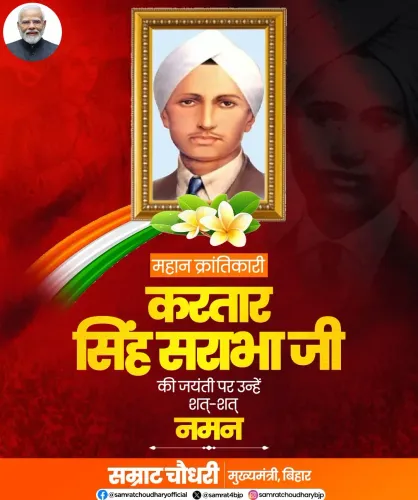
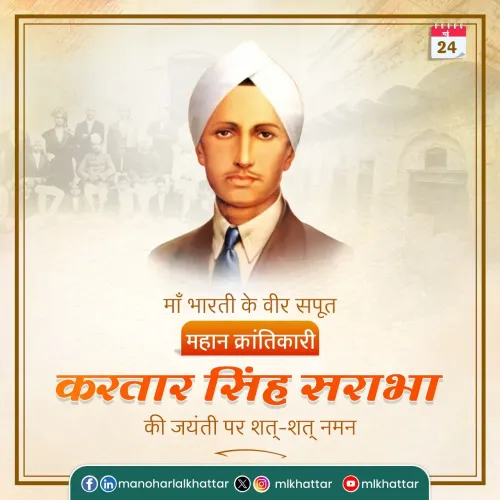
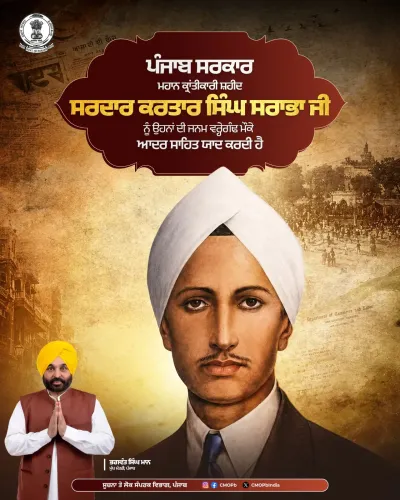
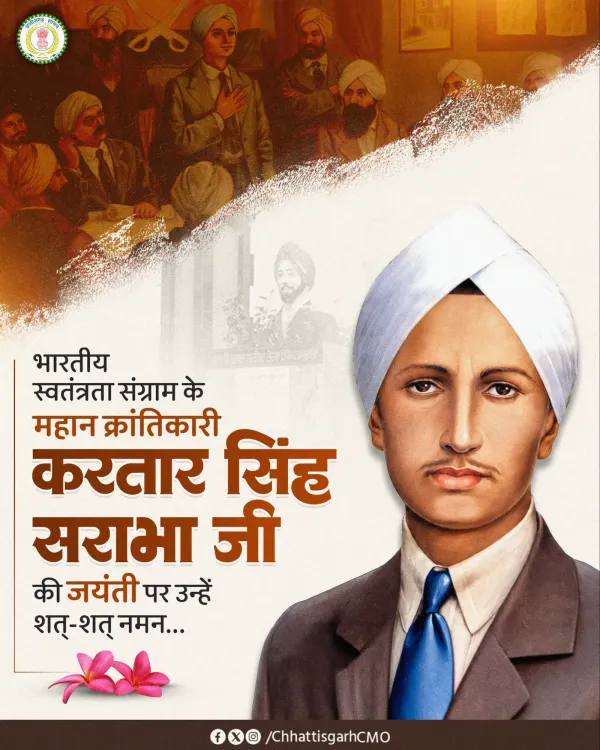
The Chief Minister's Office of Chhattisgarh on Sunday, 24 May 2026 paid homage to revolutionary martyr Kartar Singh Sarabha on his birth anniversary, saluting his sacrifice for India's freedom in an official post on X.
The post, written in Hindi, reads: 'Matrubhoomi ki swatantrata ke liye apne praanon ka balidaan dene wale mahan krantikari Shaheed Kartar Singh Sarabha ji ki jayanti par unhe kotishaha naman.' In English: 'We bow in countless salutations to the great revolutionary martyr Kartar Singh Sarabha, who sacrificed his life for the freedom of the motherland, on his birth anniversary.'
Context
Kartar Singh Sarabha was born on 24 May 1896 in Sarabha village, Ludhiana district, Punjab. He became one of the youngest and most celebrated figures of the anti-colonial armed resistance movement in early 20th-century India. Executed by British authorities on 16 November 1915 at the age of just 19, Sarabha remains a symbol of youthful revolutionary courage across India, particularly in Punjab. Sarabha was a key member of the Ghadar Party, a revolutionary organisation founded by Indian expatriates in North America that sought to overthrow British rule through armed mutiny. The party published radical anti-colonial literature and mobilised Indians abroad to return home and join the uprising. Sarabha was among the most active organisers of the planned 1915 mutiny within the British Indian Army, which was ultimately suppressed.Policy Backdrop
Indian state governments have issued official tributes to Kartar Singh Sarabha on his birth anniversary since at least the 1970s, as part of a broader institutional practice of commemorating the Ghadar movement and other armed anti-colonial efforts. These observances are consistent across political parties and form a recognised part of India's official memory of the freedom struggle. The Chhattisgarh government's tribute follows this established national pattern. Official social media accounts of Chief Ministers' Offices across states regularly mark the birth and death anniversaries of pre-independence revolutionaries, reinforcing the role of federal units in sustaining public memory of figures who did not belong to mainstream nationalist organisations such as the Indian National Congress.Stakeholders and Impact
The tribute carries symbolic weight for students, educators, and citizens who engage with the history of India's independence movement. Sarabha's story is part of school curricula in Punjab and features prominently in narratives of revolutionary nationalism. Official acknowledgements from state governments lend institutional visibility to figures whose contributions are sometimes overshadowed by more prominent independence-era leaders. For Chhattisgarh, a state geographically distant from Sarabha's native Punjab, the tribute signals a pan-Indian embrace of the revolutionary tradition, presenting the freedom struggle as a shared national inheritance rather than a regionally bounded memory.What's Next
On 24 May each year, wreath-laying ceremonies, school programmes, and cultural events are typically organised in Punjab and other states to mark Sarabha's birth anniversary. Observers will watch for any central government announcements linked to Ghadar movement centenaries or efforts to digitise and preserve revolutionary archives. As India approaches the centenary of several Ghadar-era events, state-level tributes such as this one are likely to grow in prominence, shaping how younger generations connect with the armed strand of the independence movement.Point of View
Cross-party practice of official commemoration of Ghadar-era revolutionaries, which has intensified on social media over the past decade. By invoking an armed anti-colonial martyr from Punjab, a state-level government in central India signals its stake in a pan-Indian revolutionary heritage that transcends regional identity. Such tributes also serve to position state administrations within the broader national narrative of sacrifice and patriotism, particularly as India approaches significant anniversaries of the Ghadar movement. The consistency of this practice across ideologically different governments underscores how the memory of pre-independence revolutionaries functions as a rare point of political consensus in contemporary India.
NationPress
21 Oct 2026
Frequently Asked Questions
Who was Kartar Singh Sarabha?
Kartar Singh Sarabha was a revolutionary born on 24 May 1896 in Sarabha village, Ludhiana, Punjab. He was a leading member of the Ghadar Party and was executed by British authorities on 16 November 1915 at the age of 19 for his role in organising an armed uprising against colonial rule.
What was the Ghadar Party?
The Ghadar Party was an early 20th-century revolutionary organisation founded by Indian expatriates in North America. It sought to end British rule in India through armed mutiny and published radical anti-colonial literature to mobilise Indians at home and abroad.
Why did the Chhattisgarh CMO pay tribute to Kartar Singh Sarabha?
The Chief Minister's Office of Chhattisgarh posted the tribute on 24 May 2026 to mark Kartar Singh Sarabha's birth anniversary, following a long-standing national practice of official commemoration of Ghadar movement revolutionaries on their birth and death anniversaries.
When is Kartar Singh Sarabha's birth anniversary?
Kartar Singh Sarabha's birth anniversary falls on 24 May. He was born on 24 May 1896 in Sarabha village, Ludhiana district, Punjab.
How do Indian state governments commemorate freedom fighters like Sarabha?
Indian state governments across party lines issue official social media tributes, organise wreath-laying ceremonies, and support school programmes on the birth and death anniversaries of pre-independence revolutionaries. This practice has been observed since at least the 1970s and has grown more visible with official government accounts on social media platforms.