CM Dhami pays tribute to revolutionary Kartar Singh Sarabha
Synopsis
Uttarakhand Chief Minister Pushkar Singh Dhami marked the birth anniversary of Ghadar Party revolutionary Kartar Singh Sarabha on 24 May 2026, saluting the 19-year-old martyr's courage and patriotism in a post on X. The tribute aligns with a broader BJP pattern of honouring armed-resistance freedom fighters.
Key Takeaways
CM Pushkar Singh Dhami posted a tribute to Kartar Singh Sarabha on his birth anniversary, 24 May 2026 .
Kartar Singh Sarabha was a Ghadar Party revolutionary executed by British authorities in Lahore in 1915 at the age of 19 .
Dhami called Sarabha's courage, patriotism, and sacrifice 'a source of inspiration for all of us.' 2026 marks approximately the 130th birth anniversary of Sarabha, giving the occasion added significance.
BJP-led governments have made public tributes to pre-Gandhian armed-resistance figures a consistent part of their political communication.
Sarabha's legacy influenced later revolutionaries including Bhagat Singh , cementing his place in India's nationalist memory.
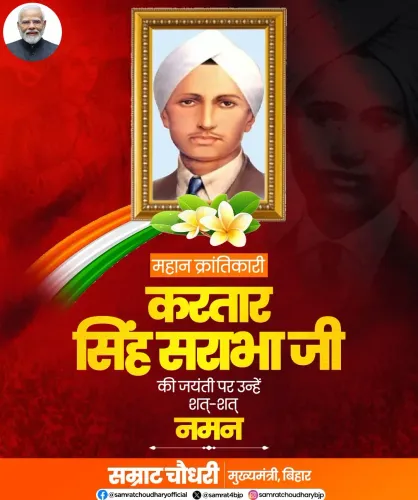
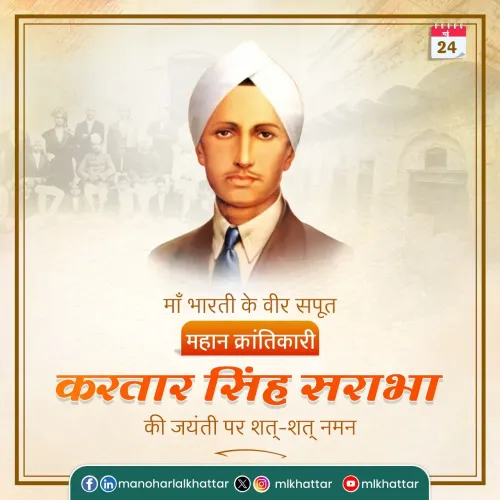
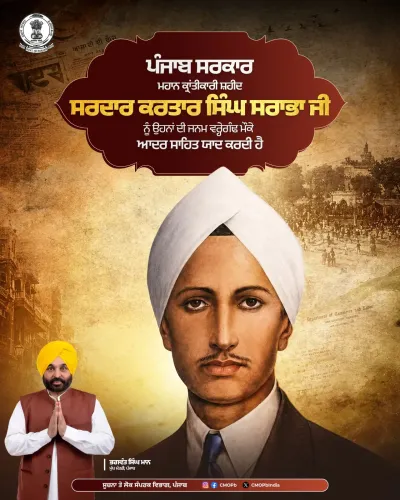
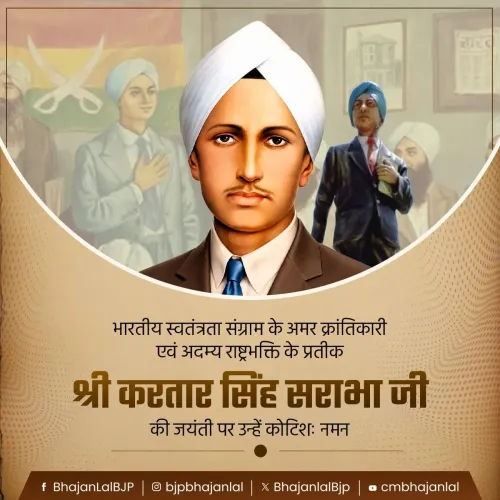
Uttarakhand Chief Minister Pushkar Singh Dhami on Sunday, 24 May 2026, paid homage to Kartar Singh Sarabha, the Ghadar Party revolutionary, on his birth anniversary, calling him an eternal inspiration for courage and patriotism.
Context
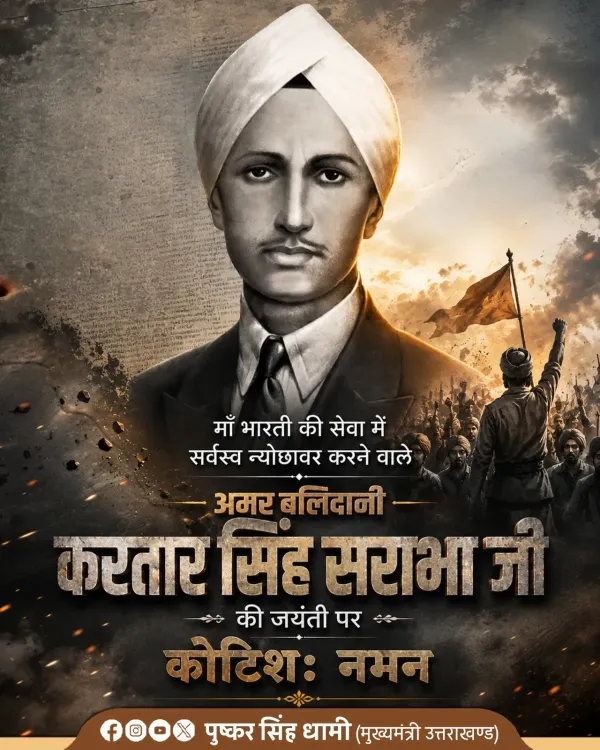
Dhami posted in Hindi on X, writing: 'Maa Bharati ki swatantrata hetu sarvasy nyochhavar karne wale amar balidani Kartar Singh Sarabha ji ki jayanti par kotishaः naman' — 'Countless salutations on the birth anniversary of immortal martyr Kartar Singh Sarabha, who sacrificed everything for the freedom of Mother India.' He added that Sarabha's 'indomitable courage, patriotism, and sacrifice are a source of inspiration for all of us.'
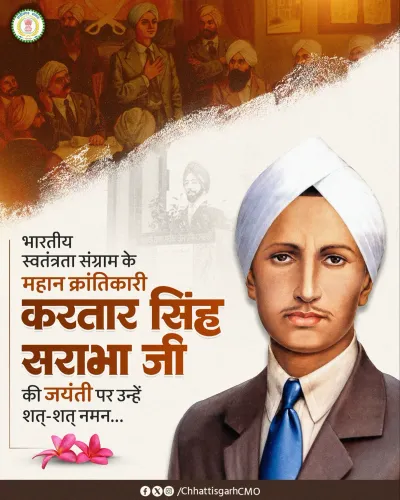
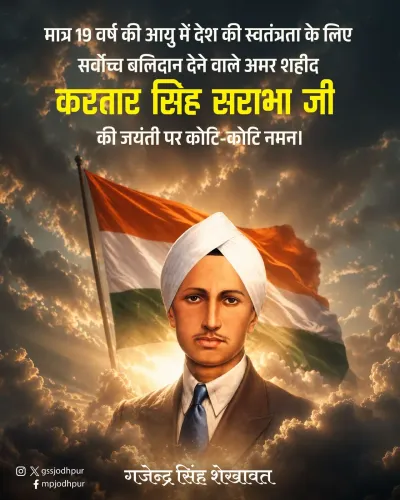
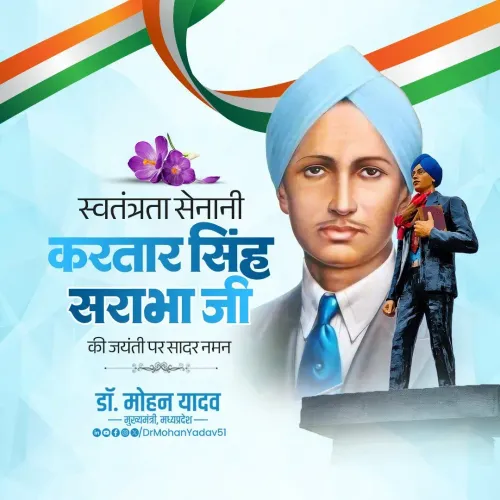
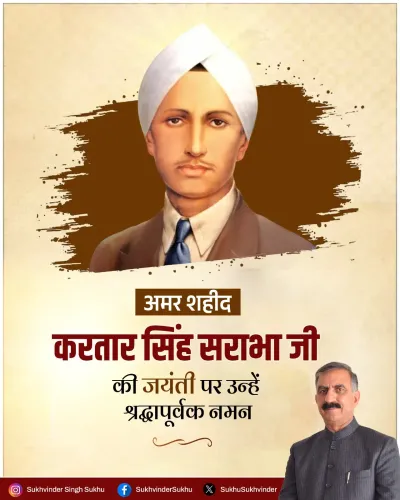
The post was accompanied by an image and was published on the morning of Sarabha's birth anniversary, which falls on 24 May each year.
Who Was Kartar Singh Sarabha
Kartar Singh Sarabha, born in 1896 in the village of Sarabha, Ludhiana district, Punjab, was a founding member of the Ghadar Party, an early 20th-century revolutionary organisation formed by Indian expatriates in North America to overthrow British colonial rule through armed uprising. He was arrested by British authorities after returning to India to organise an insurrection and was executed in Lahore on 16 November 1915, aged just 19. He is widely regarded as one of the youngest and most fearless martyrs of India's independence movement.
Sarabha's life and sacrifice had a profound influence on later revolutionaries, including Bhagat Singh, who reportedly carried a photograph of Sarabha with him. The Ghadar Party's legacy remains a touchstone in Punjab's political and cultural memory.
Policy Backdrop
Public tributes to pre-Gandhian armed-resistance figures have become a consistent feature of political communication by BJP-led governments at both the state and central levels. These observances form part of a broader narrative that seeks to elevate revolutionary martyrs — particularly those who chose armed struggle — alongside figures from the mainstream independence movement led by the Indian National Congress.
Annual 24 May observances for Sarabha have grown in prominence across multiple states since the early 2010s, with government events, school programmes, and social-media campaigns marking the occasion. 2026 marks approximately the 130th birth anniversary of Sarabha, lending the commemoration additional significance.
Stakeholders and Impact
The tribute resonates most directly with youth, students, and citizens in Punjab and Uttarakhand, where Sarabha's legacy is taught and commemorated. For CM Dhami, the post reinforces his government's alignment with nationalist iconography beyond regional boundaries, projecting a pan-India identity rooted in the sacrifice of pre-independence martyrs.
Civil society groups and historians who advocate for greater recognition of Ghadar Party figures in school curricula and public memorials are likely to welcome such high-profile acknowledgements from sitting chief ministers.
What's Next
With the 130th birth anniversary of Sarabha falling in 2026, state governments in Punjab and Uttarakhand, as well as the central government, may organise commemorative events, memorial upgrades, or curriculum reviews to formally deepen recognition of Ghadar-era revolutionaries. The trajectory of such tributes suggests that figures like Sarabha will continue to occupy a central place in official nationalist discourse in the years ahead.
Point of View
Emphasising armed resistance and supreme personal sacrifice. By publicly honouring a revolutionary who was executed at 19 for taking on the British Empire, Dhami signals alignment with a muscular nationalist narrative that resonates strongly with younger voters. The 130th birth anniversary in 2026 gives this routine observance greater symbolic weight, and similar tributes from other BJP chief ministers and central ministers are likely to follow. Over time, such coordinated messaging shapes how history is taught and remembered in state institutions.
NationPress
19 Sept 2026
Frequently Asked Questions
Who was Kartar Singh Sarabha?
Kartar Singh Sarabha was a revolutionary and founding member of the Ghadar Party who was executed by British authorities in Lahore in 1915 at the age of 19 for his role in organising an armed uprising against colonial rule.
When is Kartar Singh Sarabha's birth anniversary?
Kartar Singh Sarabha's birth anniversary falls on 24 May. In 2026, it marks approximately his 130th birth anniversary.
What did CM Dhami say about Kartar Singh Sarabha?
CM Pushkar Singh Dhami offered 'countless salutations' to Sarabha, describing his indomitable courage, patriotism, and sacrifice as 'a source of inspiration for all of us.'
What was the Ghadar Party?
The Ghadar Party was an early 20th-century revolutionary organisation formed by Indian expatriates, primarily in North America, that sought to overthrow British colonial rule in India through armed revolt.
Why do BJP leaders pay tribute to Kartar Singh Sarabha?
BJP-led governments have consistently honoured pre-Gandhian armed-resistance figures like Sarabha as part of a broader effort to elevate revolutionary martyrs in the national memory, alongside mainstream independence leaders.