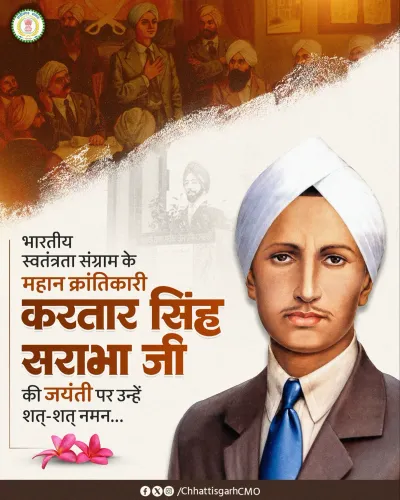
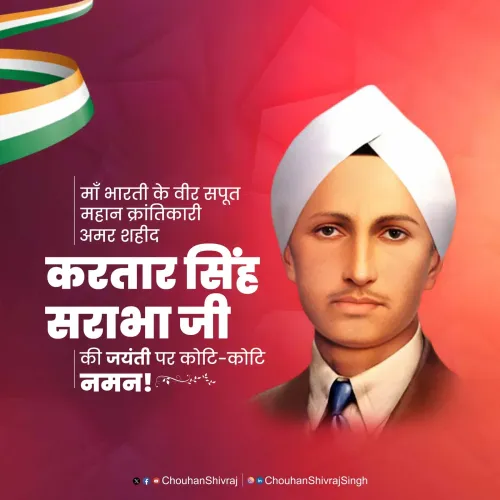
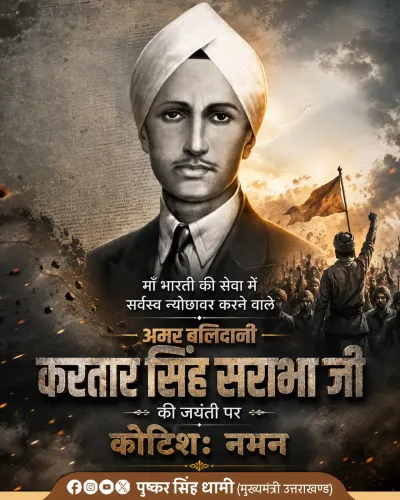
CM Samrat Choudhary Pays Tribute to Kartar Singh Sarabha on Birth Anniversary
Synopsis
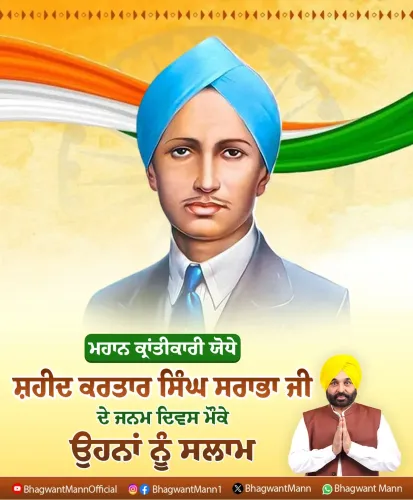
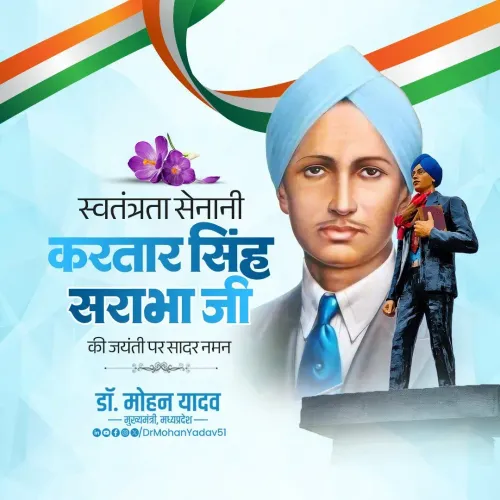
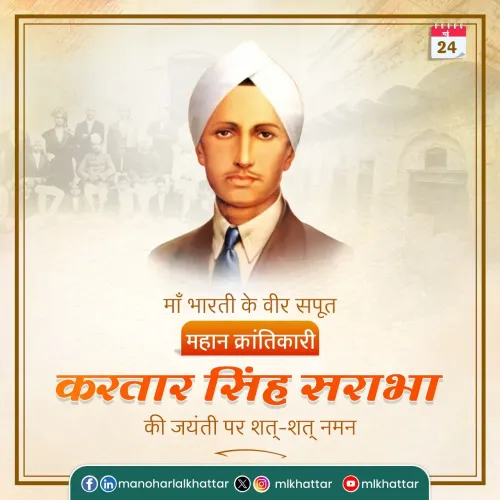
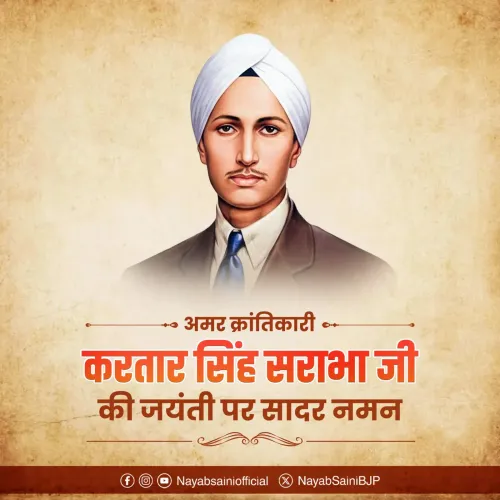
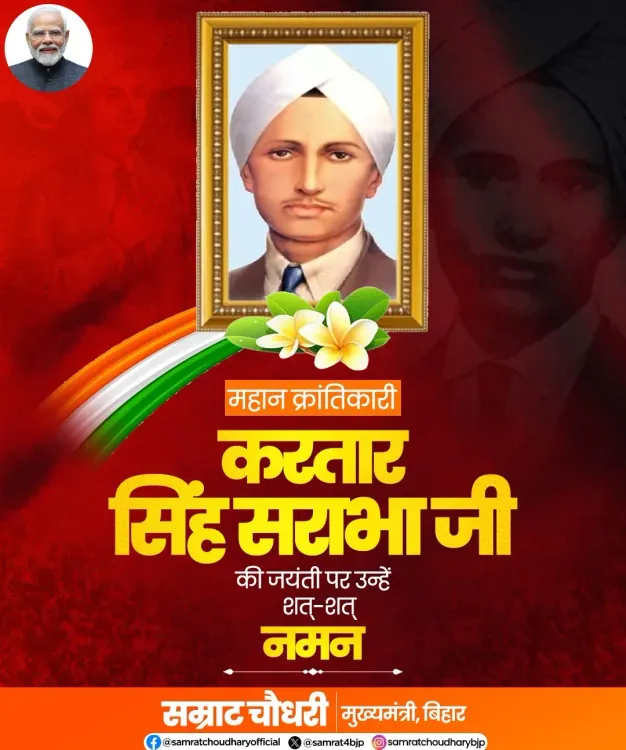
Bihar Chief Minister Samrat Choudhary on 24 May 2026 paid tribute to Ghadar Party revolutionary Kartar Singh Sarabha on his birth anniversary, honouring the martyr who was executed by the British at age 19 in 1915 and calling his sacrifice a timeless inspiration for Indian youth.
Key Takeaways
Bihar Chief Minister Samrat Choudhary posted a tribute to Kartar Singh Sarabha on his birth anniversary on 24 May 2026 .
Kartar Singh Sarabha was a member of the Ghadar Party and was executed by British authorities on 16 November 1915 at the age of 19 .
CM Choudhary described Sarabha as a 'symbol of indomitable courage and patriotism' whose sacrifice would forever inspire Indian youth.
Bhagat Singh is reported to have drawn direct inspiration from Sarabha, keeping his photograph as a symbol of revolutionary commitment.
BJP leaders have increasingly commemorated revolutionary freedom fighters since 2014 as part of efforts to broaden the recognised pantheon of independence movement icons.
State-level commemorative events in Bihar highlighting revolutionary contributions may follow ahead of Independence Day 2026 .
Bihar Chief Minister Samrat Choudhary on Sunday, 24 May 2026, paid tribute to revolutionary freedom fighter Kartar Singh Sarabha on his birth anniversary, honouring the young martyr's sacrifice for India's independence.
Context
Posting on X, CM Choudhary wrote: 'महान क्रांतिकारी, अदम्य साहस और देशभक्ति के प्रतीक करतार सिंह सराभा जी की जयंती पर उन्हें शत्-शत् नमन' ['Heartfelt salutations to the great revolutionary, symbol of indomitable courage and patriotism, Kartar Singh Sarabha, on his birth anniversary']. He added that Sarabha's saga of sacrifice, courage and love for the nation would forever inspire youth to serve the country, having given up everything for the motherland's freedom at a very young age.
The tribute underscores the continued relevance of Sarabha's legacy in India's political and cultural memory, particularly among leaders who seek to highlight the armed resistance strand of the independence movement.
Who Was Kartar Singh Sarabha?
Kartar Singh Sarabha, born in Sarabha village, Ludhiana district, Punjab, was a founding member of the Ghadar Party, an organisation established by Indian emigrants in North America to overthrow British colonial rule. He returned to India to organise an armed uprising and was arrested by British authorities. He was executed on 16 November 1915 at the age of just 19, making him one of the youngest martyrs of India's independence struggle.
Sarabha became a towering inspiration for subsequent revolutionaries. Bhagat Singh is reported to have kept a photograph of Sarabha as a constant reminder of revolutionary commitment. His life has since been commemorated through statues, educational institutions, and cultural events across Punjab and the rest of India.
Political Backdrop
BJP leaders at state and national levels have increasingly marked the birth anniversaries of revolutionary figures — including Bhagat Singh, Surya Sen, and Kartar Singh Sarabha — as part of a deliberate effort to foreground the armed resistance tradition within India's broader independence narrative. This pattern has been particularly visible since 2014, broadening the recognised pantheon of freedom fighters beyond narratives historically associated with the Indian National Congress.
For a state like Bihar, which has its own rich revolutionary heritage, such commemorations also serve to connect state leadership with national patriotic sentiment ahead of key observances such as Independence Day.
Stakeholders and Impact
The primary audience for such tributes is Indian youth, who are explicitly invoked in CM Choudhary's post as the inheritors of Sarabha's inspirational legacy. Educational institutions and cultural organisations in Bihar and Punjab are natural stakeholders, as commemorations of this kind often translate into curriculum discussions, essay competitions, and school-level events around the freedom struggle.
Civil society groups and historians who advocate for greater recognition of revolutionary figures outside the mainstream independence narrative also regard such public tributes as meaningful acknowledgements of a broader, more inclusive history.
What's Next
State-level commemorative events or school curriculum modules in Bihar highlighting revolutionary contributions could follow in the lead-up to Independence Day observances in August 2026. The tribute also signals the BJP's continued political investment in reclaiming and celebrating the legacy of early 20th-century revolutionaries as part of its broader cultural agenda, a trend that is likely to intensify as the nation approaches significant patriotic milestones.
Point of View
The post explicitly targets younger audiences, framing patriotic service as a living inheritance rather than a historical footnote. This pattern of commemorating figures like Sarabha, Bhagat Singh, and Surya Sen has accelerated since 2014, positioning the BJP as the custodian of a wider, more militant strand of the independence movement. For Bihar's political landscape, such tributes also serve to reinforce the state leadership's national-patriotic credentials ahead of key observances.
NationPress
6 Oct 2026
Frequently Asked Questions
Who was Kartar Singh Sarabha?
Kartar Singh Sarabha was a Punjab-born revolutionary and member of the Ghadar Party who was executed by British colonial authorities on 16 November 1915 at the age of 19 for his role in organising an armed uprising against British rule. He is widely regarded as one of the youngest and most celebrated martyrs of India's independence movement.
Why did Bihar CM Samrat Choudhary pay tribute to Kartar Singh Sarabha?
Bihar Chief Minister Samrat Choudhary paid tribute to mark Kartar Singh Sarabha's birth anniversary on 24 May 2026, honouring the revolutionary's sacrifice and calling his legacy a timeless source of inspiration for Indian youth.
What was the Ghadar Party?
The Ghadar Party was an organisation founded by Indian emigrants, primarily in North America, in the early 20th century with the aim of overthrowing British colonial rule in India through armed revolution. Kartar Singh Sarabha was one of its most prominent members.
Why do BJP leaders frequently tribute revolutionary freedom fighters?
BJP leaders have increasingly commemorated revolutionary freedom fighters such as Kartar Singh Sarabha, Bhagat Singh, and Surya Sen since 2014 as part of an effort to broaden the recognised pantheon of independence movement icons beyond narratives historically associated with the Indian National Congress.
What is Kartar Singh Sarabha's connection to Bhagat Singh?
Bhagat Singh, one of India's most iconic revolutionaries, is reported to have drawn direct inspiration from Kartar Singh Sarabha, keeping his photograph as a constant reminder of revolutionary commitment and sacrifice.