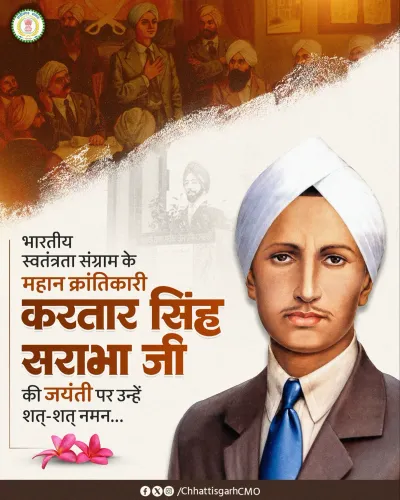
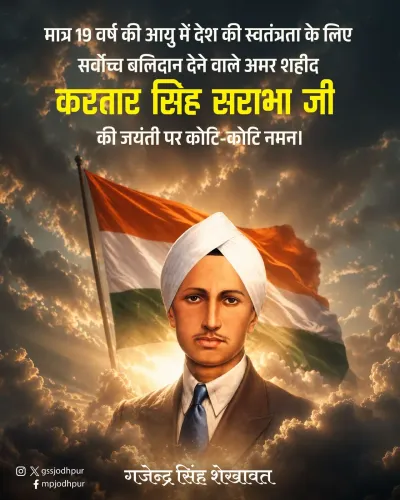
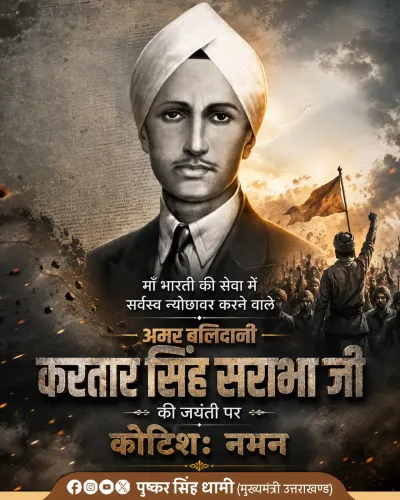
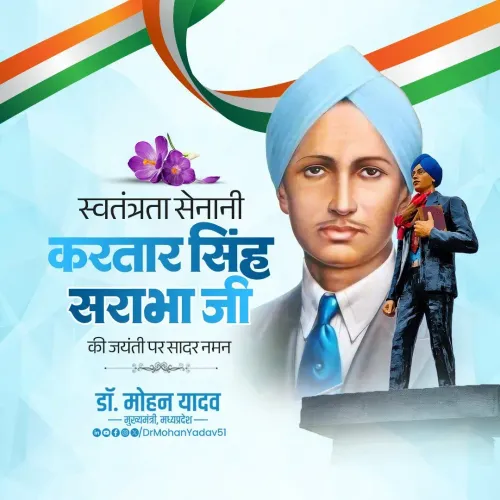
Shivraj Singh Chouhan Pays Tribute to Martyr Kartar Singh Sarabha
Synopsis
Union Agriculture Minister Shivraj Singh Chouhan saluted Ghadar Party revolutionary Kartar Singh Sarabha on his birth anniversary, honouring the martyr who was executed by British authorities at age 19 in 1915 for his role in the armed independence movement.
Key Takeaways
Union Agriculture Minister Shivraj Singh Chouhan paid tribute to Kartar Singh Sarabha on his birth anniversary on 24 May 2026 .
Kartar Singh Sarabha was executed by British authorities in 1915 at the age of 19 for his role in the Ghadar Party's armed resistance against colonial rule.
The Ghadar Party was founded by Indian expatriates in North America and sought the armed overthrow of British rule around the time of World War I.
Chouhan's post invoked Sarabha's courage and sacrifice as a source of enduring inspiration for Indian youth in service of the motherland.
Tributes to armed freedom fighters form a consistent pattern in Indian political communication, often accompanying calls for greater recognition in school curricula and memorials.
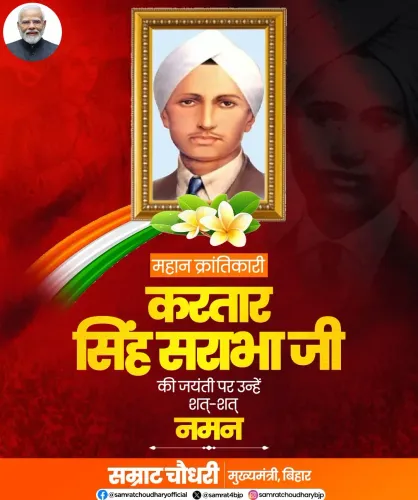
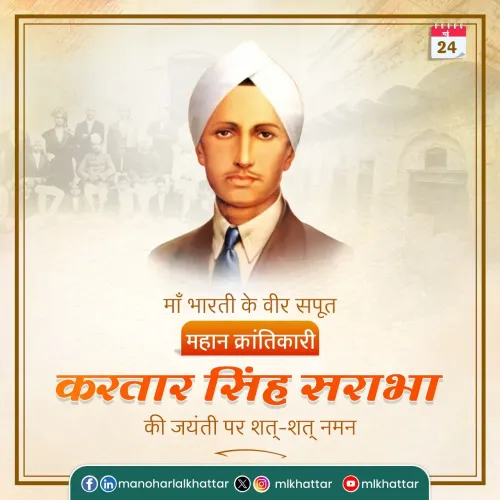
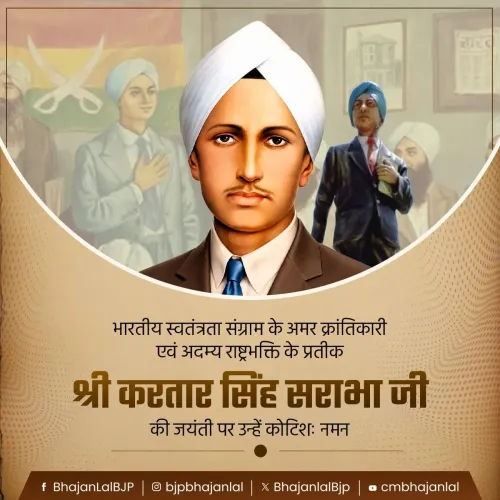
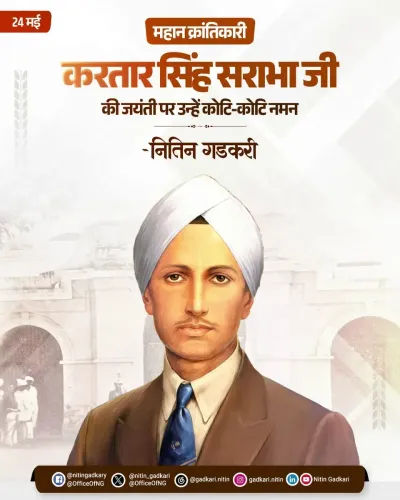
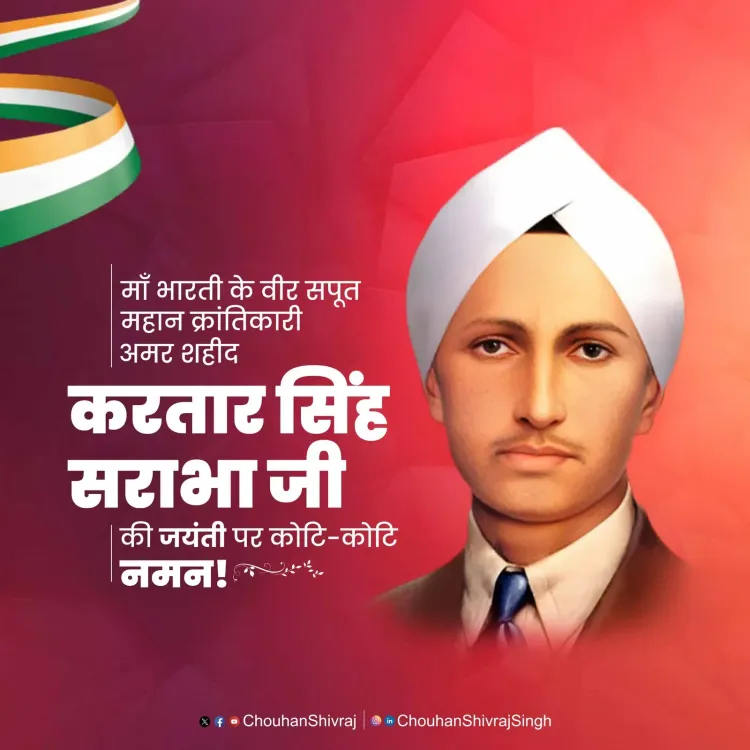
Union Agriculture Minister Shivraj Singh Chouhan on Sunday, 24 May 2026, paid homage to revolutionary freedom fighter Kartar Singh Sarabha on his birth anniversary, saluting the martyr who gave his life for India's independence at the age of 19.
Context
In his post, Chouhan offered 'koti-koti naman' (countless salutations) to Sarabha, describing him as a 'mahan krantikari, amar shaheed' (great revolutionary, immortal martyr) who 'haste-haste pranautsarg kar diya' — embraced death smiling — to break the chains of India's subjugation at the tender age of 19. He added that the tale of Sarabha's courage, sacrifice, and martyrdom would continue to inspire youth to serve the motherland for generations to come.
The tribute reflects a well-established tradition among Indian political leaders of publicly commemorating armed freedom fighters on their birth and martyrdom anniversaries, particularly those whose stories remain less prominently featured in mainstream historical narratives.
Who Was Kartar Singh Sarabha?
Kartar Singh Sarabha, born in Sarabha village, Ludhiana district, Punjab, was a central figure in the Ghadar Party, a revolutionary organisation founded by Indian expatriates in North America that sought the armed overthrow of British colonial rule around the time of World War I. He was executed by British authorities in 1915, becoming one of the youngest martyrs of India's independence movement. Bhagat Singh is known to have kept a photograph of Sarabha as a source of personal inspiration — a detail that underlines Sarabha's towering influence on subsequent generations of revolutionaries.
The Ghadar Party's ideology was rooted in secular nationalism and armed resistance, drawing members from the Indian diaspora across the United States and Canada. Sarabha's role in the party's activities within India made him a prime target for British colonial authorities.
Policy Backdrop and Broader Pattern
Commemorative tributes to independence-era revolutionaries form a consistent strand of political communication in India, cutting across party lines. Such statements serve to highlight armed resistance movements alongside the more widely taught non-violent strand of the freedom struggle, and are often accompanied by calls to embed revolutionary history more deeply in school curricula and state-sponsored memorials.
For the BJP and its leaders, invoking Punjabi and Sikh martyrs such as Sarabha carries particular resonance in Punjab and among Sikh communities nationally. Chouhan, as a senior party leader and a former four-term Chief Minister of Madhya Pradesh, regularly uses such occasions to connect historical sacrifice with contemporary calls for national service among youth.
Stakeholders and Impact
The primary audience for such tributes is Indian youth, explicitly named in Chouhan's post as the constituency whose inspiration Sarabha's story must sustain. Educational institutions, historians of the colonial period, and Punjabi cultural organisations are among the stakeholders who track how political figures engage with Ghadar-era history.
Sarabha's legacy is particularly significant in Punjab, where his memory is kept alive through local institutions, memorials, and annual commemorations. Ministerial-level tributes amplify visibility of such figures at the national level.
What's Next
Similar commemorative statements are expected on other martyr anniversaries through the year. Observers of education policy will watch for any follow-through in the form of proposals to expand coverage of Ghadar-era revolutionaries in national school curricula or to establish new state-sponsored memorials — a step that political tributes of this kind sometimes precede.
Point of View
Implicit in his Ghadar-era stature, also allows political leaders to connect multiple strands of the independence movement in a single gesture. Such commemorations, while ceremonial in form, carry electoral and cultural weight in states like Punjab where Ghadar-era memory remains deeply embedded.
NationPress
21 Sept 2026
Frequently Asked Questions
Who was Kartar Singh Sarabha?
Kartar Singh Sarabha was a revolutionary freedom fighter from Ludhiana, Punjab, who was a key member of the Ghadar Party. He was executed by British colonial authorities in 1915 at the age of 19 for his role in an armed conspiracy to overthrow British rule in India.
What was the Ghadar Party?
The Ghadar Party was an early 20th-century revolutionary organisation founded by Indian expatriates in North America. It sought the armed overthrow of British colonial rule in India, particularly around the period of World War I.
Why did Shivraj Singh Chouhan pay tribute to Kartar Singh Sarabha?
Shivraj Singh Chouhan paid tribute to Kartar Singh Sarabha on his birth anniversary, saluting the martyr's sacrifice and expressing that his story of courage and patriotism would continue to inspire Indian youth.
What is Kartar Singh Sarabha's connection to Bhagat Singh?
Bhagat Singh is widely known to have kept a photograph of Kartar Singh Sarabha as a personal inspiration, reflecting the deep influence Sarabha's martyrdom had on the next generation of Indian revolutionaries.
Why do Indian political leaders regularly tribute freedom fighters like Sarabha?
Indian political leaders across parties issue tributes on birth and martyrdom anniversaries of freedom fighters to highlight armed resistance alongside non-violent strands of the independence movement, and to connect historical sacrifice with contemporary calls for national service, especially among youth.