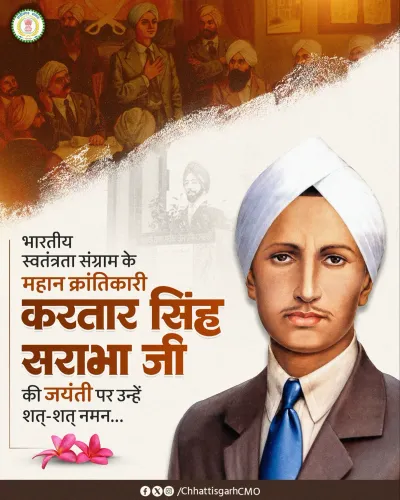
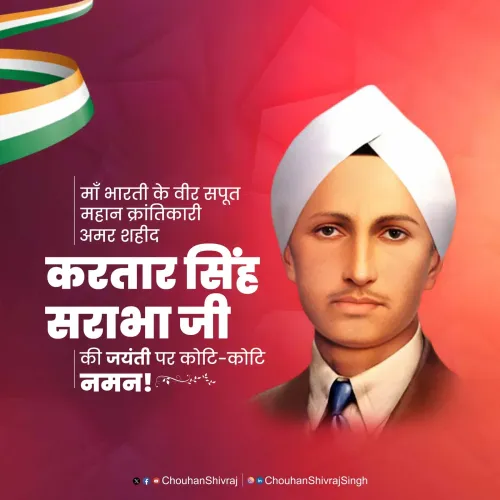
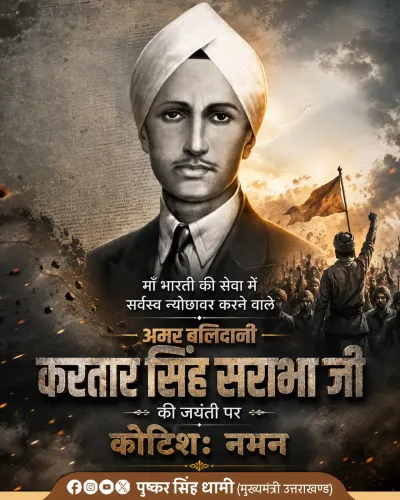
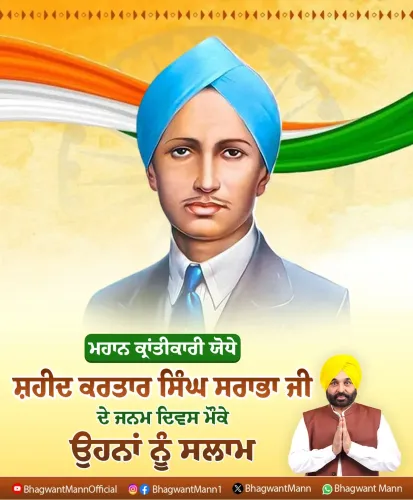
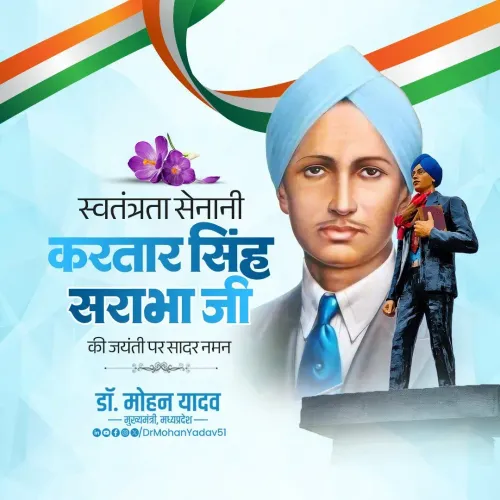
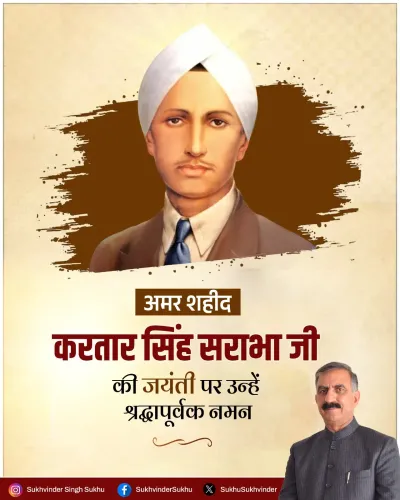
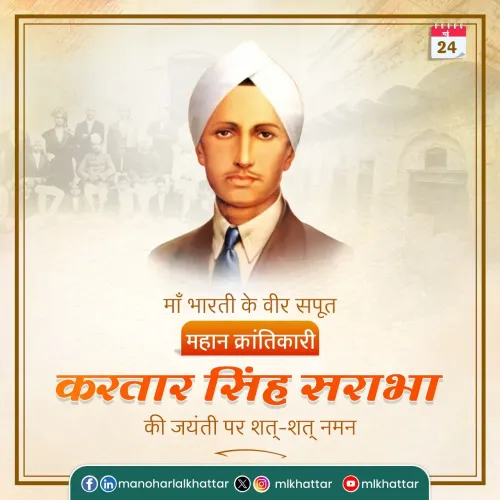
Shekhawat pays tribute to martyr Kartar Singh Sarabha on jayanti
Synopsis
Union Culture and Tourism Minister Gajendra Singh Shekhawat paid tribute to Ghadar Party revolutionary Kartar Singh Sarabha on his birth anniversary on 24 May 2026, honouring the martyr who was executed by the British in 1915 at just 19 years of age.
Key Takeaways
Union Culture and Tourism Minister Gajendra Singh Shekhawat paid tribute to Kartar Singh Sarabha on his birth anniversary on 24 May 2026 .
Kartar Singh Sarabha was a Ghadar Party revolutionary executed by the British in 1915 at the age of 19 .
Sarabha is widely revered in Punjab and was a known inspiration for martyr Bhagat Singh .
The tribute aligns with the Ministry of Culture's Azadi Ka Amrit Mahotsav calendar of freedom-fighter commemorations, active since 2021 .
The BJP-led government has since 2014 consistently elevated revolutionary and regional freedom fighters alongside the Gandhian mainstream.
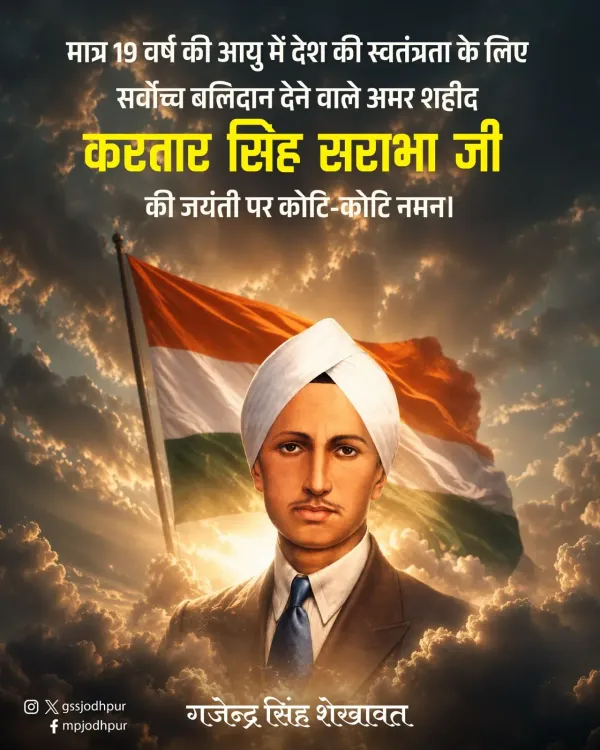
Union Culture and Tourism Minister Gajendra Singh Shekhawat on Sunday, 24 May 2026, paid homage to revolutionary martyr Kartar Singh Sarabha on his birth anniversary, honouring the freedom fighter who sacrificed his life for India's independence at the age of 19.
Posting on X, Shekhawat wrote: 'Matra 19 varsh ki aayu mein desh ki swatantrata ke liye sarvochch balidan dene wale amar shaheed Kartar Singh Sarabha ji ki jayanti par koti-koti naman.' ('Countless salutes on the birth anniversary of immortal martyr Kartar Singh Sarabha, who made the supreme sacrifice for the country's independence at the mere age of 19.')
Context
Kartar Singh Sarabha was born in Sarabha village, Ludhiana district, Punjab. A member of the Ghadar Party — a revolutionary organisation founded by Indian expatriates in North America — he returned to India to lead an armed uprising against British colonial rule. He was executed by the British in 1915, becoming one of the youngest martyrs of India's freedom struggle.
The Ghadar Party represented a militant, non-Congress strand of anti-colonial resistance, drawing members largely from the Punjabi Sikh diaspora. Sarabha's legacy has remained especially significant in Punjab, where he is revered as a symbol of youthful patriotism and sacrifice. He was also a known inspiration for Bhagat Singh, who reportedly carried Sarabha's photograph with him.
Policy Backdrop
The Ministry of Culture has, since 2021, observed birth anniversaries of revolutionary martyrs under the Azadi Ka Amrit Mahotsav framework — the Government of India's nationwide programme marking 75 years of independence. Jayanti tributes to Ghadarites and associates of Bhagat Singh have been a consistent feature of this calendar.
Since 2014, the BJP-led government has systematically elevated the memory of revolutionary and regional freedom fighters alongside the Gandhian mainstream, framing them as symbols of uncompromising nationalism. The Culture Ministry's calendar of jayantis, memorials, and educational programmes has been a key vehicle for this approach, particularly in states with deep Ghadar and INA connections such as Punjab.
Stakeholders and Impact
The tribute carries resonance for the Punjabi Sikh community, which holds Sarabha's memory in high regard across generations. For Indian youth, official commemorations of martyrs who gave their lives as teenagers serve as a reminder of the costs of the independence movement.
Shekhawat's post, issued from his official handle, reflects the Culture Ministry's broader mandate to keep the memory of 'unsung heroes' from diverse communities and regions alive in national consciousness. Such tributes also reinforce the government's narrative of a pluralistic freedom struggle beyond a single political lineage.
What's Next
State-level commemorations in Punjab and Rajasthan are expected to gather momentum ahead of Independence Day in August 2026. The Culture Ministry's ongoing calendar of jayantis and memorials is likely to include further events honouring Ghadar-era martyrs as the country approaches the mid-year independence anniversary cycle.
Point of View
Decade-long effort by the BJP-led Centre to expand the nationalist pantheon beyond Congress-associated figures, spotlighting revolutionary and Ghadar-era martyrs. The Culture Ministry's jayanti calendar has become a soft-power instrument that reinforces the government's 'unsung heroes' narrative, particularly effective in Punjab where Sarabha commands deep community reverence. By invoking a 19-year-old martyr, the messaging also targets younger demographics, linking contemporary national identity to radical sacrifice. The timing, ahead of the August 2026 independence cycle, suggests these tributes will intensify in the coming months.
NationPress
21 Sept 2026
Frequently Asked Questions
Who was Kartar Singh Sarabha?
Kartar Singh Sarabha was a Ghadar Party revolutionary from Ludhiana, Punjab, who was executed by the British in 1915 at the age of 19 for conspiring against colonial rule. He is remembered as one of India's youngest martyrs and was a known inspiration for Bhagat Singh.
What is the Ghadar Party?
The Ghadar Party was an early 20th-century revolutionary organisation founded by Indian expatriates, largely Punjabi Sikhs, in North America. It sought to overthrow British rule in India through armed uprising and was one of the earliest militant anti-colonial movements.
Why did Gajendra Singh Shekhawat pay tribute to Kartar Singh Sarabha?
Union Culture and Tourism Minister Gajendra Singh Shekhawat paid tribute on 24 May 2026 to mark Kartar Singh Sarabha's birth anniversary, consistent with the Ministry of Culture's practice of commemorating freedom fighters under the Azadi Ka Amrit Mahotsav framework.
What is Azadi Ka Amrit Mahotsav?
Azadi Ka Amrit Mahotsav is a Government of India programme launched in 2021 to mark 75 years of independence, featuring nationwide commemorations of freedom fighters, including revolutionary martyrs like those of the Ghadar Party.
What is Kartar Singh Sarabha's connection to Bhagat Singh?
Kartar Singh Sarabha was a significant inspiration for Bhagat Singh, who reportedly carried Sarabha's photograph with him. Both are celebrated as revolutionary martyrs who challenged British colonial rule through radical action.