CM Samrat Choudhary backs Modi's 'Detect, Delete, Deport' line
Synopsis
Bihar Chief Minister Samrat Choudhary has amplified Union Home Minister Amit Shah's attack on the opposition, accusing rival parties of protecting infiltrators rather than voters, and backing PM Modi's 'Detect, Delete and Deport' immigration enforcement doctrine.
Key Takeaways
Bihar CM Samrat Choudhary posted on November 5, 2026 quoting Union Home Minister Amit Shah to attack the opposition over illegal immigration.
The post charges that the opposition rally is aimed at 'saving infiltrators,' not voters.
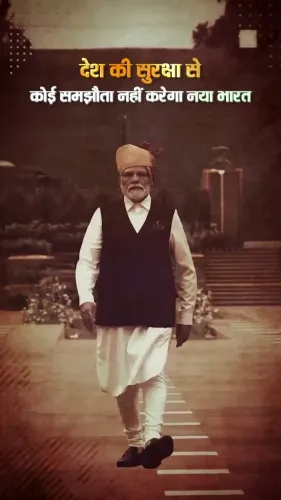
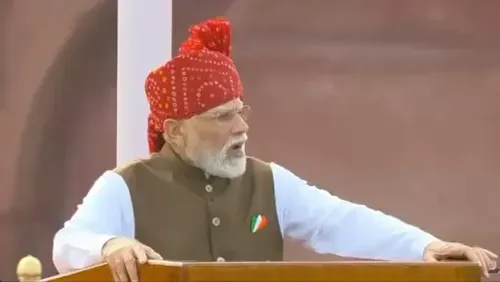
PM Narendra Modi's three-point doctrine — 'Detect, Delete and Deport' — was cited as the government's firm counter-position.
The BJP's immigration stance draws on the Citizenship Amendment Act (2019) and the Assam NRC (2019) as institutional precedents.
The issue is a recurring political flashpoint across Bihar, Assam, and West Bengal , states closest to cross-border migration pressure zones.
Choudhary's statement signals Bihar's political contest is being framed firmly within a national security narrative ahead of any electoral cycle.
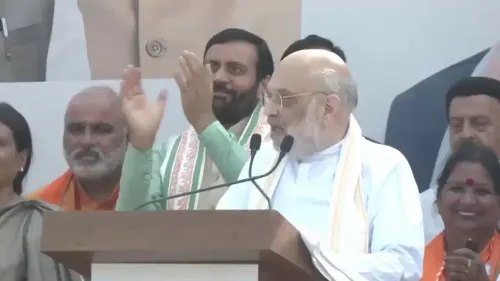
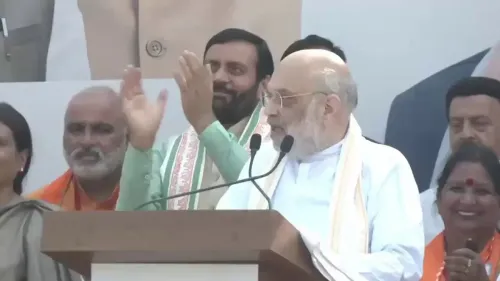
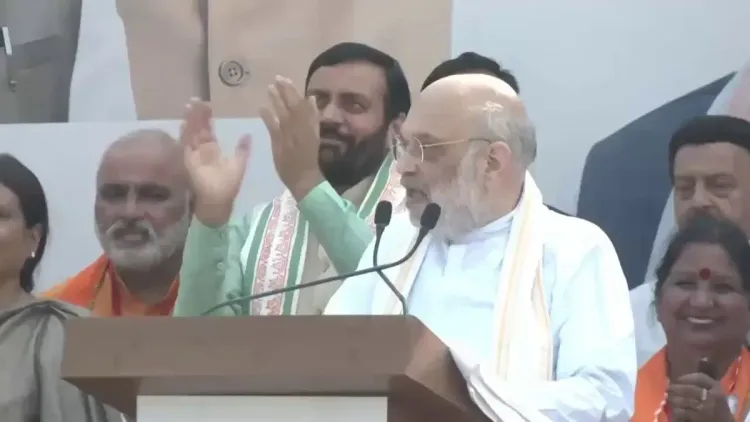
A sharp political volley landed on Thursday, November 5, 2026, as Bihar Chief Minister Samrat Choudhary turned a campaign rally into a flashpoint over illegal immigration — accusing the opposition of rallying not to protect voters, but to protect infiltrators.
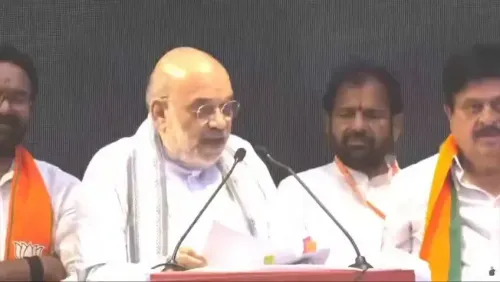
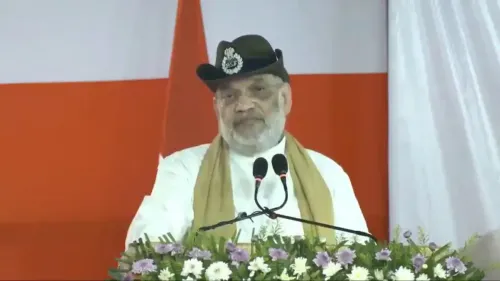
Quoting Union Home and Cooperation Minister Amit Shah, Choudhary posted: 'विपक्ष की रैली वोट बचाने के लिए नहीं बल्कि घुसपैठियों को बचाने के लिए है' — 'The opposition's rally is not to save votes, but to save infiltrators.' He followed that with the governing alliance's three-word security doctrine, attributed to Prime Minister Narendra Modi: 'Detect, Delete and Deport.'
The 'Detect, Delete, Deport' doctrine and its roots
The slogan is not new, but its deployment in Bihar signals an escalation. The BJP's framing of illegal immigration as an existential security threat — particularly of undocumented migrants crossing from Bangladesh — has been a consistent plank of the Modi government's internal security posture. It draws its institutional weight from two landmark exercises: the Citizenship Amendment Act (2019), which opened a pathway for persecuted minorities from neighboring countries, and the National Register of Citizens (NRC) completed in Assam in 2019, which identified undocumented residents for potential deportation.
That combination — legislative clarity on who belongs, administrative machinery to find who does not — is what 'Detect, Delete, Deport' gestures toward as a national template. Amit Shah, as the architect of both the CAA and the NRC process, is the face of that framework. Choudhary quoting him directly is a deliberate alignment: a state-level leader signaling that he stands with the Centre's hardest security line.
Why Bihar, why now
Immigration has emerged as a live electoral nerve across eastern India — Bihar, Assam, and West Bengal sit closest to the demographic pressure points of cross-border movement. Border communities in these states carry lived experience of demographic change, and the BJP has consistently framed the opposition's softer tone on enforcement as a vote-bank calculation at the expense of national security.
Choudhary's post, amplified with a video, is a direct rebuttal of that opposition framing. By charging that rival parties are shielding 'infiltrators' rather than fighting for citizens, he is placing Bihar's political contest squarely inside a national security narrative — one that the Centre has the institutions, the vocabulary, and now the political momentum to press hard.
What the opposition rally charge means on the ground
The specific opposition rally referenced in the post could not be independently confirmed, but the rhetorical structure is clear: any gathering that resists deportation drives or NRC-style exercises is, in BJP's telling, a gathering in defence of illegality. It is a frame designed to make the opposition's counter-argument politically costly — defending civil liberties sounds, in this framing, like defending border violations.
Watch for follow-up statements from the Union Home Ministry on immigration enforcement timelines, and for opposition leaders in Bihar to sharpen their response to the 'Detect, Delete, Deport' challenge before it fully sets the terms of the debate.
Point of View
He ties Bihar's political stakes directly to the Centre's security brand. The 'Detect, Delete, Deport' framing is particularly potent because it converts a complex civil-liberties debate into a crisp enforcement sequence that is easy to amplify and hard to rebut without sounding permissive. The opposition now faces a classic trap — silence looks like concession, while a nuanced defence of due process can be edited down to a soundbite that looks like sympathy for illegal migration. Historically, this playbook has shown strong returns in border-adjacent states where demographic anxiety is not abstract but lived.
NationPress
5 Nov 2026
Frequently Asked Questions
What does 'Detect, Delete and Deport' mean in Indian politics?
'Detect, Delete and Deport' is a three-step immigration enforcement slogan attributed to PM Narendra Modi, referring to identifying illegal immigrants, removing them from official records, and deporting them from India. It has been used by BJP leaders to frame the government's hardline stance on undocumented migrants, particularly those crossing from Bangladesh.
Why is Samrat Choudhary attacking the opposition over infiltrators?
Bihar CM Samrat Choudhary is amplifying a BJP campaign charge that opposition parties are holding rallies to protect illegal immigrants rather than serve voters. The statement, quoting Union Home Minister Amit Shah, is part of a broader BJP effort to frame immigration enforcement as a national security issue in eastern Indian states including Bihar.
What is the connection between the CAA, NRC and the deportation debate in Bihar?
The Citizenship Amendment Act (2019) and the National Register of Citizens completed in Assam (2019) together form the institutional basis for the BJP's immigration enforcement framework. The CAA provides a pathway for certain persecuted minorities, while the NRC identified undocumented residents. Bihar's proximity to Bangladesh makes these policies a live political issue in the state.
What is Amit Shah's role in India's immigration policy?
As Union Minister of Home Affairs, Amit Shah is the chief architect of India's internal security and immigration enforcement policies, including the CAA and the NRC exercise in Assam. His statements on 'Detect, Delete and Deport' carry institutional weight and are frequently cited by state BJP leaders.
Is illegal immigration a major issue in Bihar elections?
Yes. Bihar, along with Assam and West Bengal, sits in the zone most affected by cross-border migration from Bangladesh, making illegal immigration a recurring and emotionally charged electoral issue. The BJP has consistently contrasted its enforcement stance with what it characterises as the opposition's reluctance to act.