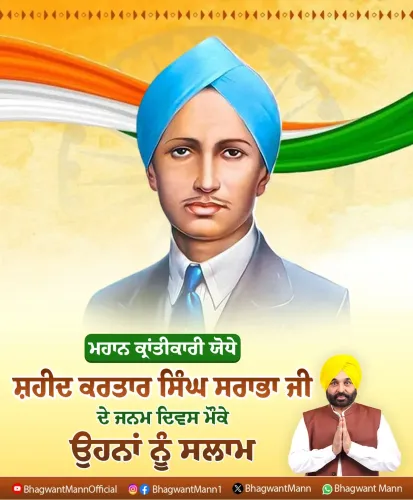
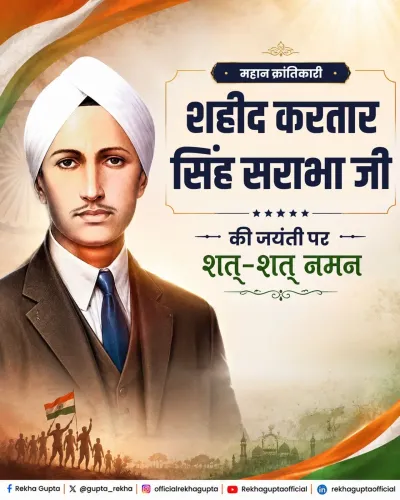
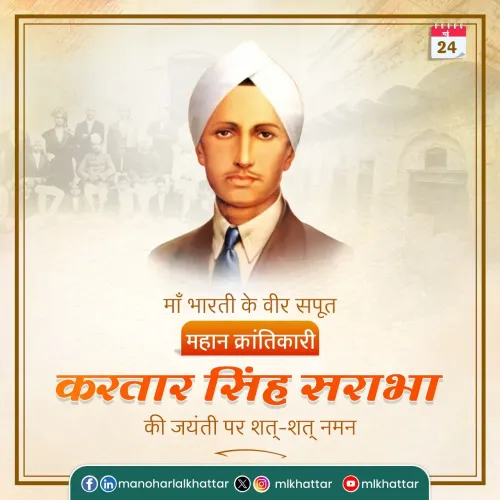
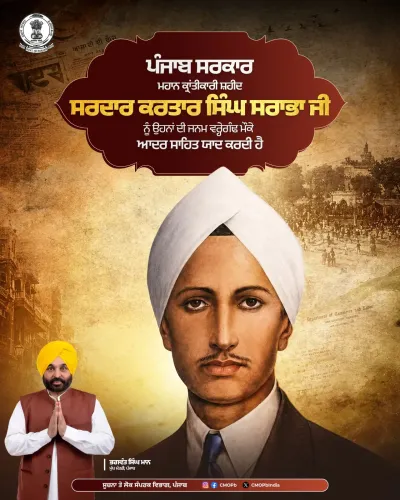
CM Sukhu Pays Tribute to Ghadar Martyr Kartar Singh Sarabha
Synopsis
Himachal Pradesh Chief Minister Sukhvinder Singh Sukhu on 24 May 2026 honoured Ghadar Party revolutionary Kartar Singh Sarabha on his birth anniversary, calling the martyr's sacrifice at age 19 an immortal example of love for the nation.
Key Takeaways
Chief Minister Sukhvinder Singh Sukhu posted a tribute to Kartar Singh Sarabha on 24 May 2026 , Sarabha's birth anniversary.
Kartar Singh Sarabha was a Ghadar Party revolutionary executed by the British in 1915 at the age of 19 .
The Ghadar Party was founded in 1913 by Indian migrants in North America to seek armed overthrow of British colonial rule.
Sukhu described Sarabha's sacrifice, courage, and devotion to the motherland as 'an immortal example of love for the nation.' Annual tributes to Ghadar figures by northern Indian chief ministers are an established part of India's political commemorative culture.
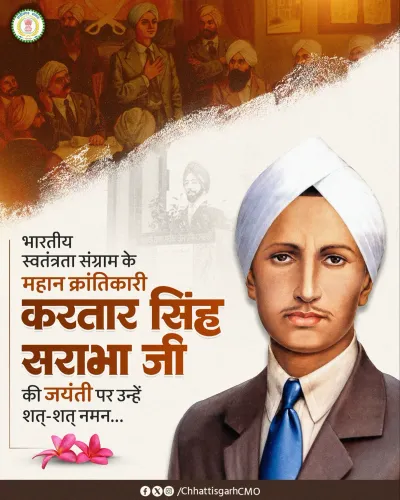
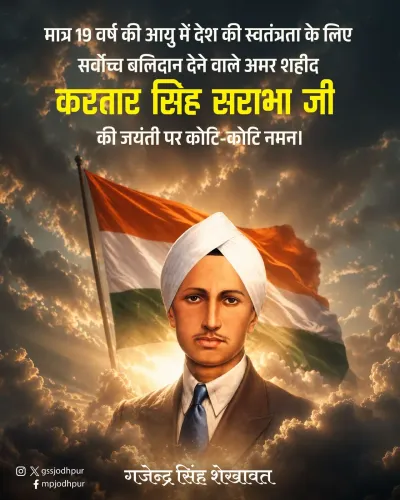
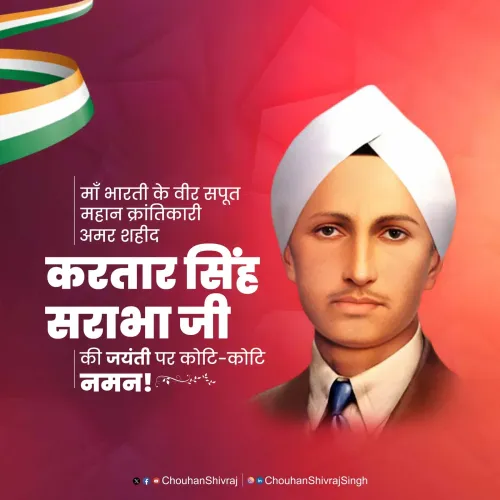
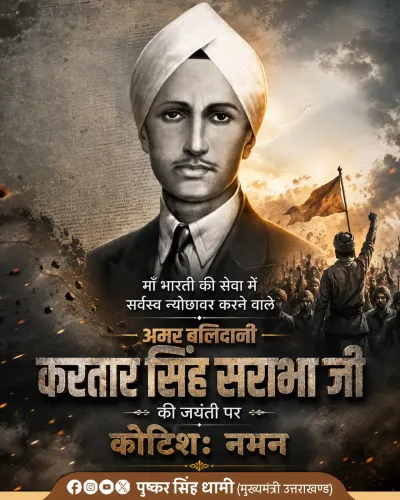
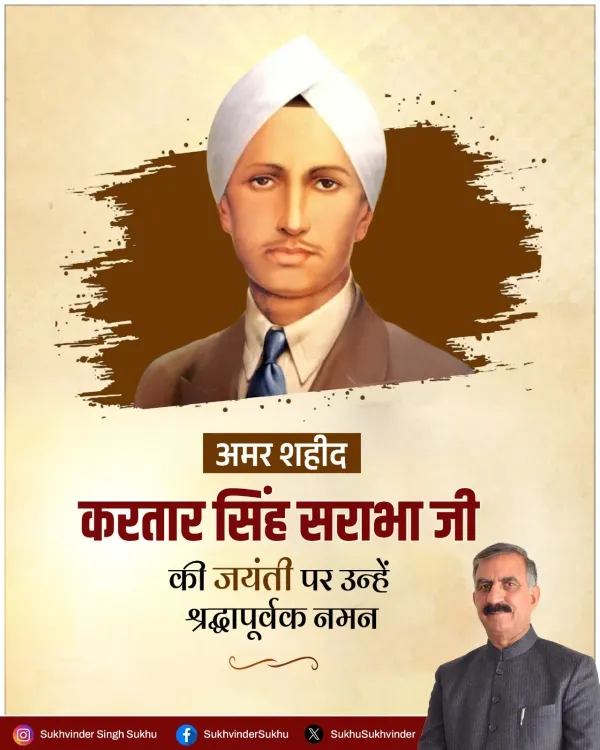
Himachal Pradesh Chief Minister Sukhvinder Singh Sukhu on Sunday, 24 May 2026 paid homage to Kartar Singh Sarabha, the revolutionary leader of the Ghadar Party, on the occasion of Sarabha's birth anniversary, invoking his sacrifice as an enduring symbol of patriotism.
Posting in Hindi on X, Chief Minister Sukhu wrote: 'Gadar Party ke krantikari neta evam amar shaheed Kartar Singh Sarabha ji ki jayanti par sadar naman' ['Respectful salutations on the birth anniversary of Ghadar Party revolutionary leader and immortal martyr Kartar Singh Sarabha']. He added that Sarabha's sacrifice, courage, and devotion to the motherland at a young age remain 'an immortal example of love for the nation.'
Context
Kartar Singh Sarabha was born in 1896 in Punjab and became one of the most prominent figures of the Ghadar Party, the revolutionary organisation founded in 1913 by Indian migrants in North America with the goal of overthrowing British colonial rule through armed uprising. He was executed by British authorities in 1915 at just 19 years of age, making him one of the youngest martyrs of India's independence movement. His role in arms procurement and anti-colonial propaganda made him a revered figure in Punjab's nationalist memory.
Policy Backdrop
The Ghadar Party occupies a distinct place in India's freedom struggle narrative — representing an armed, diaspora-driven revolutionary tradition that ran parallel to the dominant non-violent movement. Indian governments have periodically marked Ghadar milestones through memorials, publications, and state events, including commemorations around the party's founding centenary in 2013 and the centenary of the 1915 trials. Political leaders across northern India, particularly in Punjab and Himachal Pradesh, regularly invoke Ghadar figures to underscore their region's contribution to the wider freedom struggle.
Stakeholders and Impact
Chief Minister Sukhu's tribute, issued from the Congress-led government of Himachal Pradesh, is addressed to Indian citizens broadly and to the state's residents in particular. Such annual statements by chief ministers serve a dual purpose: honouring historical figures and projecting a governing party's alignment with the revolutionary nationalist tradition. For communities in northern India, Sarabha remains a figure of deep cultural and political significance, and public remembrance by elected leaders reinforces the state's participation in national commemorative culture.
What's Next
State-level educational programmes or cultural events focused on Ghadar Party history could be announced in the period leading up to Independence Day in August, particularly as Punjab-Himachal cultural exchanges around freedom-movement heritage gain renewed attention. As India's centenary of independence approaches in 2047, tributes to lesser-known revolutionary figures like Sarabha are expected to feature more prominently in official commemorative calendars.
Point of View
Revolutionary strand of nationalist identity distinct from the Gandhian mainstream. For a Congress government in Himachal Pradesh, such commemorations help reinforce the party's historical claim to the freedom-movement legacy at a time when that legacy is actively contested in national politics. The choice to honour Sarabha — a figure celebrated across party lines in Punjab and its neighbouring states — also signals an inclusive commemorative posture. As India moves toward the centenary of independence, tributes to armed revolutionaries like Sarabha are likely to grow in political salience.
NationPress
15 Sept 2026
Frequently Asked Questions
Who was Kartar Singh Sarabha?
Kartar Singh Sarabha was a revolutionary leader of the Ghadar Party, born in 1896 in Punjab, who was executed by British colonial authorities in 1915 at the age of 19 for his role in anti-colonial activities including arms procurement and nationalist propaganda.
What is the Ghadar Party?
The Ghadar Party was a revolutionary organisation founded in 1913 by Indian migrants in North America with the aim of overthrowing British rule in India through armed uprising. It had significant influence across Punjab and diaspora communities in the early 20th century.
Why did CM Sukhu post a tribute on 24 May?
24 May marks the birth anniversary of Kartar Singh Sarabha. Chief Minister Sukhvinder Singh Sukhu posted the tribute as part of the annual tradition of Indian political leaders honouring Ghadar Party martyrs on this date.
What did CM Sukhu say about Kartar Singh Sarabha?
CM Sukhu said that Sarabha's sacrifice, courage, and devotion to the motherland at a young age remain an immortal example of love for the nation, paying respectful salutations on his birth anniversary.
Why is Kartar Singh Sarabha significant for Himachal Pradesh?
While Sarabha was from Punjab, his legacy as a Ghadar Party martyr is honoured across northern India including Himachal Pradesh, where the Congress-led government regularly participates in commemorating freedom struggle figures to affirm the region's role in India's independence movement.