Khattar pays tribute to martyr Kartar Singh Sarabha on birth anniversary
Synopsis
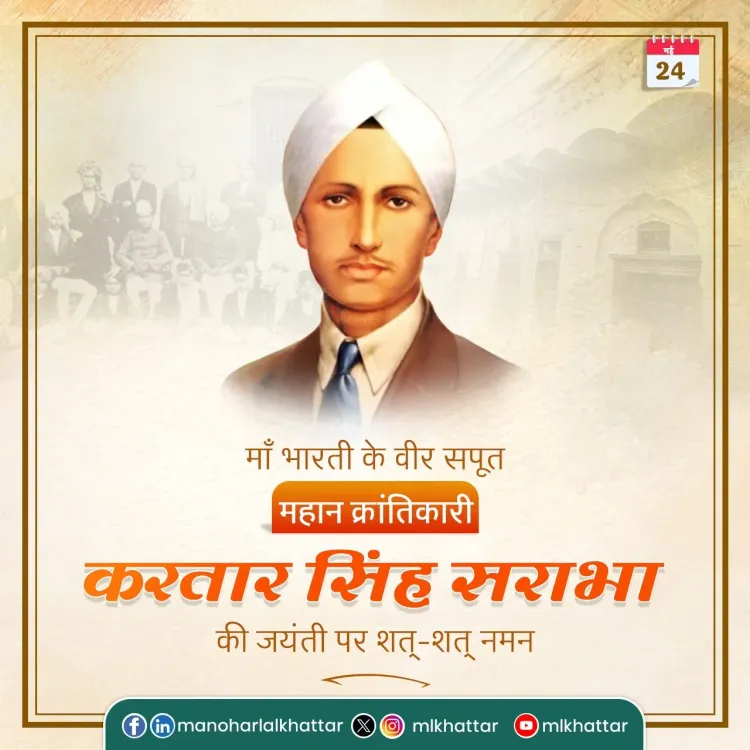
Union Power Minister Manohar Lal Khattar on 24 May 2026 offered homage to Ghadar Party revolutionary Kartar Singh Sarabha on his birth anniversary, saluting the 19-year-old martyr executed by the British in 1915 for his role in India's independence movement.
Key Takeaways
Union Power Minister Manohar Lal Khattar posted a Hindi tribute to Kartar Singh Sarabha on his birth anniversary on 24 May 2026 .
Kartar Singh Sarabha was born in 1896 in the village of Sarabha in undivided Punjab and was executed by the British in 1915 at age 19 .
Sarabha was a key organiser of the Ghadar Party , an Indian expatriate revolutionary movement based in North America .
Khattar described Sarabha's courage, sacrifice, and martyrdom as an eternal inspiration for every Indian.
The tribute is part of a broader ruling-party pattern of publicly honouring pre-Gandhian and revolutionary nationalist figures on their anniversaries.
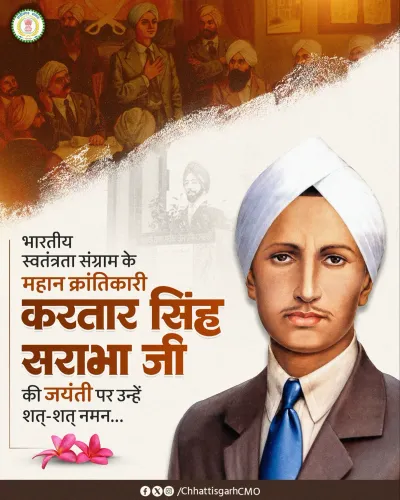
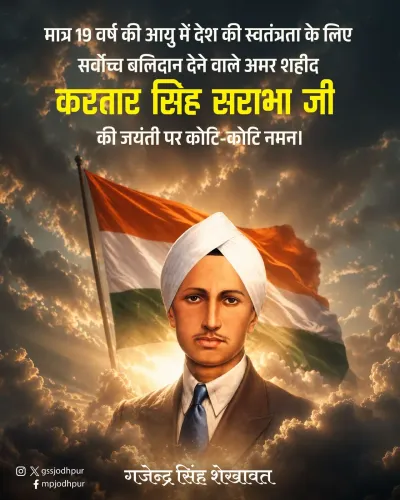
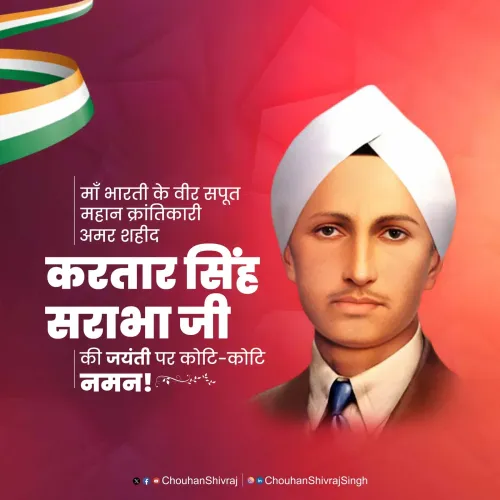
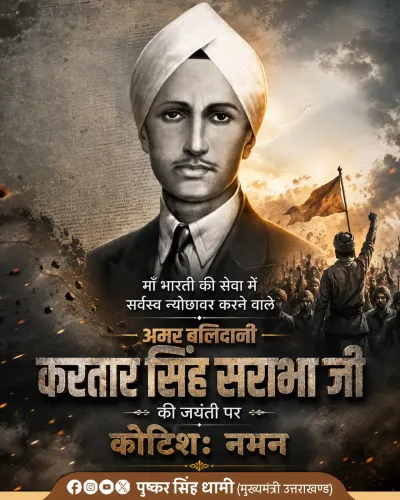
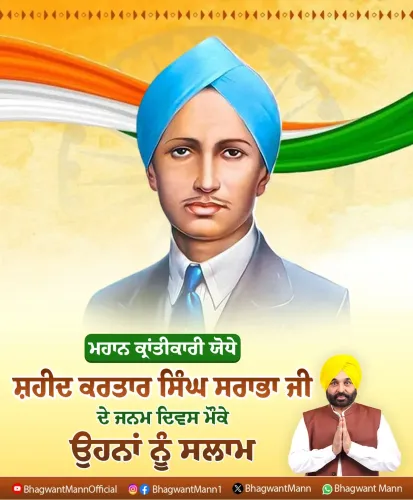
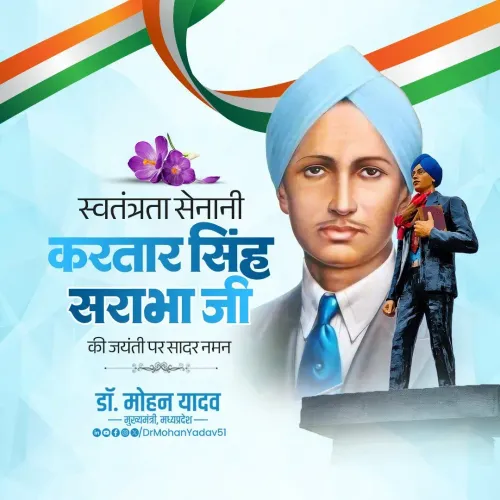
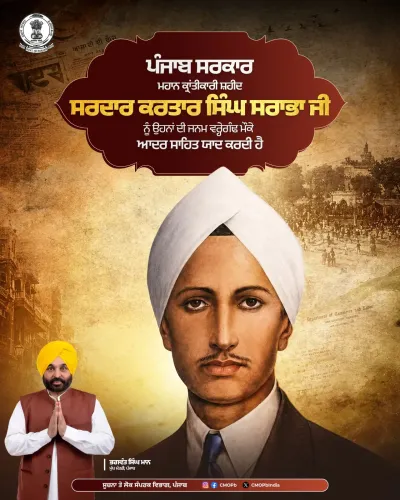
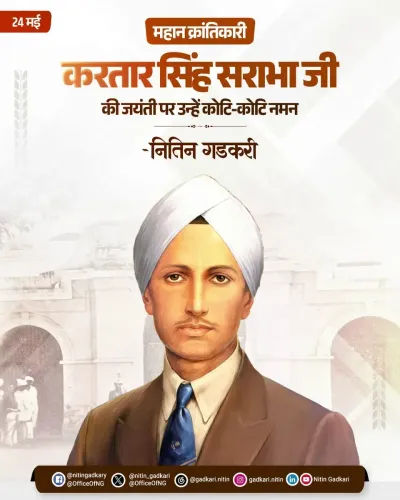
Union Power Minister Manohar Lal Khattar on Sunday, 24 May 2026, paid homage to Kartar Singh Sarabha, the Ghadar Party revolutionary who was executed by the British at the age of 19, on the occasion of the freedom fighter's birth anniversary. Khattar posted the tribute on X in Hindi, offering 'koti-koti naman' — a crores-fold salute — to the young martyr.
Context
In his post, Khattar wrote: 'Maa Bharati ki partantrata ki bediyon ko todne ke liye 19 varsh ki alpaayu mein hi hanste-hanste praan nyochhaavar kar dene waale amar balidaani Kartar Singh Sarabha ji ki jayanti par koti-koti naman arpit karta hoon.' Translated, this reads: 'On the birth anniversary of immortal martyr Kartar Singh Sarabha, who smilingly sacrificed his life at the tender age of 19 to break the chains of Mother India's bondage, I offer my crores-fold salutations.' He added that Sarabha's saga of courage, sacrifice, and martyrdom would inspire every Indian for ages to come.
The tribute carries particular resonance given Khattar's roots in Haryana, a state that shares deep historical and cultural ties with Punjab, where the Ghadar revolutionary movement was centred.
Policy Backdrop
Kartar Singh Sarabha was born in 1896 in the village of Sarabha in undivided Punjab. He travelled to North America as a young man and became a key organiser within the Ghadar Party, an early 20th-century revolutionary organisation of Indian expatriates in the United States and Canada that sought to end British colonial rule through armed mutiny. He returned to India to lead an uprising, was arrested by British authorities, and was executed in 1915 — making him one of the youngest martyrs of India's independence movement.
The Ghadar Party and its members were accorded renewed national prominence during Azadi Ka Amrit Mahotsav (2021–2022), the government's commemoration of 75 years of Indian independence, which deliberately highlighted pre-Gandhian and revolutionary nationalist figures alongside the mainstream freedom movement narrative.
Stakeholders and Impact
Tributes to Ghadar-era martyrs resonate strongly with Punjab's population and the large Punjabi diaspora in North America and the United Kingdom, communities that have long maintained an emotional connection to the Ghadar legacy. Posts of this nature also speak to Indian youth, for whom figures like Sarabha represent a tradition of youthful, self-sacrificial patriotism.
Ruling-party ministers regularly mark the birth and martyrdom anniversaries of revolutionary nationalists on social media. The pattern forms part of a broader effort to widen the public narrative of the freedom struggle and bring pre-Gandhian revolutionaries — particularly those from Punjab and Haryana — into mainstream national memory.
What's Next
State governments in Punjab and Haryana periodically organise commemorative programmes around the anniversaries of Ghadar martyrs, and civil-society groups have called for expanded curriculum coverage of figures like Sarabha in school textbooks. As the ruling dispensation continues to foreground revolutionary nationalists in its public messaging, renewed attention to memorials, academic modules, and cultural events honouring Kartar Singh Sarabha and his contemporaries can be expected in the months ahead.
Point of View
The minister signals cultural affinity with Punjab at a time when the party is working to consolidate its presence in the state. The messaging also taps into a globally connected Punjabi diaspora that has long held the Ghadar legacy close. Taken together, such posts are low-cost, high-resonance political communication that reinforces a particular reading of India's independence history.
NationPress
19 Sept 2026
Frequently Asked Questions
Who was Kartar Singh Sarabha?
Kartar Singh Sarabha was a Ghadar Party revolutionary born in 1896 in the village of Sarabha in undivided Punjab. He was executed by the British in 1915 at the age of 19 after returning from North America to organise an armed uprising against colonial rule.
What was the Ghadar Party?
The Ghadar Party was an early 20th-century revolutionary organisation of Indian expatriates based in the United States and Canada. It sought to end British rule in India through armed mutiny and was particularly active among Punjabi immigrants in North America.
Why did Manohar Lal Khattar pay tribute to Kartar Singh Sarabha?
Khattar paid tribute on the occasion of Sarabha's birth anniversary, calling him an immortal martyr whose courage and sacrifice would inspire every Indian for generations. The tribute was posted on X on 24 May 2026.
How old was Kartar Singh Sarabha when he was executed?
Kartar Singh Sarabha was 19 years old when he was executed by the British in 1915, making him one of the youngest martyrs of India's independence movement.
What is Manohar Lal Khattar's current role?
Manohar Lal Khattar is the Union Minister of Power and Housing and Urban Affairs. He is a senior BJP leader and former Chief Minister of Haryana.